
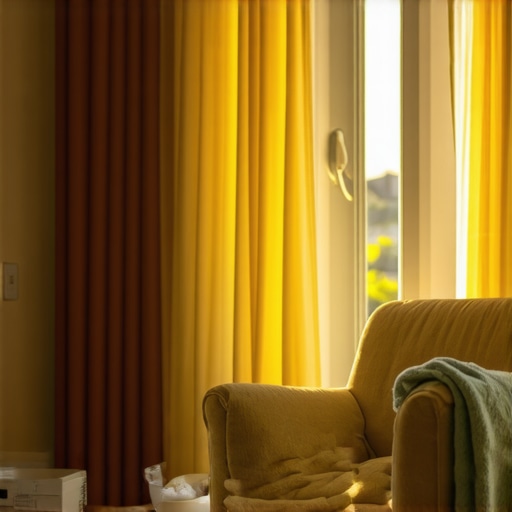
I found it at the back of a dusty estate sale: a gorgeous, curved velvet armchair that screamed 1960s chic. I paid fifty bucks and felt like a absolute genius. But the moment I closed my car door with that beauty in the backseat, the reality hit me. It wasn’t just a “vintage” scent; it was a heavy, stale wall of three decades’ worth of cigarette smoke. By the time I got home, my eyes were watering and my hair smelled like an ashtray. I made a massive rookie mistake right away—I panicked and grabbed a bottle of scented fabric spray, thinking a quick soak would do the trick. Spoiler alert: it didn’t. It just made the chair smell like “lavender-scented tobacco,” which is arguably much worse. It felt like I’d just thrown fifty dollars into a bonfire.
Why That Thrift Store Find Smells Like a 1970s Lounge
Most of us think a quick wipe-down is enough when following a move-in checklist for every first-time apartment renter, but smoke is a different beast entirely. It’s not just sitting on the surface; it’s buried deep within the foam and fibers. According to the Mayo Clinic, third-hand smoke consists of residual nicotine and other chemicals that remain on indoor surfaces for months or even years. This isn’t just about a lingering odor; it’s about the chemistry of the material itself. If you have ever tried to how we extract deep-set smoke odors from vintage armchairs, you know it feels like a losing battle. Early in my DIY journey, I actually ruined a gorgeous piece because I didn’t know the one thing you should never do when cleaning a velvet couch—which is dousing it in liquid cleaners and heat. Heat actually sets the odor deeper into the wood and fabric. I’m here to make sure you don’t repeat my heartbreak.
Is that deep cigarette odor actually permanent?
You might be sitting there looking at your thrifted find and wondering if it’s destined for the landfill. I’ve been there. I’ve stared at a beautiful mid-century sofa and wondered if I should just cut my losses. But I’ve learned that with the right upholstery cleaning tips for a fresh home revival, you can actually win this fight. We aren’t going to just mask the scent with perfumes; we are going to neutralize it at a molecular level using air, time, and specific odor-absorbers. Have you ever brought home a piece of furniture that smelled so bad you considered leaving it on the curb? Today, I’m going to walk you through the exact methods I use to save these pieces, similar to how one might disinfect a mattress without soaking the foam. We’re going to get that freshness back without the chemicals.
Let the Sun and Fresh Air Do the Heavy Lifting First
Think of smoke particles like microscopic velcro hooks that have latched onto every single fiber of your new find. The very first thing you need to do is get that piece into a space with maximum airflow. If you have a porch or a garage with a cross-breeze, use it. UV rays are actually nature’s original sanitizing hacks for safe house transitions. I remember a mid-century loveseat I once dragged into my driveway. It was so rank I could smell it from ten feet away. I left it in the sun for four hours, rotating it like a rotisserie chicken. This didn’t kill the smell entirely, but it ‘opened up’ the fibers so my next steps could actually work. If you skip the airing-out phase, you’re essentially just trying to clean over a layer of stale air trapped in the foam.
Why You Need a High-Efficiency Vacuum First
Before you apply a single drop of liquid or even a sprinkle of powder, you have to physically remove the loose nicotine dust. This is where effective house cleaning secrets from cleaning experts come into play: you must vacuum every square inch using a brush attachment. Start from the highest point and work down—why professional cleaners always start at the top of the room applies to furniture too. If you start at the bottom, you’ll just knock dust onto the areas you’ve already cleaned. Use the crevice tool to dig deep into the folds where the arms meet the back. This is where the ‘ash’ of thirty years lives. If your vacuum has a HEPA filter, use it; otherwise, you might just be blowing those smoke particles right back into your living room.
Stop the Odor with a Baking Soda Blanket
Now we get to the neutralizing phase. You aren’t just lightly dusting the chair; you are essentially burying it. Buy the giant industrial-sized bag of baking soda. This is a core part of any ultimate upholstery care guide for lasting freshness. Liberally coat every upholstered surface. If the cushions come off, coat the undersides too. I once spent an entire Saturday morning ‘frosting’ a velvet wingback chair with baking soda until it looked like a snowdrift. The key is to let it sit for at least 24 hours. Baking soda is alkaline, and it works by drawing the acidic smoke molecules out of the fabric. After a full day, vacuum it all off using that same brush attachment. You will likely see the powder has turned a slightly dingy yellow—that is the nicotine being pulled out of the chair.
Build a Vinegar Tent for Stubborn Smoke
If the baking soda doesn’t finish the job, don’t reach for the steam cleaner. Remember, why you should never use a steam cleaner on these specific upholstery fabrics is because heat acts as a sealant for odors. Instead, use the ‘Vinegar Tent’ method. Place the chair in a small room or under a large drop cloth. Set several bowls filled with white distilled vinegar on the floor around the piece (not on the fabric!). Leave it overnight. The vinegar acidity neutralizes the lingering alkaline smoke odors in the air trapped under the tent. It’s one of those effective sanitizing methods for a germ-free home that costs pennies but works better than a fifty-dollar bottle of chemicals. By morning, the vinegar smell will dissipate, and it should take the last of that ‘old ashtray’ scent with it.
Stop Reaching for the Bleach Every Time You See a Stain
The biggest myth in the DIY cleaning world is that more liquid equals more clean. In fact, when dealing with porous items, saturation is your worst enemy. Most people assume that to truly sanitize, they need to douse the fabric in heavy-duty cleaners. However, professional effective sanitizing methods for a germ-free home rely on moisture control. If you get the inner foam of a vintage chair too wet, you aren’t just cleaning it; you’re creating a breeding ground for mold that will smell worse than the smoke ever did. I’ve seen countless ‘restored’ pieces end up in the trash because the owner thought a garden hose and some dish soap were a good idea. Instead, focus on the chemistry of ‘outgassing’—giving the chemicals a way to escape rather than trapping them in a watery grave.
Can an Ozone Machine Actually Damage Your Living Room Furniture?
I get this question a lot from people who want a ‘magic bullet’ for odors. While ozone is a powerful tool used by pros to how we extract deep-set smoke odors from vintage armchairs, it’s not a toy. Overusing an ozone generator can actually oxidize the rubber backing on rugs and cause certain foam types to crumble. It is an advanced technique that requires precise timing. For the average DIYer, stick to the slower, safer methods found in an ultimate upholstery care guide for lasting freshness. A study published in the Journal of Exposure Science & Environmental Epidemiology highlights that third-hand smoke is incredibly persistent because it reacts with other indoor pollutants, like nitrous acid, to form new carcinogens. This means your cleaning isn’t just about smell—it’s about health.
The Move-Out Trap That Most Renters Fall Into
If you are cleaning a smoky piece because you’re trying to ensure your deposit refund, be careful about what you use on the surrounding walls and carpets. A common ‘oops’ factor is using high-alkaline cleaners on silk or wool blends. I once watched a friend try to scrub a smoke stain off a luxury rug, and she ended up ‘bleeding’ the dyes together. Remember the one thing you should never do when cleaning a velvet couch—vigorous scrubbing. You aren’t rubbing the smell out; you’re just fraying the fibers and pushing the soot further in. Have you ever fallen into this trap where a ‘simple’ clean turned into a total disaster? Let me know in the comments! This nuance is what separates a surface-level wipe-down from a true restoration. When you understand the material’s limit, you stop fighting the furniture and start working with its chemistry.
Upgrade Your Toolkit to Beat Persistent Odors
I used to think my standard upright vacuum was doing a great job, but then I saw a professional’s HEPA-rated canister unit in action. If your machine doesn’t have a sealed system, why your vacuum is blowing dust back into the air becomes a very real problem. You’re essentially just redistributing the smoke particles you’re trying to kill. I now use a vacuum with a certified HEPA filter and a dedicated upholstery turbine tool. This spins a small brush bar powered by airflow, which beats the fabric just enough to shake loose the microscopic soot. Combining this with effective house cleaning secrets from cleaning experts, like using a stiff-bristle horsehair brush to loosen fibers before vacuuming, makes a world of difference. This mechanical action is far more effective than any spray because it removes the source rather than just masking it.
How do I keep that fresh scent from fading over time?
Maintenance is where most people drop the ball. Once that chair is clean, you can’t just ignore it. I recommend a daily house cleaning routine to maintain perfection that includes a quick light vacuuming of all soft surfaces at least once a week. This prevents new dust and environmental pollutants from settling into the ‘pores’ of the fabric. According to the Institute of Inspection Cleaning and Restoration Certification (IICRC) S500 standard, controlling indoor humidity is also vital for odor management. If your home gets too humid, those dormant smoke molecules in the deep foam can re-hydrate and start to smell again. Keep your humidity between 30% and 50% to lock those scents away for good. If you’re currently prepping a rental for inspection, using these move-out cleaning strategies to secure your deposit will ensure the landlord doesn’t walk into a ‘stale’ room even weeks after you’ve left.
The Next Wave of Cleaning Uses Good Bacteria
I’m predicting a massive shift toward ‘probiotic’ cleaners in the next few years. Instead of using harsh chemicals to kill everything, these formulas introduce beneficial bacteria that literally eat the organic matter causing the smells. It’s one of the most exciting sanitizing secrets for a safer house in 2025. These microbes stay active for days after application, providing a continuous deep-clean that traditional sprays just can’t match. This is particularly effective for vintage foam which is too delicate for traditional steam cleaning. This is the ultimate way to scale your home maintenance without adding hours of manual labor. I challenge you to try the ‘low-moisture’ brush technique—using only a dry brush and a high-powered vacuum—on your couch this weekend. You’ll be shocked at the amount of ‘invisible’ dust you pull out before you ever need to reach for a bottle of cleaner. This proactive approach saves your furniture and your health simultaneously.
The Hardest Lesson I Learned About Rescuing Vintage Velvet
After years of trial and error, I realized that the biggest mistake isn’t using the wrong cleaner—it’s rushing the process. Smoke molecules are incredibly stubborn, and they often hide in the very foam that gives your furniture its shape. One thing I’ve learned is that humidity acts like a ‘scent-trigger.’ You might think a piece is clean on a dry day, but as soon as the rain starts, that old ashtray smell crawls back out. This is why a daily house cleaning routine to maintain perfection includes checking the moisture levels in your home. Another lightbulb moment? The nose never lies. If you can still smell it after two rounds of baking soda, you haven’t reached the core yet. Don’t be afraid to repeat the ‘Vinegar Tent’ method multiple times; sometimes it takes a week of gentle neutralization to truly win the war against third-hand smoke particles.
The Gear That Actually Saved My Sanity and My Deposit
If you’re worried about your landlord’s walkthrough, you need more than just luck. My essential toolkit for these situations focuses on removal rather than masking. First, I always keep a high-quality horsehair brush on hand to loosen fibers without causing damage—it’s one of those effective house cleaning secrets from cleaning experts that truly works. Second, a vacuum with a sealed HEPA system is non-negotiable. Without it, why your vacuum is actually spreading more dust around becomes a nightmare for your indoor air quality. Finally, I rely on low-moisture probiotic cleaners that break down organic compounds. These tools are the backbone of any move-out cleaning hacks to ensure your deposit refund, especially if you are dealing with the lingering effects of a previous tenant’s habits.
#IMAGE_PLACEHOLDER_E#
Give Your Thrifted Treasures the Second Life They Deserve
Restoring a piece of history is more than just a DIY project; it’s about reclaiming beauty from the past. Don’t let a little stale smoke keep you from that perfect mid-century find. By following a structured ultimate upholstery care guide for lasting freshness, you can transform a ‘garage sale reject’ into the centerpiece of your living room. The process takes time and effort, but the reward of a fresh, healthy home is worth every sprinkle of baking soda. You now have the upholstery cleaning tips for a fresh home revival that the pros use—so go ahead and rescue that chair! Have you ever successfully removed a deep odor from a piece of furniture that everyone else told you to toss? Let me know your success stories in the comments below!