
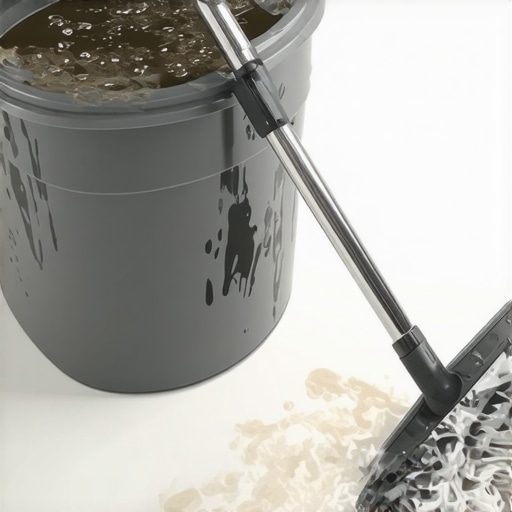
I remember leaning against my kitchen counter, panting after what I thought was a marathon session of cleaning, only to watch the afternoon sun reveal a total disaster on my hardwood. Instead of a mirror-like shine, I saw swirls of gray residue and a persistent, cloudy film that looked significantly worse than the dust I’d started with. It was a gut-punch. I’d spent an hour pushing dirty water around, thinking I was sanitizing my home when I was actually just re-distributing last week’s grime. That’s the moment I realized my trusty old mop bucket was actually the enemy.
Why Your Classic Mopping Routine Is Just Pushing Mud Around
I used to think that as long as the water was hot and the soap smelled like a pine forest, I was winning the war against germs. I was so wrong. When you use a single bucket, you dip your dirty mop back into the ‘cleaning’ solution, immediately contaminating the very water you’re using to clean. This is one of the biggest reasons why your floors feel sticky even after you finished mopping. It’s a cycle of futility. If you are prepping for a big move, this mistake can cost you your security deposit; following a solid move-out clean checklist to simplify your transition means ensuring those floors are actually bare, not just wet. My early mistake? I used to use the same mop head for months without a deep wash, thinking the soap in the bucket would miraculously clean the mop fibers too. It was gross, but I didn’t know any better!
Does a Second Bucket Actually Make a Difference?
You might be skeptical. Carrying two buckets sounds like a chore, and you’re probably wondering if it’s just another one of those cleaning gimmicks. It’s not. A study published in the Journal of Hospital Infection highlights that mop heads and cleaning solutions can quickly become contaminated with high levels of bacteria like Pseudomonas if not managed correctly. By separating your rinse water from your soapy water, you ensure that only clean solution touches your floor. Using house cleaning strategies for a sparkling home today often comes down to this single, simple mechanical change. Have you ever noticed that weird ‘gray’ tint on your grout even after you’ve spent all morning on your knees scrubbing? [IMAGE_PLACEHOLDER] Let me know if you’ve struggled with this—I promise we are going to fix it right now.
How to Build Your Two-Bucket Command Center
Setting up your cleaning station is the most critical part of the process. Think of your two buckets as a filtration system for your home; one holds your active cleaning solution, while the other serves as a decontamination zone. I learned this the hard way while helping a friend tackle a move-out clean checklist to simplify your transition. We were rushing and used a single bucket for a large apartment. When the landlord walked through, his shoes actually made a ‘velcro’ sound on the floor because of the soap buildup. It was mortifying. We ended up spending an extra three hours re-mopping with plain water just to get that sticky film off. If we had used effective house cleaning secrets from cleaning experts, we would have finished in half the time.
Ditch the Gray Water for Good
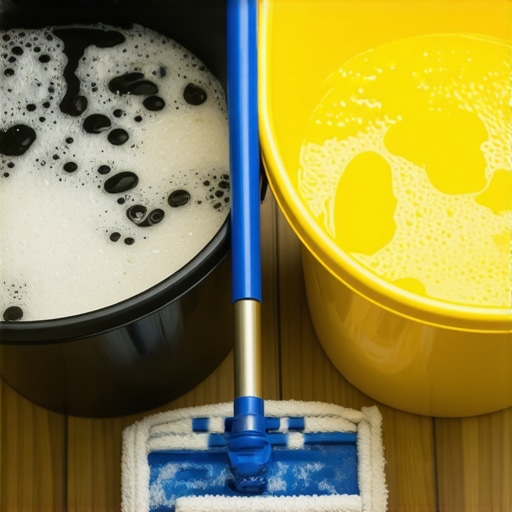
The execution is simple but requires discipline. First, dip your mop into the soapy ‘wash’ bucket. Wring it out until it’s damp, not dripping. Mop a small section of the floor—about a three-foot square. Now, here is where most people fail: do not put that dirty mop back into your soap. Instead, plunge it into the ‘rinse’ bucket. This bucket should contain only plain, hot water. Agitate the mop to release the grit, hair, and gray film it just picked up. Wring it out thoroughly in the rinse bucket before returning to the soap bucket for more cleaner. This ensures that the water touching your floor is always pristine. By utilizing effective sanitizing methods for a germ-free home, you are mechanically removing bacteria rather than just moving it around the room.
Stop Wreaking Havoc on Your Laminate and Wood
Water is the natural enemy of many modern flooring materials. While you want your floors clean, saturating them is a recipe for disaster. This is especially true for those moving into a new place; following a move-in checklist for every first-time apartment renter usually involves a deep floor scrub, but you must be careful. If you have laminate, you should know why your steam mop might be damaging your laminate floors—the heat and moisture can cause the edges to swell and peel. The two-bucket method allows you to control the moisture levels much more effectively. You want the mop head to be ‘thirsty,’ meaning it’s dry enough to soak up the dirty water rather than just adding more liquid to the puddle.
Real Sanitizing Requires Patience Not Just Chemicals
Many people assume that ‘clean’ happens the moment the mop touches the floor. In reality, sanitizing is a chemical reaction that requires ‘dwell time.’ If you are looking for sanitizing secrets for a safer house in 2025, look at the back of your cleaner bottle. Most disinfectants need to stay wet on a surface for 3 to 10 minutes to actually kill pathogens like E. coli or Salmonella. When you use the two-bucket method, you can apply a slightly wetter layer of solution from your ‘clean’ bucket, let it sit for a few minutes, and then go back over it with a wrung-out mop from your rinse bucket to pick up the residue. This is one of the most reliable house cleaning strategies for a sparkling home today because it combines chemical kill-power with mechanical removal. I once tried to sanitize a kitchen floor after a raw chicken mishap by just splashing bleach water and wiping it up instantly. A quick swab test later (I was being paranoid) showed I’d missed almost everything. Now, I let the solution sit, and the results are night and day.
The biggest trap I see people fall into—and I was guilty of this for years—is the ‘clean smell’ delusion. We’ve been conditioned to think that a waft of bleach or synthetic lavender means a surface is safe. It’s a total myth. In fact, many of those heavy scents are just masking the odors produced by bacteria that haven’t actually been removed. If you are following move-out cleaning strategies to secure your deposit, relying on scent rather than science is a surefire way to fail an inspection. Real cleanliness doesn’t have a smell; it’s the absence of everything.
Why Your Scrubbing Technique Matters More Than the Chemical
Here is a bit of advanced nuance: you can’t sanitize a surface that isn’t already clean. This sounds like a riddle, but it’s the cornerstone of effective house cleaning secrets from cleaning experts. Bacteria and viruses often live inside ‘biofilms’—slimy protective layers that shield them from disinfectants. If you just spray and walk away, the chemical might never touch the actual germ. You have to use mechanical action—scrubbing—to break that film first. This is exactly why the two-bucket method is so superior; the friction of the mop combined with the constant rinsing of the fibers physically tears those biofilms apart. According to the EPA, a product is only a ‘disinfectant’ if it can kill 99.999% of germs, but it can only do that if it makes direct contact with the surface for the full dwell time mentioned on the label.
Can You Over-Sanitize Your Living Space?
Believe it or not, there is a point of diminishing returns. When you are deep in the weeds of sanitizing hacks for safe house transitions, you might be tempted to reach for the strongest chemicals available. But using industrial-strength cleaners on residential surfaces is one of those ‘oops’ factors that leads to permanent damage. For instance, using high-pH cleaners on natural stone can etch the surface forever. I’ve seen homeowners ruin beautiful furniture because they didn’t consult an ultimate upholstery care guide for lasting freshness before attacking a stain with bleach. The goal isn’t to create a sterile lab environment; it’s to remove the pathogens that actually make us sick while preserving the integrity of our home materials.
The Hidden Danger of Cross-Contamination in Your Living Room
The most common advanced mistake is forgetting that your tools are as important as your technique. If you use the same microfiber cloth to wipe the bathroom counter and then move to the coffee table, you aren’t cleaning; you are just relocating E. coli. This is why I always preach the ‘color-coded system’ for house cleaning strategies for a sparkling home today. Red cloths for bathrooms, blue for glass, and green for general surfaces. It prevents the accidental transfer of microbes that your two-bucket mop system worked so hard to eliminate. Have you ever fallen into this trap and realized you were cleaning the whole house with one ‘dirty’ rag? Let me know in the comments, because we have all been there at least once!
I used to think any old rag or discount mop would do the trick, but if you want to stop the cycle of endless scrubbing, you have to upgrade your arsenal. Relying on cheap tools is like trying to win a race in flip-flops—you might get to the finish line, but you’re going to be exhausted and probably hurt. After years of trial and error, I’ve realized that professional results require a shift in mindset toward high-performance equipment. For example, moving away from cotton mops to high-denier microfiber changed everything for me. Microfiber doesn’t just push dirt; it actually traps it within the wedge-shaped fibers. This is one of those effective house cleaning secrets from cleaning experts that most people ignore because they think a mop is just a mop. It’s not.
How Do I Keep My Home Sanitized Month After Month?
Maintenance is where most people lose the battle. You do a massive deep clean, the house looks incredible for forty-eight hours, and then life happens. The secret isn’t more cleaning; it’s better systems. I swear by a daily house cleaning routine to maintain perfection that focuses on high-touch surfaces. If you can spend five minutes a day on the ‘hot spots’ like door handles and light switches, you’ll find that you don’t need a grueling eight-hour session every Saturday. When you schedule a deep clean that actually lasts more than a week, you are essentially setting up a defense perimeter. This is especially vital for soft surfaces; I’ve found that using an ultimate upholstery care guide for lasting freshness helps me stay on top of the dust mites and allergens that thrive in our sofas. According to the IICRC S100 Standard for Professional Carpet Cleaning, regular soil removal is the most critical factor in extending the life of your home’s textiles. It’s about being proactive, not reactive.
The Future of Sanitization is Already Here
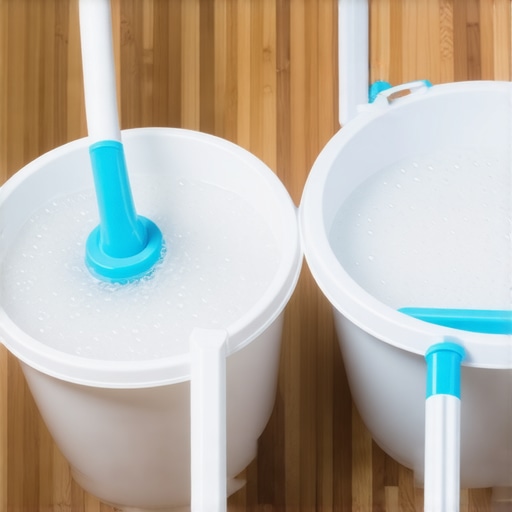
Looking ahead, the trend is moving away from harsh liquid chemicals and toward tech-driven solutions. We are seeing a massive surge in UV-C light sanitization and autonomous ‘smart’ mops that can actually sense the level of soil on a floor. While these aren’t a replacement for a good old-fashioned deep clean, they are incredible for maintaining that ‘just cleaned’ feel. If you’re currently dealing with a transition, like moving out of a rental, don’t just rely on gadgets. You need move-out cleaning strategies to secure your deposit that involve manual precision. Even the smartest robot mop can’t scrub the grime out of a window track. However, for those of us looking for sanitizing secrets for a safer house in 2025, integrating HEPA-filtration vacuums and steam-assisted tools will become the baseline for health-conscious living. I recommend starting with one advanced tool—a high-quality spin mop system with a separate rinse chamber. It’s a low-tech investment with high-tech results. Try it on your high-traffic kitchen floor this week; the amount of black water in your rinse bucket will absolutely shock you.
Why My Floors Stayed Dirty Until I Changed One Habit
Looking back at my years of cleaning trials, there are a few things I learned the hard way that no manual tells you. First, clean water feels heavier than dirty water because you aren’t just pushing sludge around; you’re actually hydrating the floor. I also realized that the quality of your rinse water is just as important as your detergent. If your rinse bucket looks like swamp water after ten minutes, you aren’t using enough effective sanitizing methods for a germ-free home. Another lightbulb moment was realizing that ‘clean’ doesn’t mean ‘wet.’ If you leave a floor soaking, you’re just inviting dust to settle into the moisture and create new grime.
#IMAGE_PLACE_HOLDER_E#
The Toolkit That Changed My Cleaning Game
I don’t recommend products lightly, but these few items saved my sanity. I swear by a dual-chamber spin mop—it makes the two-bucket method mechanical rather than a balancing act. For my windows, I transitioned to the two-cloth method for streak-free windows in half the time, which perfectly complements a deep floor clean. I also keep a digital kitchen timer on my belt; it sounds silly, but it’s the only way to ensure proper dwell time for disinfectants. Finally, for those tough bathroom transitions, knowing how to get rid of soap scum without harsh scrubbing has saved my back and preserved my grout’s color for years.
Your Path to a Truly Pristine Home Starts Now
Sanitizing your living space isn’t about perfection; it’s about creating a safe, breathable environment for your family. Whether you are prepping for a move and need to know how to get your security deposit back when you have pets or you’re just tired of sticky floors, the two-bucket method is your secret weapon. Don’t be afraid to slow down—the most effective house cleaning usually happens when you stop rushing and start being intentional with your tools. You’ve got this!
Have you ever noticed your mop water turning black after just a few minutes? Let me know your biggest ‘yuck’ moment in the comments below!