
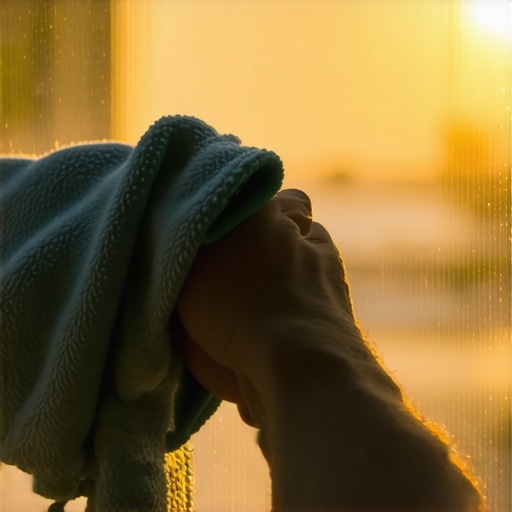
I remember standing in my living room, the late afternoon sun streaming through the glass. At least, it was trying to. Instead of a golden glow, I saw a messy roadmap of every single circular wipe I had made with that “streak-free” blue spray and a mountain of paper towels. My arms were sore, my wastebasket was overflowing, and the windows looked arguably worse than when I started. It is that heart-sinking moment every homeowner knows—when your hard work just highlights the grime. I was exhausted and ready to give up on ever having a sparkling home today. But then I discovered a technique that felt almost too simple to work. Have you ever spent an entire afternoon scrubbing just to find a giant, greasy streak right in your line of sight the next morning? [image]
Stop fighting your glass and start winning
I used to think the secret to perfect windows was the chemical. I would buy the most expensive sprays, thinking the price tag equaled clarity. Total lie. I actually once used so much glass cleaner that it dripped into the frames and stayed damp for days, which is a classic mistake I see often when people try to rush their effective house cleaning. The truth is that the more product you use, the more residue you leave behind to attract dust. This is especially frustrating when you are trying to get through a move-out clean checklist and every minute counts. The Two-Cloth Method changed everything for me because it relies on physics rather than chemistry. By using one cloth to lift the dirt and a second to polish the surface dry, you eliminate the slurry of gray water that usually just gets pushed around the pane. It is the same reason why you should scrub window tracks before cleaning the glass—you have to manage the moisture and the debris separately to get that professional finish.
Is this really worth the extra laundry?
I know what you are thinking because I thought it too. Why would I want to double the number of rags I have to wash? It sounds like more work, but the reality is that it cuts your actual cleaning time in half. You are no longer standing there buffing the same spot for three minutes trying to get a smudge to disappear. According to experts at Infection Control Today, high-quality microfiber can remove up to 99% of bacteria and soil with just water, which means you are not just making things look pretty; you are actually sanitizing the surface. I realized that by switching to this method, I stopped wasting money on paper towels and started enjoying the view. It is about working smarter, not harder, so you can actually enjoy your home instead of just maintaining it. I am going to show you exactly how to execute this so you never have to squint at a smudge again.Grab your two microfibers and forget the squeegee. Most people think a professional squeegee is the only way to get clarity, but unless you have the wrist flick of a seasoned pro, you are likely just going to leave a trail of gray water on your carpet. I learned this the hard way during a frantic afternoon trying to follow a move-out cleaning hack to save my security deposit. I ended up with dirty suds dripping onto my beige upholstery, creating a secondary disaster I wasn’t prepared for. The two-cloth method is your safeguard because it controls the moisture from start to finish.
Master the S-pattern with your lead cloth
Wet your first microfiber cloth just enough so it is damp, not dripping. If you can wring out more than a single drop of water, it is too wet. Think of this cloth as a magnet for the grime rather than a washcloth. Start at the top left corner and move across in a continuous ‘S’ shape. This specific motion ensures you are always pulling the dirt toward the uncleaned section rather than just swirling it around. It is similar to why effective sanitizing methods require a clear surface first; you cannot kill germs effectively if they are buried under a layer of grit. If you hit a stubborn spot, let the dampness sit for ten seconds to soften it, then swipe again.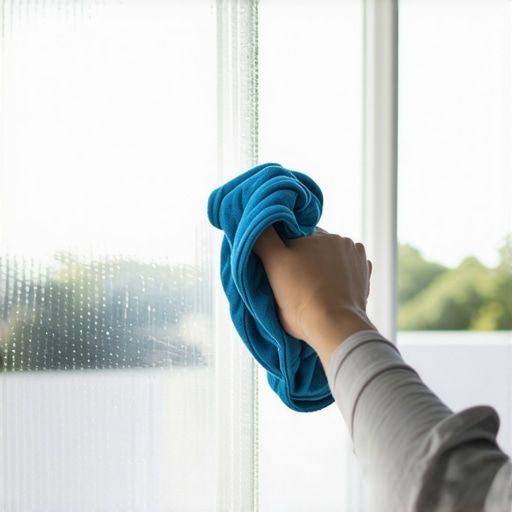
Why your second cloth must stay bone dry
This is where the magic happens and where most people fail. While the window is still slightly hazy from the damp pass, take your second, bone-dry microfiber and buff the glass immediately. You have to be fast. If the water dries on its own, it leaves minerals behind, and that is exactly what creates those annoying white streaks. This part of the process is a staple in any daily house cleaning routine because it works equally well on mirrors and chrome faucets. I once tried to use a cloth that was ‘mostly’ dry after I had already finished three other windows. The fourth window looked like a foggy morning in London because the saturated fibers could no longer absorb the moisture. Change your dry cloth often to maintain that friction.
Clean the edges to avoid the halo effect
The biggest giveaway of a DIY job is the ‘halo’—that ring of dirt right at the edge where the glass meets the frame. Use your fingernail tucked inside the cloth to get right into that rubber gasket. If you are dealing with years of buildup, you might need the window track hack that uses a utility knife and a sponge to get the gunk out of the corners first. A perfectly clear pane next to a filthy, dusty frame is like wearing a tuxedo with muddy boots; it ruins the entire aesthetic. By integrating this detail-oriented approach into your sanitizing secrets, you are not just clearing the view; you are removing the hidden allergens that congregate in the corners of your home.
Many people think that if a little bit of disinfectant is good, then soaking the surface is better. This is a massive mistake that I see professionals avoid every single day. When you oversaturate a surface, especially during a high-stakes move-out cleaning strategy, you aren’t actually cleaning better; you are just creating a swamp. This moisture seeps into cracks and can actually encourage mold growth behind the scenes. In my experience, the ‘dwell time’ listed on the back of the bottle is far more important than the amount of liquid you spray. If you wipe it off immediately, you might as well have used plain water.
Stop trusting hot water for every stain
Everyone says that heat is the ultimate sanitizer, but that is a dangerous half-truth. While heat can kill bacteria, it also acts as a ‘set’ for organic proteins. If you use hot water on a fresh spill before treating it properly, you are essentially cooking that stain into the fibers forever. This is why effective sanitizing methods for a germ-free home require a cold-start approach for stains like blood or milk. A study from the University of Arizona famously highlighted how improper cleaning techniques, like using the same rag for multiple surfaces, actually increases cross-contamination rather than reducing it. I’ve seen homeowners spread kitchen bacteria all the way to their living room upholstery just because they used a ‘warm, damp cloth’ everywhere.
Will a steam cleaner actually sanitize my couch?
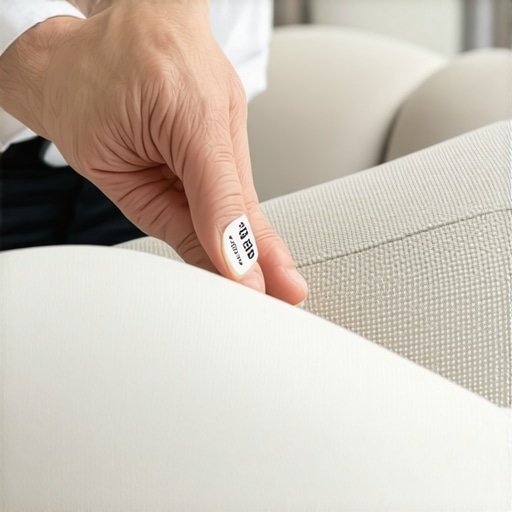
This is the question I get asked most by people who want a truly deep clean. The answer is: only if the fabric can handle it. Most people assume steam is universal, but you must check your furniture tags. I once saw a beautiful designer sofa ruined because the owner didn’t realize they were dealing with ‘S’ coded fabric, which means ‘solvent only.’ If you want to know how to treat s-coded upholstery fabric without ruining it, you have to stay far away from water-based steam. Pushing moisture into those specific fibers causes permanent shrinkage and water rings that look like giant coffee stains. This is why you should never use a steam cleaner on these specific upholstery fabrics unless you are 100% sure of the material composition. Have you ever fallen into this trap and accidentally left a water mark on your favorite chair? Let me know in the comments below.
The hidden danger of a dirty vacuum filter
Another nuance that the pros know is that your tools can be your own worst enemy. If you haven’t changed your HEPA filter recently, your vacuum is actually spreading more dust around than it is picking up. You might be clearing the floor, but you are launching microscopic allergens into the air, which then settle right back onto your freshly cleaned windows and furniture. It creates a never-ending cycle of dust that makes your home feel ‘gritty’ even after a full day of scrubbing. To maintain a truly daily house cleaning routine to maintain perfection, you have to clean the things that do the cleaning. It sounds meta, but it is the secret to that ‘crisp’ air feeling you only get after a professional visit. Don’t let your equipment betray your hard work.
I’ve spent thousands of hours testing different fabrics, and I’ve learned that if your microfiber doesn’t have a distinctly ‘grabby’ feel when it’s dry, it’s basically just a glorified napkin. Professional-grade cloths are measured in GSM (grams per square meter), and for a truly daily house cleaning routine to maintain perfection, you need a split-fiber weave with at least 300 GSM for general surfaces and 400 for anything delicate. According to the Cleaning Industry Research Institute (CIRI), it is the specific capillary action within these split fibers that creates a mechanical bond with soil, trapping microscopic contaminants rather than simply relocating them across the surface like a cotton rag does. If you are using the same bundle of cheap, non-split rags for your bathroom and your kitchen, you are likely failing the most basic sanitizing hacks for safe house transitions. I personally keep a strict color-coded system—red for the bathroom, blue for glass, and green for living areas—so I never have to worry about cross-contamination. This isn’t just about being organized; it’s about hygiene science. 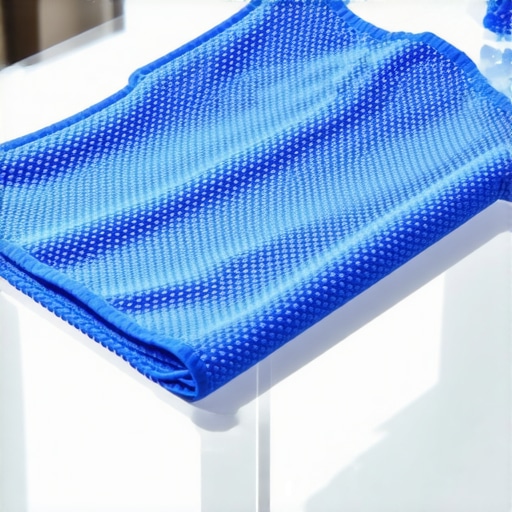
How can I keep these results from fading in forty-eight hours?
The secret isn’t more cleaning; it’s better environmental management. Most people finish a job and think they are done, but the pros know that ‘sealing’ the win is what actually saves your weekends. This means using a high-quality upholstery protector on high-traffic sofas or a dust-repellent finish on your baseboards. When you finally learn how to schedule a deep clean that actually lasts more than a week, you realize that the first 24 hours post-clean are the most critical for setting the stage. If you’re currently preparing for a move, these small protective steps are the cornerstone of successful move-out cleaning strategies to secure your deposit. Stop looking at cleaning as an exhausting one-time event and start seeing it as a managed system for your home’s ecosystem.
The era of the ‘all-purpose’ spray is ending
Looking ahead, I see the industry moving toward ‘intelligent’ surfaces and advanced probiotic cleaners. We are already seeing the rise of bio-active formulas that leave behind beneficial bacteria to keep eating away at organic matter—like skin cells and food particles—long after you’ve put the spray bottle back under the sink. In the next decade, your upholstery cleaning tips won’t just be about the physical removal of dirt; they will be about ‘charging’ the fabric with protective layers that repel stains at a molecular level using nanotechnology. We’re moving away from harsh, corrosive chemistry and toward sophisticated, safe biology. It’s an exciting time for anyone who loves a fresh home. For now, I want you to try this one thing today: Go to your cleaning closet, find any microfiber that feels ‘smooth’ like a t-shirt, and move it to the garage for oil spills. Replace them with dedicated waffle-weave cloths for your glass and high-GSM plush cloths for your furniture. You will feel the difference in the resistance of the cloth the very first time you use them.
The Expensive Mistakes I Made Before Mastering My Routine
If there is one thing I’ve learned, it is that effort does not always equal results. I spent years thinking that if I just scrubbed harder, the house would stay cleaner. In reality, I was just wearing down the fibers of my rugs and scratching my window glass. The moment I shifted to effective sanitizing methods that prioritized chemistry over elbow grease, everything changed. I also learned the hard way that ‘universal’ cleaners are a myth—always check your tags to avoid why you should never use a steam cleaner on these specific upholstery fabrics because once that fabric shrinks, there is no going back. Finally, remember that cleaning is a top-down game. If you aren’t starting with the ceiling fans, you are just dusting the same floor twice.
The Non-Negotiable Gear in My Cleaning Caddy
I don’t believe in having a cabinet overflowing with chemicals. Instead, I focus on high-quality tools that do the heavy lifting. First, a high-quality HEPA vacuum is essential because why your vacuum is actually spreading more dust around is usually due to poor filtration. Second, I swear by a dedicated set of waffle-weave microfibers for glass. Third, I always keep a small utility knife and a sponge handy for the window track hack that gets into those impossible corners. These simple additions to your daily house cleaning routine to maintain perfection will save you hours of frustration every month. [image]
Your Path to a Stress-Free Sparkling Home
You don’t need to spend eight hours every Saturday scrubbing to have a beautiful space. By implementing these house cleaning strategies for a sparkling home today in small, manageable chunks, you can maintain a high standard of living without the burnout. Whether you are prepping for a move and need move-out cleaning strategies to secure your deposit or just want to see the sunset through clear windows, remember that you are in control of your environment. Start with one room, one cloth, and one win at a time. Have you ever accidentally used the wrong product on a delicate surface and lived to tell the tale? Let me know in the comments below!