
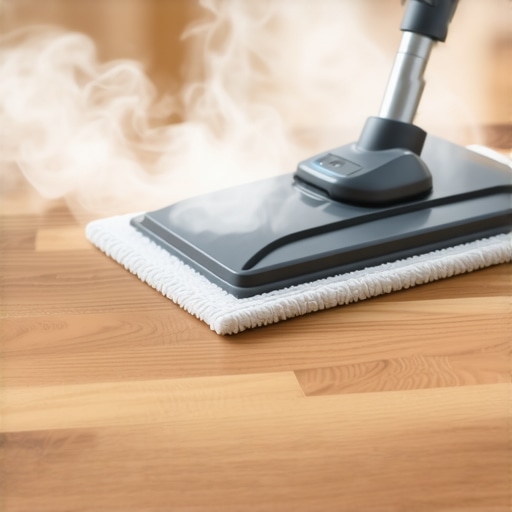
I still remember the exact moment I realized I had made a massive mistake with my home maintenance. I was standing in my sun-drenched living room, admiring what I thought was a pristine floor, when the afternoon light hit the doorway just right. There it was: a tiny, unmistakable ridge where the laminate planks met. My heart sank. I’d spent months using my high-end steam mop, thinking I was being the ultimate clean-freak, but I was actually cooking my floor from the inside out. If you have ever wondered why your floors feel sticky even after you finished mopping, or why they just don’t look right anymore, you might be falling for the same trap I did. Today, I want to share the hard lesson I learned so you don’t have to replace your flooring two years earlier than expected.
That Sinking Feeling of Seeing Buckled Planks
Believe me, I get the appeal of steam. It’s fast, it feels like it’s truly sanitizing your home, and there’s something oddly satisfying about that hiss. But laminate isn’t real wood; it’s a sandwich of composite materials held together by glue and covered with a high-resolution photo. When I first started using my steam mop, I ignored the tiny warnings in the manual because I wanted that deep-clean feeling. I noticed why my wood floors were losing their shine over time, but I just thought I needed more steam. I was wrong.
Is steam really too hot for a floor?
You might think, “It’s just water vapor, how can it hurt?” The problem is that steam is a gas, and gas expands. It forces its way into the micro-cracks between your laminate planks that liquid water can’t reach. Once that moisture gets into the core of the board, it stays there. According to the North American Laminate Flooring Association (NALFA), excessive moisture and heat can cause the internal layers to swell, eventually leading to permanent buckling or “peaking” at the seams. I learned this the hard way during a move-out cleaning where my landlord pointed out the damage I’d caused.
How High Heat Destroys the Adhesive Bond
The heat doesn’t just mess with the wood fibers; it attacks the glue. Most laminate floors are installed with a click-lock system, but the planks themselves are manufactured with adhesives that aren’t designed to withstand 200-degree vapor. Over time, that heat softens the resin, causing the top decorative layer to peel or delaminate. This is exactly why your steam mop might be ruining your laminate floors without you even realizing it until the damage is done. Have you noticed any weird bubbling or “peeling” near the seams of your floor lately? I’d love to hear your experiences in the comments—sometimes we just have to learn from each other’s mishaps!
Stop using steam and start sweeping
The first rule of preserving your laminate is to treat it like a delicate photograph. You wouldn’t put a hair dryer or a steamer on your favorite family portrait, right? Think of the top layer of your floor in the same way. Before you even think about moisture, you have to get the grit off. Dirt and sand act like sandpaper under your feet, and no amount of steam will fix a scratched surface. In fact, understanding why your vacuum cleaner is making the house smell worse is often the first step in realizing that your cleaning tools might be spreading debris rather than removing it. Use a soft-bristle broom or a vacuum specifically designed for hard surfaces to clear the path first. If you don’t remove the dry debris, the moment you add any liquid, you are just mopping around a abrasive slurry that will dull the finish in weeks.
Ditch the bucket for a spray bottle
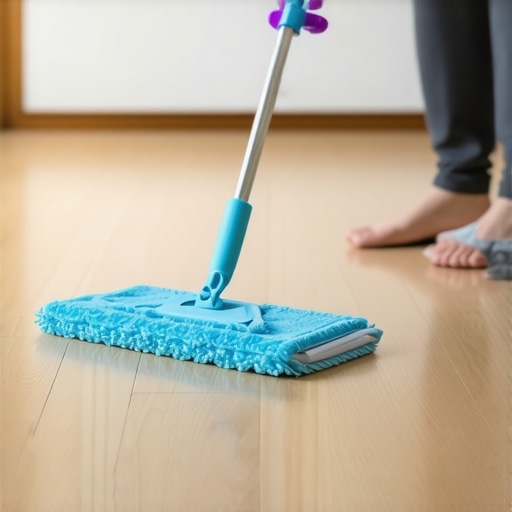
Most of us were raised with the old mop and bucket mentality, but that is the absolute enemy of composite flooring. When you dunk a traditional mop into a bucket, you are essentially inviting a flood onto your floor. I remember a particularly messy Saturday after hosting a housewarming party. Muddy footprints were everywhere from people tracking in debris from the yard, and my panic-mode instinct was to douse the floor in soapy water to get it over with. I almost did it, but I stopped myself just in time. Instead, I used a fine-mist spray bottle and a flat microfiber mop. By misting the mop head rather than the floor, I controlled exactly how much moisture touched the seams. This precision meant I didn’t end up needing to know how to fix water damaged hardwood floors before the wood starts to warp because the water never sat long enough to penetrate the core. It felt slower at first, but the result was a floor that looked brand new rather than a buckled mess.
Wait, is vinegar actually safe for these floors?
A lot of natural cleaning blogs swear by vinegar for everything, but you have to be incredibly careful. While it’s great for windows or scale, the high acidity can actually eat away at the protective melamine resin layer of your laminate over time. Much like why vinegar is not always the best choice for granite countertops, it is often too harsh for the finishes on modern flooring. Instead, look for a pH-neutral cleaner specifically formulated for laminate. If you are in a pinch and need to clean immediately, a single drop of clear dish soap in a gallon of distilled water works wonders without leaving that sticky residue that makes your feet pop when you walk across the room.
The two-cloth technique for a streak-free finish
If you want that showroom shine without the heat damage of a steamer, follow the effective house cleaning secrets from cleaning experts: the two-cloth method. Use one slightly damp microfiber cloth to clean a four-by-four section, then immediately follow it with a dry microfiber cloth to buff it dry. This prevents any remaining moisture from settling into the grooves. Integrating this into your daily house cleaning routine to maintain perfection will keep the edges of your planks flat and the surface reflective for years. It is about speed and evaporation; the faster the floor is dry, the longer it will last.
Why the ‘Clean’ Smell Is Actually a Warning Sign
Most people assume that if a room smells like a swimming pool of bleach, it must be sterile. I used to be in that camp until I realized that a heavy chemical scent is often a mask for poor technique. In my experience, the cleanest homes don’t smell like anything at all. When you over-rely on harsh agents, you aren’t just killing germs; you’re leaving behind a microscopic layer of residue that actually attracts more dirt. This is exactly why your floors feel sticky even after you finished mopping. Instead of achieving a true clean, you’ve created a magnet for dust and pet dander. Transitioning to sanitizing secrets for a safer house in 2025 means moving away from ‘more is better’ and focusing on the science of mechanical removal. Have you ever fallen into this trap of over-cleaning with chemicals? Let me know in the comments!
Don’t Let Your Deposit Disappear Under the Fridge
If you are preparing for a transition, the biggest mistake is focusing only on what is at eye level. I’ve seen countless friends lose their security deposits because they ignored the hidden dust trap in your dishwasher filter or the grease buildup on the very top of the kitchen cabinets. These are the specific spots landlords check to see if you actually cared for the property. A standard move-out clean checklist to simplify your transition should always include a ‘look up and look under’ phase. For example, if you miss the area behind the coils of your refrigerator, you aren’t just leaving dust; you’re leaving a fire hazard and a reason for a deduction. Using move-out cleaning hacks to ensure your deposit refund is about being more thorough than the person who lived there before you. 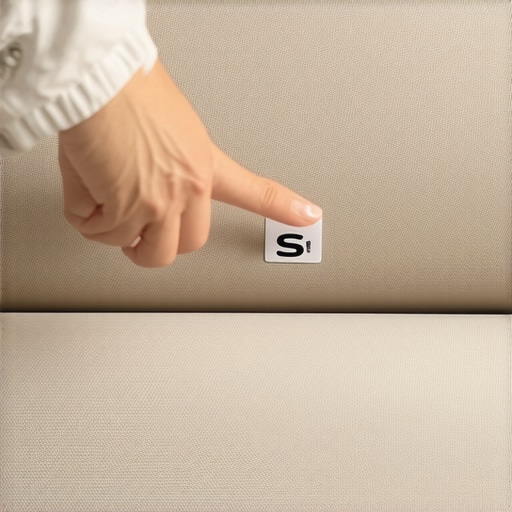
How do you handle those mysterious ‘S’ codes on furniture labels?
Many homeowners treat their sofa like a giant towel, throwing water and soap at every stain. This is a dangerous game. If you look under your cushions, you might see an ‘S’ code, which stands for ‘Solvent only.’ The IICRC (Institute of Inspection Cleaning and Restoration Certification) warns that applying water to these fabrics can cause permanent ‘browning,’ shrinkage, or water rings that are impossible to remove. This is the nuance of ultimate upholstery care guide for lasting freshness. You must know how to treat S-coded upholstery fabric without ruining it before you even think about a spot treatment.
The Over-Wetting Trap in Upholstery and Carpets
The ‘Oops’ factor often happens when we try too hard to remove a deep stain. I once tried to scrub a coffee spill out of a linen ottoman using a soaking wet rag. I thought I was being thorough, but I was actually pushing the liquid deeper into the foam. This leads to ‘wicking,’ where the stain reappears days later as the foam dries. It can also lead to a musty odor that never goes away. Following effective house cleaning secrets from cleaning experts means using the least amount of moisture necessary. Whether you are following a daily house cleaning routine to maintain perfection or doing a deep annual scrub, the goal is always quick evaporation. If the surface stays wet for more than a few hours, you’ve accidentally invited mold to the party.
Invest in a vacuum that actually works for you
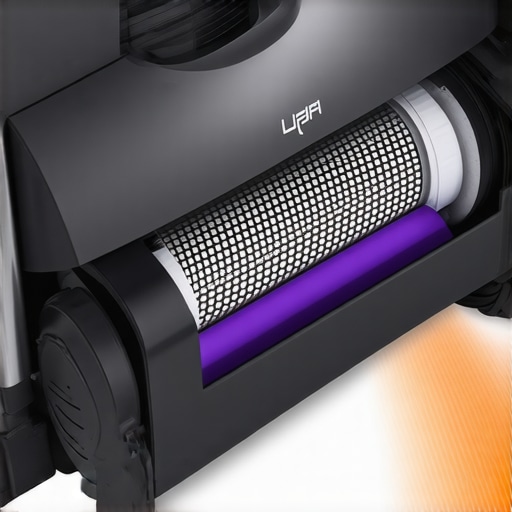
I’ve spent years testing different vacuums, and the biggest lesson I’ve learned is that a cheap motor is expensive in the long run. If you’ve ever noticed why your vacuum smell might mean the motor is dying, you know the frustration of a tool that gives up when you need it most. I personally recommend a vacuum with a sealed HEPA system. This isn’t just marketing fluff; according to the U.S. Department of Energy (DOE) standards, a true HEPA filter must trap 99.97% of all particles that are 0.3 microns in size. Without a sealed system, that dust just blows out the side vents, which is exactly why your vacuum filter might be making your allergies worse. When I switched to a high-grade canister vacuum with a motorized brush head, the amount of pet dander I pulled from my rugs was shocking. It changed how I viewed my daily house cleaning routine to maintain perfection because I was finally removing the dirt instead of just relocating it.
How do I maintain my home’s freshness over the long haul?
Consistency is your best tool, but even the best routine needs a deep-dive maintenance schedule. For example, your appliances are often the source of phantom odors. I make it a point to check the hidden dust trap in your dishwasher filter every single month. If that filter is clogged, your dishes aren’t getting clean; they are being rinsed in old food particles. The same goes for your laundry room. I’ve seen so many people wonder why your washing machine smells like a swamp, only to find a layer of biofilm inside the rubber gasket. Maintenance isn’t just about the surface you see; it’s about the machines that do the work. Looking forward, I predict we will see smart flooring with integrated moisture sensors that alert your phone before a spill becomes a permanent warp, but until then, we have to be the sensors.
Stop using cheap rags and switch to split microfiber
If you are still using old t-shirts to clean your windows or counters, you are working three times harder than you need to. I only use split microfiber cloths now because the fibers are physically shaped like a ‘star’ to grab and hold dirt rather than just pushing it around. This is one of the most effective house cleaning secrets from cleaning experts that actually scales. When you use the right cloth, you can achieve sanitizing secrets for a safer house in 2025 without needing gallons of bleach. For my upholstery, I follow the ultimate upholstery care guide for lasting freshness by using a dedicated soft-brush attachment on my vacuum twice a week. This prevents the abrasive dust from cutting into the fabric fibers every time you sit down. I challenge you to try the two-cloth method on one window today—I promise you’ll never go back to paper towels. If you ever feel overwhelmed by the technical side of fabric care or floor maintenance, don’t hesitate to reach out via our contact-us page for more personalized advice.
What My Biggest Maintenance Blunders Taught Me About Real Cleanliness
After years of trial and error, I realized that the best results come from working with your home’s materials rather than against them. First, I learned that moisture is a precision tool, not a default setting. Whether you are performing a deep scrub or just a quick touch-up, keeping surfaces as dry as possible is the only way to prevent long-term warping. Second, I discovered that mechanical removal—actually lifting the dirt with the right cloth—is far more effective than trying to dissolve it with harsh chemicals. By following sanitizing secrets for a safer house in 2025, I stopped worrying about germs and started focusing on the actual physics of cleaning. Lastly, I realized that the ‘perfect’ home doesn’t happen in a single weekend; it’s the result of small, consistent actions that protect your investment.
The Hardware and Habits I Swear By for Every Room
If you want to move beyond the basics, you need a toolkit that prioritizes surface safety. I’ve replaced my heavy buckets with a high-quality fine-mist spray mop and a stack of color-coded split microfiber cloths. These tools allow me to apply the effective house cleaning secrets from cleaning experts without the risk of over-saturating my laminate or delicate fabrics. For my furniture, I strictly follow the ultimate upholstery care guide for lasting freshness, which includes a monthly vacuuming of the seams to prevent abrasive dust from wearing down the weave. I also highly recommend keeping a pH-neutral cleaner on hand; it’s the safest way to ensure you never accidentally strip the finish off your floors or countertops.
#IMAGE_PLACEHOLDER_E#
Empower Your Home With Better Care Starting Today
Maintenance doesn’t have to be a source of anxiety. Once you understand the specific needs of your flooring and furniture, you can clean with total confidence. Whether you are preparing for a rigorous move-out cleaning strategies to secure your deposit or simply want a healthier environment for your family, the right techniques make all the difference. Start by implementing just one or two house cleaning strategies for a sparkling home today, and you will notice a difference in both the look and the longevity of your space. Remember, your home is likely your biggest investment—treat its surfaces with the respect they deserve. If you ever run into a stain or a surface issue that seems impossible to solve, feel free to reach out through our contact-us page for more expert guidance. What’s one cleaning ‘hack’ you tried that ended up causing more work than it saved? Let’s swap stories in the comments below!