
I was standing in the middle of my living room, triumphant. The carpet had those perfect vacuum lines, the sun was streaming through the windows, and I felt like the absolute king of a clean castle. Then, the sneezing started. Not just a little tickle in the nose, but a full-blown allergy attack that left me reaching for the antihistamines. I had just spent two hours on a daily house cleaning routine to maintain perfection, so why did I feel like I had just rolled around in a field of ragweed? It was a visceral realization: my trusty cleaning machine was actually a dust-spreading betrayer. Today, I am going to show you exactly how to stop your vacuum from being an allergen exhaust pipe so you can finally breathe easy.
Why Your Vacuum Is Sneakily Ruining Your Indoor Air Quality
It took me years of wheezing to realize that my vacuum was essentially acting as a high-powered exhaust pipe for microscopic allergens. I used to think that as long as the canister was empty, I was doing a great job. I was wrong. I made the classic rookie mistake of ignoring the one part of the machine that actually protects your lungs: the filter. If you have ever noticed that peculiar, warm, dusty smell when you hit the power switch, it is because your vacuum cleaner is making the house smell worse by literally spitting fine particles back out at you. According to the Environmental Protection Agency (EPA), indoor air can be two to five times more polluted than outdoor air, often because the tools we use to clean are actually recirculating pollutants. When your filter is compromised, those microscopic dust mites, pet dander, and pollen grains are not getting trapped. They are getting pressurized and blasted into the air you breathe. It is a frustrating cycle, especially when you are trying to master upholstery cleaning tips for a fresh home revival and end up making the atmosphere grit-filled instead.
Is my vacuum actually doing more harm than good?
It is a scary thought, isn’t it? You spend the money on a fancy machine, you put in the manual labor, and yet your allergies are flaring up worse than before you started. The skepticism is real—I used to think people talking about specialized filters were just falling for a marketing gimmick. But the reality is that if your machine isn’t sealed correctly or the filter is caked with old grime, you are just rearranging the dirt. This is particularly true for South Ogden homeowners who should check their ductwork and their vacuums simultaneously to ensure they aren’t just recirculating the same mountain dust year after year. Have you ever felt like you were sneezing more after you finished cleaning than before you began?
The Dirty Truth About That Clogged Filter
The problem usually starts with a “good enough” attitude toward maintenance. I remember one specific move-out clean where I pushed my old vacuum to the absolute limit. I didn’t wash the filter; I just tapped it against the side of the trash can and kept going. Big mistake. Within twenty minutes, the air felt heavy and gritty. I was spreading dust around my home rather than removing it. Have you ever finished a deep clean only to find a thin layer of grey fuzz on your coffee table an hour later? That is your vacuum’s filter crying for help, and it is the first thing we need to address to reclaim your health.
Stop the Blowback Once and For All
To fix your air quality, you have to think like a filtration engineer, not just someone with a chore list. The first step is acknowledging that a full bag or canister isn’t the only metric for a dirty machine. I have seen people diligently maintain a daily house cleaning routine to maintain perfection while their vacuum was essentially acting as a fog machine for dander. If you are not maintaining the internal airflow, you are just recirculating allergens under the guise of tidying up.
Give That Filter a Serious Scrub
If your vacuum has a washable HEPA filter, you need to do more than just knock the loose debris off against a trash can. Every three months, I take mine to the sink and run lukewarm water through it from the inside out. I remember once, after a particularly dusty home renovation project, I ignored this and my vacuum started whistling like a tea kettle. The pressure build-up was so intense that the air was forcing its way out of the side vents instead of through the actual filter. By washing it properly, you ensure that your vacuum filter isn’t spreading dust around your home. Just make sure the filter is 100% bone-dry before you reinstall it—otherwise, you are just inviting mold to the party inside your machine. 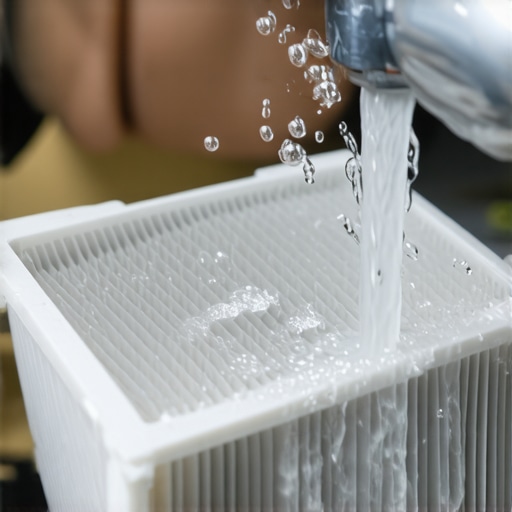
The Gasket Check You Are Probably Missing
Sometimes the filter is pristine, but the machine is still failing you. This usually happens because of a faulty seal or a cracked hose. I once spent an entire Saturday trying to get through a move-out clean checklist to simplify your transition, only to realize my vacuum was leaving a trail of fine silt behind me. Upon closer inspection, I found a tiny rubber gasket near the canister intake had warped. This is precisely why your vacuum is blowing dust back into the air. If the air can find an easier path than the filter, it will take it every single time. Inspect every rubber seal and connection point for cracks or gaps; a bit of electrical tape or a inexpensive replacement ring can be the difference between a clean room and a total sneeze-fest.
Dust Your Walls Before You Even Plug It In
If you want your vacuuming to actually improve your health, you have to control where the dust lands before the motor even starts. Using the best house cleaning strategies for a sparkling home today means working from the ceiling down. I used to make the classic mistake of vacuuming first and then dusting the shelves, which is completely backward. Before you even touch the power button, you should use a microfiber cloth or a dampened mop to wipe down vertical surfaces. This is why you should always dust your walls before a move-out clean. When that dust hits the floor, your vacuum can actually trap it. This is especially vital when following an ultimate upholstery care guide for lasting freshness, as airborne dust will settle right back onto your freshly cleaned sofa if you aren’t careful about the surrounding air quality.I used to believe that if I could smell the bleach, the room was sterile. I was wrong. The most common mistake I see—even among those following a daily house cleaning routine to maintain perfection—is the ‘spray and wipe’ reflex. Most people think a stronger chemical concentration means a faster kill time, but that’s a dangerous myth. In fact, many high-level disinfectants require a specific ‘dwell time’—usually between three to ten minutes—to actually neutralize pathogens. If you’re wiping it off immediately, you’re essentially just giving the germs a bath. This is one of the core sanitizing secrets for a safer house in 2025 that pros know but homeowners ignore. According to the Global Hygiene Council, improper dwell time is the leading reason home ‘disinfection’ fails. If you’re rushing through a move-out clean checklist to simplify your transition, you’re likely just moving bacteria from the kitchen counter to the sink.
Chemical Strength Won’t Save a Lazy Scrub
It is a hard truth to swallow: you cannot sanitize a dirty surface. I have walked into homes where the owner used the most expensive hospital-grade cleaners, yet the surfaces were still coated in a microscopic biofilm—a protective layer for bacteria that shields them from your chemicals. This is why we stopped using bleach on wooden cutting boards; it simply doesn’t penetrate the porous grains effectively and can actually damage the material. Instead, focus on effective sanitizing methods for a germ-free home that start with mechanical cleaning—actually scrubbing the grime away—before you ever reach for the sanitizer. 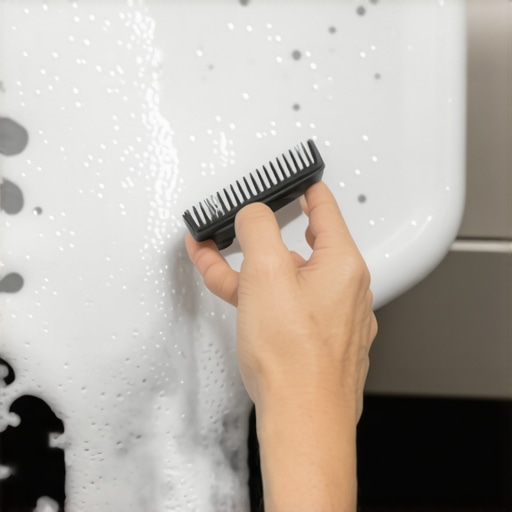
Why are your ‘sanitized’ surfaces still failing the swab test?
Often, it is because we ignore the invisible ‘oops’ factors that negate our hard work. For instance, using the same rag for the kitchen and the bathroom is the fastest way to facilitate cross-contamination, regardless of the chemicals used. Have you ever fallen into the trap of thinking a quick spray was enough? Let me know in the comments.
The Temperature Trap That Permanently Sets Stains
Then there is the upholstery disaster. I’ve seen so many people try to use upholstery cleaning tips for a fresh home revival only to end up with water rings that never come out. The nuance here is the fabric code. If you have an S-coded sofa, water is your enemy. You must know how to treat s-coded upholstery fabric without ruining it by using solvent-based cleaners. And for the love of your carpets, stop using hot water on everything. It’s a common belief that heat equals clean, but why you should never use hot water on a fresh blood stain is simple: heat cooks the proteins into the fibers, making the stain permanent. Whether you’re using sanitizing hacks for safe house transitions or just doing a weekly deep clean, these nuances are what separate a clean-looking house from a truly healthy one. Adopting effective house cleaning secrets from cleaning experts means respecting the chemistry of your home, not just the scent. It is about understanding that cleaning is a mechanical process first and a chemical process second.Transitioning from just doing the chores to managing a healthy environment requires more than just effort; it requires a specific kit of tools that actually work. I ditched the cheap, multicolored supermarket rags years ago. Why? Because they don’t actually trap anything. I now exclusively use 300 GSM (grams per square meter) split-fiber microfiber. These are not your average cloths; they are engineered with a star-shaped cross-section that physically grabs bacteria and locks it away. When I am following my daily house cleaning routine to maintain perfection, these cloths are the only reason I am not just pushing dust from one side of the dresser to the other. If you are still using old t-shirts to clean, you are leaving behind 50% of the biofilm you think you are removing.
The Gear That Actually Makes a Difference
The heart of my setup is a ‘sealed system’ vacuum. Most people think HEPA is enough, but if the machine’s body leaks air through the cracks in the plastic, that filter is useless. I personally use a vacuum that is certified by the Carpet and Rug Institute (CRI). It is the difference between a surface-level spruce-up and the effective house cleaning secrets from cleaning experts that actually preserve your health. For those tackling a move-out clean checklist to simplify your transition, having a machine that actually extracts deep-set grit from the baseboards is the only way to avoid those ‘hidden’ charges from a landlord. 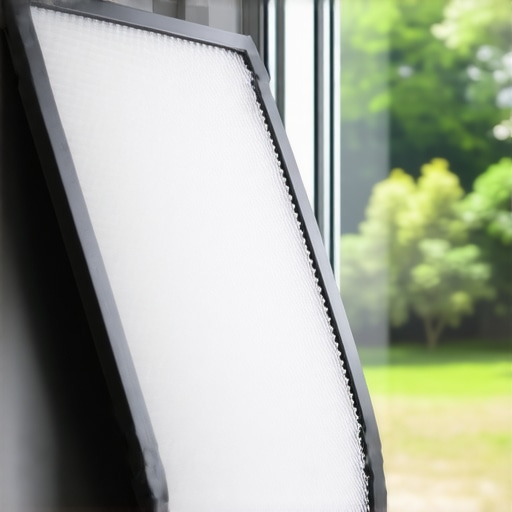
How do I maintain my cleaning tools over the long haul?
Maintenance is where most people fail, and it is the primary reason for gear burnout. I have a strict rule: the first Sunday of every month is ‘Tool Day.’ I strip the brush roll of my vacuum, checking for tangled hair that strains the belt. According to technical standards from the Association of Home Appliance Manufacturers (AHAM), even a 10% reduction in airflow due to a dirty filter can increase motor temperature by 25 degrees, drastically shortening the machine’s lifespan. If you have ever wondered why your vacuum smell might mean the motor is dying, it is almost always a result of this neglected airflow. I also boil my microfiber cloths for ten minutes once a month to release the deeply embedded oils and waxes that standard washing machines miss, ensuring my house cleaning strategies for a sparkling home today remain effective tomorrow.
Smart Sensors and the Future of Sanitization
I predict that within the next five years, we will see a massive shift toward ‘feedback-loop’ cleaning. We are already seeing vacuums with laser dust detection, but the next step is real-time microbial sensors. Imagine a spray bottle that changes color when a surface is truly sanitized, or an ultimate upholstery care guide for lasting freshness that uses AI to tell you exactly which solvent is needed for a specific stain. We are moving away from ‘guesswork’ and toward precision. For now, the best of the sanitizing secrets for a safer house in 2025 is simply consistency and the right dwell time. I challenge you to try this tonight: take your vacuum filter out and hold it up to a bright window. If you can’t see the light through the pleats, it is not cleaning your house—it’s suffocating it. Don’t just clean; maintain the tools that do the work for you.
Hard Lessons from My War on Indoor Dust
I used to think a clean house meant a tired back, but the real secret is working smarter. One of the biggest effective house cleaning secrets from cleaning experts is that the order of operations matters more than the elbow grease. For instance, I learned the hard way that missing the 7 spots behind the toilet your landlord always checks first can negate an entire day of scrubbing. My most important lightbulb moment? Realizing that moisture is the enemy of a deep clean. If you use water before you have removed the dry dust, you are just creating mud. This applies to everything from floors to baseboards, where I now swear by the toothbrush trick for removing pet dander from baseboard crevices.
The Non-Negotiable Kit for a Professional Finish
If you are building a kit to handle a high-stakes move-out cleaning hack to ensure your deposit refund, focus on three things. First, high-quality microfiber cloths (300 GSM or higher) which trap particles instead of spreading them. Second, a vacuum with a truly sealed HEPA system to protect your air quality. #IMAGE_PLACEHOLDER_E# Third, a reliable set of nylon detail brushes for those impossible corners. I trust these tools because they address the microscopic layer—the dust and bacteria you cannot see but definitely feel. Using the right gear is what transforms a chore into a health-saving routine.
Your Path to a Truly Fresh Living Space
You do not have to overhaul your entire life in one afternoon. Start small. Fix your vacuum filter, let your sanitizer sit for the full dwell time, and see how much better your lungs feel tomorrow. You deserve a home that actually supports your health and provides a sanctuary from the world. Once you master these small shifts, you will never go back to the old, dusty ways of cleaning. Have you ever noticed your allergies acting up right after you finish cleaning? Let me know in the comments below.