
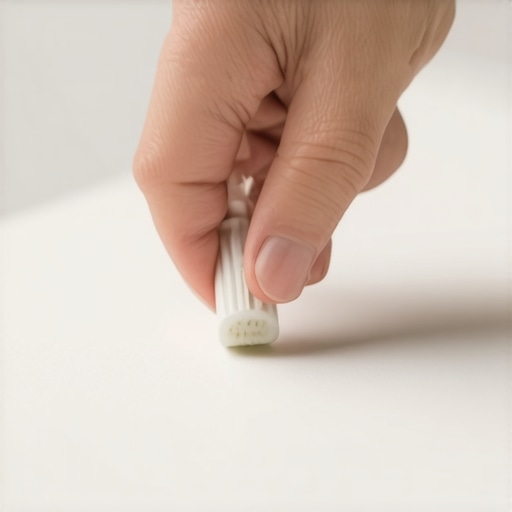
I was staring at my baseboards, exhausted and ready to quit. I had spent the entire afternoon working through a move-out clean checklist to simplify your transition, and I honestly thought I was finished. Then the sun shifted. A bright beam of afternoon light hit the trim in the hallway, revealing the truth. My golden retriever’s ‘glitter’—also known as dander—was wedged deep into that tiny, impossible gap where the wood meets the floor. It looked like a fuzzy gray gasket. My expensive vacuum nozzle couldn’t reach it, and my microfiber cloth just glided right over the top. I felt like I was failing at basic adulthood until I grabbed a discarded toothbrush from the bathroom cabinet. That was my lightbulb moment. Today, I’m going to show you how this tiny tool can do what a thousand-dollar vacuum cannot. We are finally going to win the war against those hidden allergens.
Why Your Professional Vacuum and Wet Rags Are Failing You
I made a massive mistake early on that I don’t want you to repeat. I thought that if a little water was good, a lot of water was better. I used a soaking wet sponge to try and ‘wash’ the dander out of the crevices. It was a disaster. The dander turned into a gray, muddy paste that stained the white paint and became even harder to remove once it dried. It’s one of those effective house cleaning secrets from cleaning experts that you usually learn the hard way: moisture is often the enemy of dust. According to the American Lung Association, pet dander is a microscopic protein that is remarkably ‘sticky,’ meaning it clings to surfaces and settles into the smallest gaps in your home. This stickiness is why you feel like you’re just moving the mess around. If your home still feels ‘stuffy’ even after a deep clean, it might be because your vacuum cleaner is actually making your house dustier by blowing those fine particles back into the air instead of pulling them out of the cracks. Have you ever spent hours cleaning only to find a layer of dust back on your surfaces twenty minutes later? It’s the most frustrating feeling in the world.
Is This Tiny Tool Really Worth the Hype?
You might be skeptical that a used toothbrush is the answer to your pet hair woes. It seems too simple, right? But the magic is in the bristles. They are designed to reach into the grooves of human teeth, which makes them the perfect size for the narrow tracks of your baseboards. Unlike a flat cloth, those bristles act like hundreds of tiny fingers flicking the dander out of its hiding spot and into the open where you can actually deal with it. We’re going to pair this technique with some effective sanitizing methods for a germ-free home to make sure your air quality actually improves along with your aesthetics. In the next section, I’ll walk you through the dry-scrub method that keeps the mess contained and your paint intact.
Master the Dry-Brush Flick for Better Air Quality
The secret to this method isn’t just the tool; it’s the sequence. Think of your baseboard gap like a tiny gutter. If you pour water into a gutter filled with leaves, you get a clog. If you sweep it out first, it’s clear. I remember a humid Saturday in July when I tried to clean the upholstery seams on my velvet armchair using a damp cloth first. The dog hair turned into a series of dark, matted felt strips that I had to pick out with tweezers. It was a nightmare. Now, I always start with a bone-dry toothbrush.
Start with a Bone-Dry Bristle
Hold the toothbrush at a 45-degree angle to the baseboard or window track. Use short, stiff flicking motions rather than long strokes. You want to launch the dander out of the crevice and onto the floor. If you’re dealing with window tracks, this is the only way to ensure the corners are truly empty before you apply any cleaning solution. This is one of those move-out cleaning hacks to ensure your deposit refund because landlords always check those tight corners for accumulated grime.
#IMAGE_PLACE_HOLDER_B#
Catch the Dander Before it Resettles
While you flick with one hand, hold your vacuum hose about two inches away from the brush with the other. This prevents the microscopic particles from floating back into your lungs or onto your freshly cleaned surfaces. Remember, your vacuum cleaner is actually making your house dustier if you aren’t careful with how you direct the exhaust. By capturing the dander the second it’s agitated, you’re creating a much healthier environment.
Sanitize the Gap Without Creating a Mess
Once the bulk of the dry debris is gone, you can introduce moisture to kill any remaining bacteria. This is where you apply effective sanitizing methods for a germ-free home. Dip the tip of the toothbrush into a 1:1 mixture of water and white vinegar. Shake off the excess—the bristles should be damp, not dripping. Scrub the same area again. The vinegar acts as a mild degreaser for the oils found in pet dander, which are surprisingly stubborn.
Why Toothbrushes Outperform Industrial Tools
I’ve seen people try to use specialized crevice tools that come with high-end vacuums, but they are often too thick for the hairline fractures where floors meet trim. A toothbrush is flexible and low-profile. It allows you to feel the resistance of the dirt, giving you tactile feedback that a plastic vacuum nozzle simply can’t provide. If you’re tackling ultimate upholstery care, use a soft-bristled brush to avoid pilling the fabric while still reaching deep into the tucks and folds where crumbs and dander hide.
The mistake I see most often, even among the most meticulous cleaners, is the ‘spray-and-wipe’ habit. We’ve been conditioned by commercials to believe that as soon as the mist hits the counter, the germs vanish. But here is the nuance most people miss: dwell time. If you spray a surface and wipe it within five seconds, you haven’t sanitized anything; you’ve just moved the dust around in a damp medium. According to the Centers for Disease Control and Prevention (CDC), most household disinfectants need to remain visibly wet on a surface for anywhere from 3 to 10 minutes to actually kill pathogens. If you’re rushing through sanitizing hacks for safe house transitions, you might be leaving behind exactly what you’re trying to kill.
Is Your Disinfectant Actually Working or Just Smelling Good?
Many people mistake the scent of pine or lemon for a job well done, but ‘smelling clean’ is not a metric for safety. In fact, a common ‘oops’ factor is using too much product. I once thought that a heavy layer of cleaner would ensure total victory, but I ended up creating a sticky surfactant film. This residue acts like a magnet for new dander and dust, meaning the surface becomes dirty again twice as fast. This is particularly dangerous for furniture. You have to know how to treat s-coded upholstery fabric without ruining it, because many professional-grade disinfectants are water-based and will leave permanent tide marks if applied too heavily. 
Stop Spraying Your Surfaces Directly
I’ve found that the best way to maintain a daily house cleaning routine to maintain perfection is to spray your cloth, not the object. When you spray a baseboard or a chair directly, the liquid pools in the very cracks we’re trying to clear, creating a sludge that your toothbrush can’t flick away. By dampening the tool instead, you control the moisture. Have you ever fallen into this trap where you keep cleaning but the smell keeps coming back? Let me know in the comments. Often, that persistent odor happens because your sofa smells like wet dog every time it gets humid due to soap residue trapped in the fibers. Breaking this cycle requires a shift in perspective: cleaning is about removing the unwanted, not just adding layers of ‘fresh-scented’ chemicals. These effective house cleaning secrets from cleaning experts are what separate a surface-level tidy from a truly healthy home.I’ve learned that the right tool isn’t always the most expensive one, but it does need to be the most specialized. If you are serious about maintaining that pristine feeling, you have to look at your vacuum’s filtration system. Most people assume that if the machine is sucking up hair, it’s doing its job. But the reality is often the opposite. I realized this when I noticed a faint smell of ‘old dust’ every time I turned my machine on. It turns out why your vacuum filter is actually spreading dust around your home is usually due to a lack of a true HEPA seal. I now only use vacuums with H13 HEPA filters, which are medical-grade and trap 99.97% of particles as small as 0.3 microns. Without this, you are just performing a high-speed redistribution of allergens.
How do I keep my home allergy-free every single week?
To keep the momentum going after a deep clean, I rely on a high-density microfiber system. Not all microfiber is created equal. I personally use cloths with a GSM (grams per square meter) of at least 300. These are thick enough to trap particles within the loop of the fiber rather than just pushing them into the air. This is a core part of the house cleaning strategies for a sparkling home today that I recommend to everyone. If you combine this with a daily house cleaning routine to maintain perfection, you won’t find yourself facing a mountain of dander next month. According to the IICRC (Institute of Inspection Cleaning and Restoration Certification) S100 standards, consistent dry-soil removal is the single most important factor in extending the life of your home’s textiles and surfaces. 
Scale Your Success with Better Equipment
When you are executing move-out cleaning strategies to secure your deposit, time is your scarcest resource. This is why I’ve moved away from standard cotton mops and toward telescopic flat-mop systems. They allow you to reach the tops of door frames and the deep recesses of kitchen cabinetry without a ladder. For my furniture, I’ve found that the ultimate upholstery care guide for lasting freshness involves using a dedicated horsehair brush for agitation before any liquid touches the fabric. Looking ahead, I predict we are going to see a massive shift toward AI-integrated air quality monitors that sync directly with your cleaning appliances, telling you exactly which corner of the room has the highest concentration of volatile organic compounds or dander. We are moving from ‘cleaning by sight’ to ‘cleaning by data.’ My challenge to you this week: check your vacuum filter. If it isn’t a HEPA H13, or if you haven’t washed it in three months, stop what you are doing and address it. You will see a physical difference in how much dust settles on your furniture by tomorrow.
Hard Lessons from My Long War with Pet Dander
After years of sneezing through my own living room, I realized that house cleaning is as much about physics as it is about soap. One of the biggest shifts in my mindset occurred when I stopped trying to ‘wash’ dust and started ‘extracting’ it. If you apply liquid to a heavy layer of dander, you are effectively making mud that cements itself into the wood grain. I also learned that speed is the enemy of air quality; moving quickly just kicks particles into the air. True sanitizing secrets for a safer house in 2025 focus on containment and capturing the microscopic before they settle elsewhere. Finally, I discovered that the most expensive equipment in the world won’t save you if you aren’t willing to get on the floor and look at your trim from a different angle.
The Gear That Actually Earns Its Spot in My Cleaning Cupboard
I am very picky about what I keep in my utility closet because clutter makes cleaning harder. To get the results I’ve described, I rely on a few non-negotiables. First, an H13 HEPA-sealed vacuum is your best friend—it ensures that once the dander enters the machine, it stays there. Second, I always keep a stash of used toothbrushes; they are the ultimate tool for window track cleaning and baseboard maintenance. Third, I only use high-density microfiber with a GSM of 300 or higher to ensure I’m actually lifting the dust. If you’re looking for a complete roadmap to overhaul your space, these house cleaning strategies for a sparkling home today will provide the structural framework you need to keep up with a shedding pet.
Take Back Your Air and Finally Breathe Easy
The transition from a ‘visibly tidy’ home to a ‘microscopically clean’ one is a journey, but the reward is waking up without a stuffy nose. You don’t have to tackle the entire house in one afternoon. Start with one room, one toothbrush, and a commitment to the dry-flick method. As you refine your house cleaning habits, you’ll notice that the dust takes longer to return and the air feels lighter. You are not just cleaning for aesthetics; you are cleaning for your health and the longevity of your home. Which ‘impossible’ crack or crevice in your house has been driving you crazy with pet hair lately? Let me know in the comments below!