
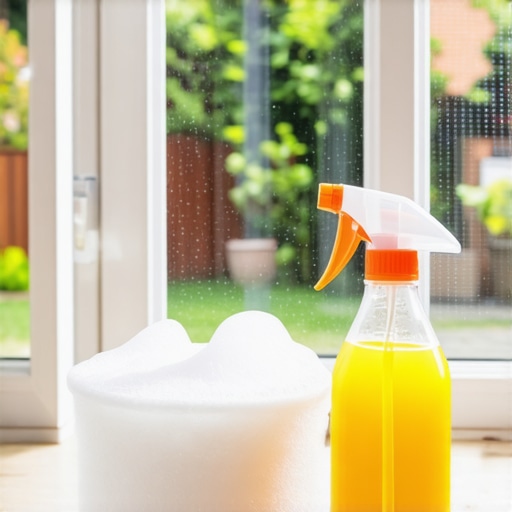
I’ll never forget the afternoon I tried to show my neighbor a rare blue jay in the yard, only to realize we couldn’t actually see the bird through the hazy, grey velvet of dust coating my window screens. It was embarrassing. I had spent so much time on house cleaning strategies for a sparkling home, yet I’d completely neglected the filters that let the fresh air in. My first instinct was to blast them with a high-pressure garden hose. Huge mistake. I ended up warping the mesh so badly it looked like a saggy hammock, and I spent the rest of the day scrubbing muddy splatters off the siding. We’ve all been there—ignoring a chore because it feels like a weekend-ruiner. Today, I’m showing you how to skip the frustration and the hardware store chemicals. We are going to reclaim your view using two simple items already sitting under your kitchen sink.
Stop Squinting Through Your Grimy Window Screens
Most of us treat screen maintenance like a dentist appointment; we know it’s necessary, but we delay it until the situation is dire. The reality is that your screens are the first line of defense for your indoor air quality. They trap pollen, soot, and spider webs before they ever hit your glass. According to the National Institutes of Health, indoor environments can harbor surprisingly high concentrations of allergens, and those clogged screens are just acting as a reservoir for dust. I used to think I needed a professional crew to get them truly clear, but after learning some house cleaning secrets from cleaning experts, I realized the power is in the chemistry, not the muscle. You don’t need to spend a fortune to get that ‘invisible’ look back. Usually, the biggest hurdle is just knowing how to tackle the grime without making a massive mess on your sills.
Is a DIY solution really better than the expensive stuff?
I hear the skepticism already. We’ve been conditioned to believe that if a cleaner doesn’t come in a neon spray bottle with a ‘Max Strength’ label, it won’t handle the outdoor elements. But here is the secret: vinegar’s acetic acid is a master at breaking down mineral deposits from hard water and rain, while dish soap is specifically engineered to lift the greasy atmospheric film that water alone won’t budge. Have you ever noticed that even after a rainstorm, your screens still look cloudy? That’s because water alone can’t dissolve the sticky oils. I once spent twenty dollars on a ‘specialized’ screen foam that did half the job this vinegar mix does for pennies. If you’ve been struggling with window tracks that are full of gunk or mesh that looks permanently grey, you’re in the right place. Have you looked closely at your screens in the direct sunlight lately and felt that pang of cleaning guilt? If so, let’s get to work.
Raid your pantry for the ultimate cleaning duo
You don’t need a chemical lab to get professional results. A simple bucket, white vinegar, blue dish soap, and a soft-bristled nylon brush—think of an old soft toothbrush or a dedicated detailing brush—will do the trick. If you are aiming for a daily house cleaning routine to maintain perfection, you might think deep-cleaning screens is overkill, but for seasonal maintenance, it’s the gold standard. The acetic acid in the vinegar acts as a mild solvent, while the soap serves as a surfactant to carry the gunk away.
Master the mix that melts the soot away
Fill your bucket with one part white vinegar and two parts warm water, then add about a tablespoon of dish soap. This isn’t just about making bubbles; it’s about breaking surface tension. The vinegar handles the crusty hard water spots that rain leaves behind, while the soap encapsulates the oily smog particles that stick to the mesh. It is a logic similar to how effective sanitizing methods for a germ-free home rely on the right pH balance to actually lift contaminants rather than just spreading them around. 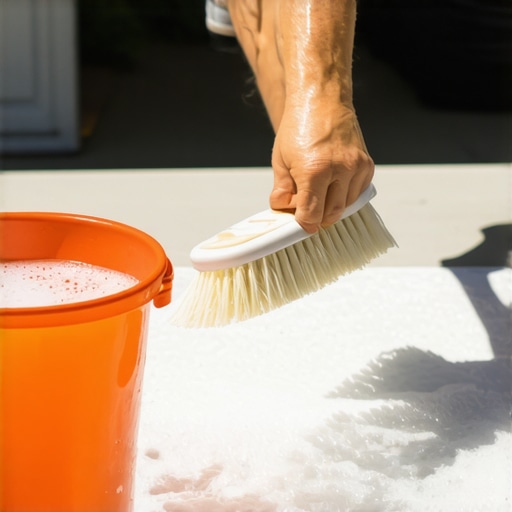
Why you should always pull the screens out first
I’ll admit, I once tried to ‘speed-clean’ by spraying the screens while they were still locked in the window frames. It was a disaster. Within minutes, a sludge of grey pollen and city soot was weeping down my white siding, leaving permanent-looking streaks. It took me three times longer to scrub the exterior walls than it would have to just pop the screens out. Now, I always lay them flat on a drop cloth or lean them against a fence. This is a vital step in any move-out clean checklist to simplify your transition, ensuring you don’t leave the next tenant with muddy window sills and stained tracks.
The circular scrub that saves your mesh
Instead of scrubbing back and forth—which can stretch the mesh into a saggy shape—use light, circular motions. Think of it like upholstery cleaning tips for a fresh home revival; you want to agitate the dirt out of the weave without distorting the material. If you find the grime is stuck in the very corners of the frame, use the window track hack that uses a sponge and a utility knife to customize a tool that reaches those tight edges where the screen meets the metal. This ensures no hidden dust remains to blow back into your home the next time there is a breeze.
Rinse and dry without the water spots
Once you’ve scrubbed both sides, rinse with a low-pressure hose or a watering can. Avoid the ‘jet’ setting at all costs, as the pressure can pop the spline right out of the frame. After rinsing, don’t just lean them up and walk away. Use a microfiber cloth to gently pat the mesh down. This prevents those annoying minerals in your tap water from drying into white, cloudy spots. For the glass itself, I always recommend the two-cloth method for streak-free windows in half the time to ensure that once the screens go back in, the view is actually crystal clear.
Stop Relying on Magic Bullets for Every Surface
Most DIYers assume that because vinegar is ‘natural,’ it is a universal solvent. I used to be one of them until I etched a client’s marble windowsill while trying to get a screen ‘extra’ clean. The nuance that beginners miss is that cleaning is about chemistry, not just effort. While we’ve covered the house cleaning strategies for a sparkling home, the real pro-level skill is knowing when to stop. For example, if you are tackling a move-out clean checklist to simplify your transition, the temptation is to drench everything in disinfectant. But did you know that many sanitizers require a specific ‘dwell time’—usually five to ten minutes—to actually work? Simply spraying and wiping is just ‘cleaning,’ not sanitizing. According to the American Journal of Infection Control, improper contact time is one of the most common reasons household sanitization fails, leaving behind the very pathogens you intended to eliminate.
Is it possible to sanitize your screens without destroying the mesh?
This is the question I get most often from allergy sufferers. You want the pollen dead, but you do not want to melt the nylon or fiberglass. The trick is to avoid bleach at all costs. Bleach can cause the mesh to become brittle over time, leading to those annoying little tears that let the flies in. Instead, use a light mist of 70% isopropyl alcohol after your soapy wash. It evaporates quickly enough that it won’t warp the frame but provides that extra layer of sanitizing secrets for a safer house in 2025. I’ve seen homeowners try to steam-clean their screens to ‘kill germs,’ but that high heat can actually shrink the mesh, pulling it right out of the spline and ruining the frame entirely.
The Moisture Trap That Ruins Your Rental Deposit
If you are using these tips to secure a refund, listen closely. The biggest trap in move-out cleaning hacks to ensure your deposit refund is the ‘wicking’ effect. When you over-wet a screen or a piece of nearby upholstery, the water travels deep into the fibers or the window track and then pulls hidden dirt from the bottom to the surface as it dries. This results in those weird brown rings on your couch or streaks on your sills. I always suggest looking into upholstery cleaning tips for a fresh home revival to understand how to control moisture levels. If you leave a screen dripping wet, gravity will pull that dirty water into the wooden frame, leading to rot or mold that a landlord will definitely charge you for. Have you ever fallen into this trap of over-cleaning and making a bigger mess? Let me know in the comments below. If you’re feeling overwhelmed by the grime, you can always contact us for a professional deep clean that takes the guesswork out of the chemistry.If you’re cleaning more than three windows, your trigger finger is going to give out long before the grime does. That was my epiphany three years ago. I switched to a one-gallon pressurized pump sprayer, and it changed my life. You can find these at any hardware store for under fifteen bucks. The beauty of this tool is the consistent pressure; it allows you to lay down an even coat of your vinegar and soap solution without the ‘splotchy’ application you get from a standard bottle. This is one of those house cleaning secrets from cleaning experts that professionals use to scale their speed. When I’m tackling a whole-house exterior, the pump sprayer ensures the mesh stays wet long enough for the chemistry to work, which is the key to a ‘scrub-free’ finish.
How do I maintain my screen clarity over the long haul?
The secret isn’t more scrubbing; it’s preventing the ‘static’ buildup that attracts dust in the first place. Once your screens are clean and dry, a quick pass with a high-quality HEPA vacuum using the soft brush attachment once a month keeps the pollen from settling. If you neglect this, your vacuum might actually be a liability. I’ve seen cases where your vacuum filter might be making your allergies worse because it’s kicking up fine particulate from the mesh rather than sucking it in. To truly scale your results, incorporate screen dusting into your daily house cleaning routine to maintain perfection. It takes thirty seconds per window but saves you hours of deep scrubbing in the spring. I also recommend checking your ultimate upholstery care guide for lasting freshness to ensure that any fabric near your windows isn’t acting as a secondary dust trap.
The Shift Toward Probiotic and Bio-Enzymatic Solutions
As we look toward the future, the industry is moving away from the ‘kill-everything’ approach of harsh sanitizers. I’m already seeing a massive shift toward bio-enzymatic cleaners that use beneficial bacteria to break down organic matter long after you’ve finished wiping. These sanitizing hacks for safe house transitions are becoming the gold standard because they are safer for pets and children. According to the IICRC S520 Standard for Professional Mold Remediation, controlling moisture and using appropriate surfactants is more effective for long-term health than simply nuking a surface with bleach. This ‘probiotic’ approach to cleaning is where the smart money is for 2026 and beyond. Go grab a cheap pump sprayer today and try it on your most stubborn screen—you’ll be shocked at how much easier the job becomes when you have constant pressure on your side.
Why Your Mesh Is Still Dusty Even After Scrubbing
I learned the hard way that the ‘invisible’ screen look isn’t about how hard you scrub, but about how effectively you rinse. One of the biggest lightbulb moments for me was realizing that if I didn’t dry the mesh with a microfiber cloth, the water evaporation left behind a mineral film that actually caught new dust faster. It is a similar logic to how house cleaning secrets from cleaning experts often emphasize removal over just spreading dirt around. Also, if you are prepping a rental, remember that the window track cleaning hack you actually need for a move out is just as important as the screen itself. If the tracks are full of sludge, your screens will be dirty again within a week. Finally, never clean screens on a windy day; the breeze will just deposit pollen right back into the wet mesh before you can finish drying it.
Items in My Utility Closet That Actually Work
You don’t need a professional trailer full of gear. My personal kit is simple: a one-gallon pump sprayer for that constant, gentle pressure that saves your hand from fatigue. For the glass itself, I rely on the two-cloth method for streak-free windows in half the time to ensure my view is perfect. I also suggest a HEPA-filtered vacuum because your vacuum filter might be making your allergies worse if it is just redistributing the fine dust you have sucked off the screens. Lastly, keep a bottle of blue dish soap handy—it is the only thing that truly cuts the greasy smog film in urban areas.
Stop Living Behind a Wall of Dust
Cleaning your window screens should not feel like an impossible task. By integrating these simple house cleaning strategies for a sparkling home into your seasonal routine, you are not just improving your home’s curb appeal; you are literally cleaning the air you breathe. It is about more than just a chore—it is about clarity and health. If you feel like your home needs a complete reset, do not hesitate to contact us for a professional deep clean that covers every hidden corner. Have you ever accidentally warped a screen while trying to spray it clean with a garden hose? Let me know your biggest cleaning disaster in the comments!