
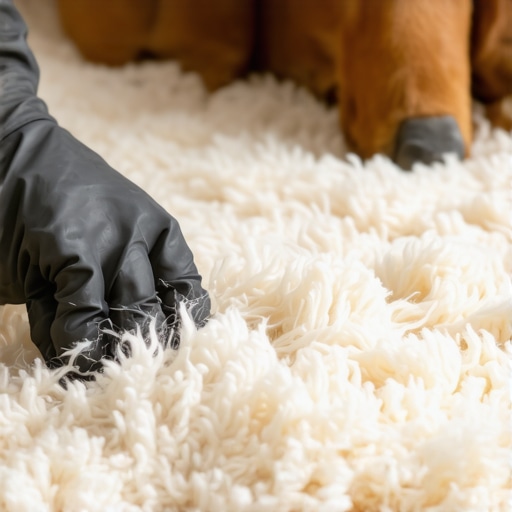
I remember kneeling on my living room floor, sweat beads forming on my forehead, as I stared at my beautiful, ivory shag rug. It looked more like a giant, discarded poodle. I had just spent forty-five minutes with my vacuum on its highest setting, and yet, the hair was still there—woven into the fibers like it had been professionally embroidered. It’s incredibly demoralizing when your home feels dirty no matter how hard you scrub. If you have ever struggled to get your security deposit back when you have pets, you know that sinking feeling in your stomach. You realize that your standard tools aren’t just underperforming; they are completely the wrong weapons for the war. I spent months failing, but I finally stumbled onto a method that works better than any ‘pet-pro’ machine I’ve ever owned. [image_placeholder_1]
The Real Reason Your Carpet Still Looks Fuzzy After Vacuuming
I used to be a total sucker for high-tech gadgets. I thought that if I just spent enough money on a vacuum with a laser light or a specific ‘tangle-free’ brush roll, my deep-pile rugs would finally be hair-free. I was wrong. In fact, I made the classic mistake of being too aggressive. Once, I actually tried to use a steam cleaner on a delicate synthetic blend rug, thinking the heat would loosen the fur. Instead, I learned the hard way why you should never use a steam cleaner on these specific upholstery fabrics as it almost ruined the texture forever. The problem is that deep-pile fibers act like thousands of tiny fingers, gripping pet hair at the root. Suction alone can’t break that physical bond. You need something that creates friction without destroying the rug. Whether you are doing a routine Sunday chore or following a move-out clean checklist, the goal is to lift the hair out, not push it deeper.
Is This Simple Tool Actually Better Than a High-End Vacuum?
It sounds like a joke, but the secret weapon I use now costs less than a latte. I’m talking about a simple rubber window squeegee. I was skeptical at first—how could a piece of rubber do what a $500 machine couldn’t? But the results were undeniable. According to the Carpet and Rug Institute, the physical agitation of fibers is often more effective for debris removal than air-flow alone in high-density carpets. The rubber creates a specific type of friction that grabs the hair and rolls it into manageable clumps. It’s a game-changer for effective house cleaning because it requires zero electricity and very little setup. I want to know—have you ever spent an entire afternoon cleaning only to realize the pet hair had simply ‘moved’ rather than disappeared? Today, I’m going to walk you through the exact technique I use to keep my deep-pile rugs looking brand new, even with two shedding dogs in the house.
The First Pass Matters More Than You Think
Before you even touch that squeegee, you need to clear the ‘surface debris.’ If you skip the vacuuming phase, you’ll just be pushing crumbs and dust into the deep fibers, which is often why your carpet is still dirty after you shampooed it. Use your vacuum’s highest setting to avoid tangling the long fibers, but don’t expect it to pull the hair out. Think of this as clearing the battlefield before the real fight begins. I once made the mistake of squeegeeing a rug that hadn’t been vacuumed in a week; I ended up with a muddy, hairy mess because the fine dust mixed with the friction-induced heat.
Drag Your Way to a Hair-Free Floor
Now, grab your rubber squeegee. You aren’t going to use long, sweeping strokes like you’re cleaning a window. Instead, use short, firm tugs—about six inches at a time. Press the rubber blade deep into the pile and pull toward your body. You will feel a distinct ‘grab.’ That is the friction working. As you pull, the pet hair will begin to roll into what cleaning pros call ‘gray caterpillars.’ These are tight cylinders of fur that the vacuum could never reach. This level of mechanical agitation is a core component of house cleaning strategies for a sparkling home today because it physically breaks the static bond between the fur and the synthetic fibers.
How to Handle the Most Stubborn Sections
In areas where your dog loves to nap, the hair is usually matted. For these spots, I use a ‘cross-hatch’ pattern. Pull the squeegee vertically, then go over the same spot horizontally. It’s exactly like exfoliating skin; you have to approach the ‘clog’ from different angles to loosen it. I remember doing this on my stairs—a high-traffic zone—and I filled an entire grocery bag with fur that my $400 upright vacuum had missed for months. It was gross, but incredibly satisfying. This method ensures you aren’t just moving hair around but actually lifting it. For those preparing for a move, this is a vital part of move-out cleaning strategies to secure your deposit.
Apply This Technique to Your Furniture
The beauty of the squeegee method is its versatility. If you have a fabric sofa that looks permanently ‘fuzzy,’ the same rules apply. However, for delicate weaves, you should check the ultimate upholstery care guide for lasting freshness to ensure you aren’t being too rough on the fabric. On a couch, the hair tends to migrate into the seams. Use the corner of the squeegee to dig into those crevices. Once the hair is removed, it is the perfect time to implement effective sanitizing methods for a germ-free home, as the sanitizing spray can finally reach the actual fabric instead of just coating a layer of pet dander. It’s about creating a clean foundation before you worry about the scent or the shine.
Most people think that once the hair is gone and the surface looks clear, the job is done. But here is the nuance that separates a ‘tidy’ house from a truly clean one. We often fall into the trap of thinking ‘natural’ always means ‘better.’ Everyone tells you to use vinegar for every surface, but in my experience, vinegar is often the enemy of a long-lasting finish. If you have stone surfaces, you already know why vinegar is not always the best choice for granite countertops because the acidity can etch the stone permanently. The same applies to carpets; high-acid cleaners can strip away factory-applied stain resistors, making your rug a magnet for future dirt.
The Dwell Time Mistake That Sabotages Your Sanity
Here is the ‘oops’ factor that most homeowners miss: the spray-and-wipe habit. If you are trying to kill bacteria after removing pet dander, you can’t just mist and buff. According to the Environmental Protection Agency (EPA), disinfectants require a specific ‘dwell time’—often between three to ten minutes of remaining visibly wet—to actually neutralize pathogens. If you wipe it off immediately, you’ve just performed a expensive dust-move, not a sanitization. This is a crucial distinction when following sanitizing secrets for a safer house in 2025. I once lost a portion of my security deposit because I ‘cleaned’ the bathroom but didn’t actually disinfect the grout, leaving behind microscopic mildew that the inspector caught with a blacklight.
Does Natural Cleaning Actually Kill Germs on High-Touch Surfaces?
The short answer is: not always. While lemon and salt are great for abrasive scrubbing, they aren’t a substitute for EPA-registered sanitizers in high-risk areas. When you are deep into move-out cleaning hacks to ensure your deposit refund, you need to be strategic. For example, why you should never spray cleaning products directly on surfaces—especially electronics or delicate wood—is a lesson in avoiding moisture damage. Instead, spray your cloth. This prevents the liquid from seeping into cracks where it can cause mold or electrical shorts. Have you ever fallen into the trap of using too much product and ending up with a sticky residue? Let me know in the comments. This residue is actually a dirt magnet, which is often why your floors feel tacky. To fix this, always follow up with a ‘clear water’ rinse pass. It’s one of the most overlooked effective house cleaning secrets from cleaning experts that ensures your home stays clean for weeks, rather than just days. Using effective sanitizing methods for a germ-free home means understanding the chemistry of your cleaners, not just the scent they leave behind.
Once you have conquered the immediate chaos of pet hair and surface grime, the conversation shifts from ‘how do I fix this’ to ‘how do I never let it happen again.’ I’ve realized that the tools we choose are often the difference between a one-off victory and a sustainable lifestyle. For me, that meant ditching the cheap, multi-pack rags and investing in high-GSM (grams per square meter) microfiber. If you have ever wondered why your microfiber cloths are leaving lint everywhere, it is usually because the fibers are too large or the edges aren’t laser-cut. High-quality microfiber acts like a magnet for microscopic particles, which is essential when you are trying to implement sanitizing hacks for safe house transitions. I personally use a color-coded system—blue for glass, red for high-risk sanitizing zones, and green for general dusting—to prevent cross-contamination.
The Gear That Actually Earns Its Keep
If there is one piece of equipment I’ve become obsessive about, it is my vacuum’s filtration system. Most people look at suction power, but I look at the seal. According to the Department of Energy (DOE) standards (specifically standard ASME AG-1), a true HEPA filter must capture 99.97% of particles at the 0.3-micron level. This is non-negotiable if you are serious about upholstery cleaning tips for a fresh home revival. Without that seal, your vacuum is essentially a dust-recycling machine, blowing allergens right back into the air you breathe. I also learned the hard way why your vacuum brush roll is ruining your hardwood floors; I now only use a soft-roller head for hard surfaces to avoid those tiny micro-scratches that eventually dull the finish.
How do I keep these results from fading in a week?
Maintenance isn’t about deep-cleaning every Saturday; it’s about micro-habits that prevent the ‘grime-build-up’ cycle. I’ve found that the daily house cleaning routine to maintain perfection starts with the entryway. If you can stop the dirt at the door, you reduce your workload by half. I also swear by the two-cloth method for streak-free windows in half the time. One damp cloth removes the dirt, and a dry, high-weave cloth polishes the surface before the water can air-dry and leave spots. This level of precision is exactly what’s needed for move-out cleaning hacks to ensure your deposit refund, where every smudge counts against you.
What the Future of Home Maintenance Looks Like
Looking ahead, I suspect we are moving toward a ‘sensored’ home. We are already seeing robot vacuums that can distinguish between a spill and a stain, but the next step is real-time bio-load testing. Imagine a mop that changes color when a surface is truly sanitized rather than just looking clean. Until then, we have to rely on proven methods and avoid common pitfalls, like understanding why your mop bucket is spreading more dirt than it removes. If you aren’t using a dual-chamber bucket, you are just bathing your floors in grey water. I challenge you to try the ‘two-bucket’ or ‘two-cloth’ method on your next cleaning session and see the difference in the water clarity—it is eye-opening. For more professional secrets, check out our effective house cleaning secrets from cleaning experts to see how the pros handle large-scale jobs.
What I Learned After Failing Five Times to Beat the Fur
The biggest hurdle isn’t the hair itself; it is the belief that a single tool will solve everything. I spent years thinking my vacuum was the hero, but I realized it was just a supporting character. The real lightbulb moment for me happened when I stopped treating cleaning like a chore and started treating it like physics. Friction removes the hair, dwell time kills the bacteria, and consistent habits stop the cycle. If you are prepping for a move, you have to be even more meticulous. I have found that using sanitizing hacks for safe house transitions can save you hours of panic on inspection day. Don’t underestimate the power of the small stuff—like how to clean the space between the stove and countertop. It is usually where the most stubborn grime hides and the first place a landlord looks.
The Toolset That Actually Saved My Sanity
You do not need a warehouse full of chemicals to maintain a healthy home. My essential toolkit is surprisingly lean. First, a high-quality rubber squeegee is non-negotiable for rugs. Second, invest in laser-cut microfiber to avoid why your microfiber cloths are leaving lint everywhere and actually trap the microscopic dust. Third, a dual-chamber mop bucket is the only way to ensure you are not just moving grey water around your kitchen. These simple upgrades are the backbone of any house cleaning strategies for a sparkling home today. I trust these tools because they rely on mechanical efficiency rather than just masking smells with chemical scents.
Take Back Your Home One Room at a Time
Cleaning can feel overwhelming, especially when pets are involved, but you have the upper hand now. By focusing on friction and proper sanitizing techniques, you are not just making things look pretty—you are creating a healthier environment for your family. Whether you are aiming for the secret to getting your full security deposit back every time or just trying to survive a heavy shedding season, remember that perfection is a journey. Stick to your daily house cleaning routine to maintain perfection and do not be afraid to get down on the floor and scrub when the situation calls for it. You have got this! Have you ever found pet hair in a place it definitely should not be, even after a deep clean? Let me know your most frustrating cleaning moments in the comments below!