
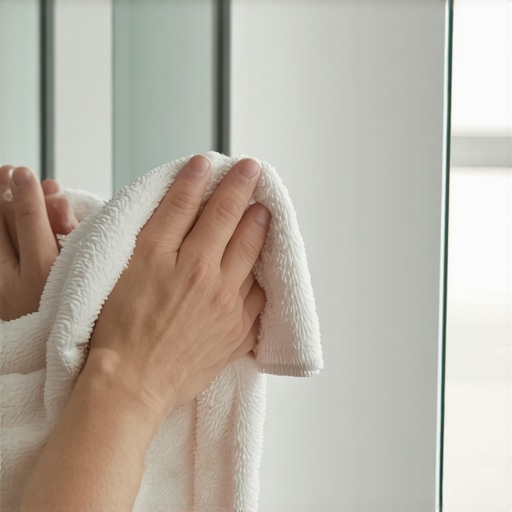
I was standing in my bathroom, sweating, clutching a crumpled roll of paper towels like they were a life raft. The afternoon sun was streaming in, and instead of a gleaming reflection, I saw a map of hazy swirls and blue-tinted lint. I’d sprayed, wiped, and polished three times already. Every time I thought I was done, I’d tilt my head, and there they were: the ‘ghost streaks.’ I felt like a failure at basic adulting. We’ve all been there, right? You spend hours on house cleaning strategies, but those mirrors just refuse to cooperate. Well, I finally threw the chemicals away and realized that the secret wasn’t in a bottle—it was in the weave of a simple cloth. Today, I’m going to show you how to get that ‘invisible glass’ look without spending a dime on fancy sprays or killing your wrists. [image]
Stop Buying Blue Liquid and Start Looking at Your Cloth
For years, I made the classic mistake of thinking more cleaner meant a cleaner surface. I’d douse the glass until it dripped, thinking I was being thorough. Big mistake. According to the Environmental Working Group, many glass cleaners contain ammonia or synthetic fragrances that actually leave a thin film behind—that’s the ‘gunk’ your cloth is just pushing around rather than removing. When I was prepping for a big move, following my own move-out clean checklist, I actually ran out of spray. In a moment of panic, I grabbed a high-quality microfiber cloth and used just a tiny bit of warm tap water. My jaw hit the floor. The streaks disappeared instantly. It felt like I’d discovered fire for the first time. This isn’t just about saving a few bucks; it’s about sheer efficiency. Whether you’re refining your daily house cleaning routine or looking for move-out cleaning hacks to save your deposit, this is the only way to go. It makes the glass look so clear it’s almost dangerous—I’ve nearly walked into my sliding door twice now. It is about working smarter, not harder.
Does a Dry Cloth Really Work on Tough Grime?
You might be skeptical. I certainly was. I thought, ‘Surely, I need some chemical punch to cut through the toothpaste splatter and hairspray.’ But the magic is actually in the physics of the fibers. Microfiber is designed to hook onto microscopic particles, not just slide over them like a paper towel does. Have you ever spent twenty minutes on one mirror only to realize you’ve just moved the dirt from the left side to the right? Let me know in the comments if you’ve ever felt that specific brand of cleaning rage. It turns out, we’ve been overcomplicating things. Even when you’re looking for sanitizing hacks for a new home, the physical removal of dirt via microfiber is often more effective than chemical sprays that just leave a sticky residue behind. I’m going to break down the exact damp-to-dry ratio you need to make this work every single time without the frustration.
Ditch the Sprays and Grab Two Microfiber Cloths
The biggest hurdle to a clear mirror is actually the chemical product you’re using. Most of us were raised to believe that a blue spray and a mountain of paper towels was the gold standard, but that’s like trying to clear a muddy windshield with more mud. To get results that actually last, you need to transition into professional-grade house cleaning strategies that rely on physical agitation rather than chemical breakdown. The secret lies in the ‘Two-Cloth System.’ You aren’t just wiping the glass; you are buffing it to a surgical standard. This isn’t just about mirrors, either. If you’ve ever looked into upholstery cleaning tips, you know that managing moisture is the key to preventing stains from wicking back to the surface. Glass works the same way. If you leave it too wet, the minerals in the water dry into those annoying white spots.
The One-Two Punch for a Flawless Finish
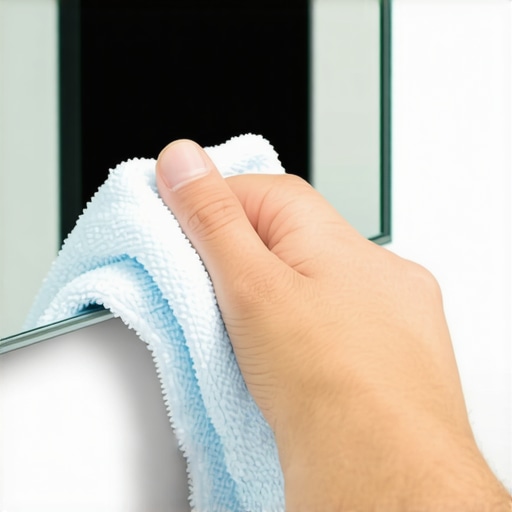
First, take your first microfiber cloth and dampen just one small corner of it with warm water. You don’t want it soaking; think ‘damp to the touch,’ not ‘dripping on the floor.’ Wipe the mirror from top to bottom in a ‘Z’ pattern. This captures the dust and oils. Then, immediately—and I mean before the water has a chance to evaporate—take your second, completely dry microfiber cloth and buff the surface. This is one of the most effective house cleaning secrets from cleaning experts because the dry cloth picks up the microscopic water droplets before they can leave a mark. 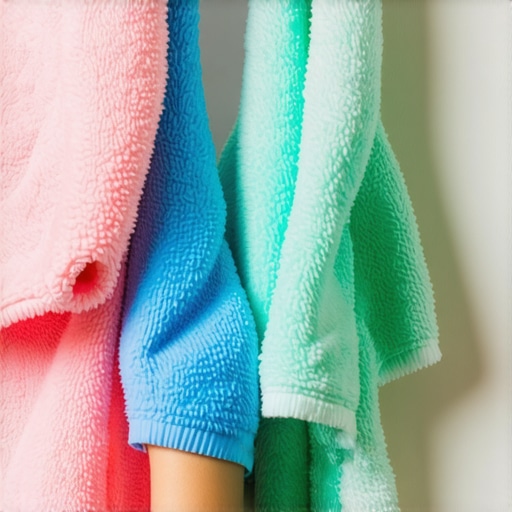
Fixing the Most Common Mirror Cleaning Mistakes
I remember a move-out clean where I was so exhausted I forgot this rule. I sprayed the whole bathroom mirror, got distracted by a phone call, and by the time I came back, the cleaner had dried into a hazy film. I spent twenty minutes scrubbing that single mirror just to get back to square one. It was a nightmare. If you are focused on move-out cleaning strategies, you cannot afford to waste twenty minutes on one mirror. You have to work in sections. If your cloth feels like it’s dragging or catching, it’s likely because of old wax or chemical buildup from previous cleanings. In those cases, you might need effective sanitizing methods to strip the surface clean before the microfiber can do its job. Also, keep an eye on your tools. If you notice tiny specs after you’re done, check why your microfiber cloths are leaving lint everywhere—it usually means they were dried on high heat, which melts the fibers and makes them brittle. Treat your cloths like the precision tools they are, and they’ll treat your glass like a masterpiece.
Most people think that ‘sanitizing’ is the ultimate goal when prepping a home for a new tenant, but here is a contrarian take: over-sanitizing with harsh chemicals often makes your home look dirtier. Everyone says you need a hospital-grade disinfectant for every surface, but in my experience, a ‘mechanical clean’—the physical removal of soil using high-quality microfiber—is far more effective for aesthetics. If you are following sanitizing secrets for a safer house in 2025, you’ll learn that soap and water (or even just water with microfiber) physically lift bacteria and grime off the surface rather than just killing it and leaving the ‘dead’ debris behind to create a streak. The CDC actually confirms that cleaning with a detergent or even just water is sufficient for most surfaces to remove the majority of germs. When you’re trying to nail those move-out cleaning hacks, remember that a surface can be ‘sterile’ but still look like a smeared mess. Have you ever fallen into this trap where you sprayed so much disinfectant that the surface became a sticky magnet for dust? Let me know in the comments.
Why Do Your Clean Cloths Still Leave Ugly Lint Behind?
This is the ‘Oops’ factor that kills most cleaning efforts. You think you’re being a pro by using fresh cloths, but if you washed those cloths with your regular laundry, you’ve already lost. Fabric softeners and dryer sheets contain wax-like surfactants that coat the fibers of your cleaning rags. When that wax hits a cold mirror, it smears. It’s why you should check why your microfiber cloths are leaving lint everywhere before you start a big project. To keep your tools in peak condition, boil them or wash them with a vinegar rinse—never, ever use a dryer sheet. This level of detail is what separates a DIY attempt from a professional finish. It’s the same logic applied in an ultimate upholstery care guide for lasting freshness; the wrong tool or a residue-heavy cleaner will actually attract more dirt over time, making your furniture look dingy within weeks of a deep clean.
Stop Spraying Your Mirrors Directly
Another advanced mistake is the ‘direct spray’ method. We see it in every commercial: a person spraying a huge ‘X’ of blue liquid on the glass. This is a nightmare for your frames. Liquid seeps behind the glass and can cause the silvering to peel or rot over time—a phenomenon known as ‘black edge.’ This is why you should never spray cleaning products directly on surfaces. Instead, mist the cloth. This allows you to control the moisture levels, ensuring that no liquid escapes into the cracks of your cabinetry or mirror frames. By mastering these small nuances, you aren’t just cleaning; you’re preserving the value of your home.
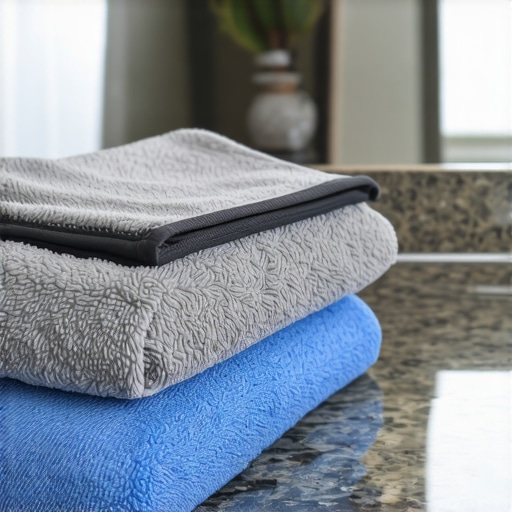
I’ve spent way too much time obsessing over the ‘Grams per Square Meter’ (GSM) of my cleaning rags, and I am not even embarrassed about it. For mirrors, I swear by a 300 GSM split-fiber polyester-polyamide blend. If it is not split-fiber, it is just a glorified rag that moves dirt around instead of lifting it. This level of technical detail is what separates a frustrating afternoon from a successful move-out clean checklist completion. Most people ignore the weight of the fabric and then wonder why their daily house cleaning routine feels like a chore that never ends. Professional-grade microfiber is designed to be a mechanical tool, not just a carrier for soap. According to the experts at Microfiber Wholesale, the physical structure of a high-quality split fiber can hold up to seven times its weight in water and debris, which is exactly why the ‘Two-Cloth System’ works so well. When you invest in the right gear, move-out cleaning hacks actually start to feel like ‘hacks’ instead of just hard work.
Why 300 GSM is the magic number for your mirrors
I recently started experimenting with ultra-fine ‘glass-only’ cloths that have a smooth, almost silk-like weave rather than the looped pile of standard microfiber. These are 100% focused on the final buffing stage. When you use these in conjunction with effective sanitizing methods on the rest of your bathroom fixtures, the results are actually intimidatingly clean. This is the level of precision needed for move-out cleaning strategies that actually get your deposit back. I suspect that in the next few years, the ‘cleaning chemical’ aisle will shrink as more homeowners realize that high-tech textiles do a better job with just plain water. We are moving toward a ‘less is more’ era where the quality of the tool outranks the potency of the liquid.
How do I maintain this level of clarity every week?
Maintenance is where most of us fail because we wait for the grime to become visible. I have found that a ‘maintenance buff’ once a week—using just the dry cloth—prevents the buildup of dust that eventually bonds with bathroom humidity to create those stubborn streaks. It is the same logic I use when I am following an ultimate upholstery care guide for lasting freshness; if you catch the surface dust before it settles into the fibers, the deep cleaning becomes ten times easier. If you keep your dry cloth hanging on the back of the bathroom door, you can give the mirror a five-second wipe after your morning shower while the steam has slightly loosened any particles. This keeps things looking professionally staged without ever pulling out a bucket of supplies.
The future of cleaning is probably invisible
If you’re noticing that your mirrors are still stubborn, it might be time to audit your laundry room. I cannot stress this enough: check why your microfiber cloths are leaving lint everywhere before you blame the technique. I personally keep a small mesh bag specifically for my ‘glass cloths’ so they never get mixed with cotton towels that shed lint. It sounds obsessive, but if you are looking for sanitizing hacks for safe house transitions, you will realize that the cleanest surfaces are the ones where you control every variable. Looking ahead, I predict we are going to see a massive shift toward ‘self-cleaning’ glass treatments in residential homes—essentially permanent hydrophobic coatings that mimic the Lotus effect, making water bead off and take the dirt with it. Until then, your best defense is a high-GSM cloth and a little bit of friction. Try this tonight: take your best microfiber cloth and buff just one mirror with zero chemicals. Look at it from an angle. If you see your reflection clearly without a single ‘ghost streak,’ you will never go back to the blue spray again.
Everything I Got Wrong About Glass Until Now
After years of trial and error, I’ve realized that the ‘perfect’ reflection isn’t about the brand of spray you buy. First, I learned that heat is the enemy of microfiber; drying your cloths on high heat literally melts the tiny hooks that grab dirt. Second, I discovered that most ‘ghost streaks’ are just leftover wax from previous cleanings. If you are struggling, try a one-time strip-clean with a 50/50 vinegar and water mix to remove the old gunk before starting the two-cloth method. Finally, consistency beats intensity every time—a quick ten-second buff once a week keeps the ‘invisible’ look alive without a deep scrub. This shift in mindset is what separates a frustrating chore from a successful daily house cleaning routine.
#IMAGE_PLACEHOLDER_E#
Tools That Earned a Permanent Spot in My Cleaning Caddy
I don’t keep a lot of gadgets, but a few items are non-negotiable for my house cleaning strategies. I swear by 300 GSM split-fiber cloths because they actually ‘bite’ into the grime. If you’re dealing with other glass-like surfaces, I highly recommend checking out the only way to clean your flat-screen TV without streaks, as the mechanics are surprisingly similar. For those of you battling kitchen glassware, you might find the reason your dishwasher still leaves spots on your glasses equally helpful. I also keep a simple mesh laundry bag to ensure my glass cloths never touch my linty bath towels.
Look Beyond the Surface
Cleaning shouldn’t feel like a battle against physics. When you finally see that ‘invisible’ glass, it changes how you feel about your entire space—it’s like the whole room finally takes a deep breath. Whether you’re refining your home or just trying to get a few effective house cleaning secrets from cleaning experts under your belt, remember that the best results come from simple, high-quality tools. You don’t need a chemical lab under your sink; you just need a better cloth and a little bit of technique. What’s the one surface in your house that always seems to have a permanent smudge no matter what you do? Let me know below and let’s troubleshoot it together!