
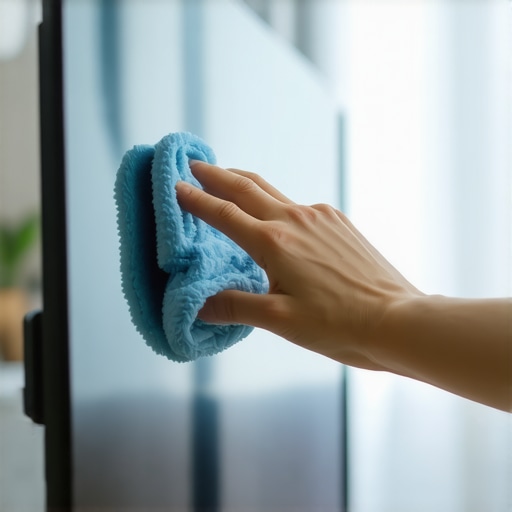
I still remember the first time I sat down to watch a movie on my brand-new flat screen and noticed a tiny, greasy fingerprint in the corner. Being the self-appointed cleaning expert of the neighborhood, I grabbed a bottle of glass cleaner and a paper towel, thinking I was doing the right thing. Big mistake. Within seconds, my beautiful display was covered in hazy blue streaks that wouldn’t go away. I felt like I had just thrown a few hundred dollars down the drain. It turns out, I was committing the cardinal sin of tech maintenance: spraying cleaning products directly on surfaces that have delicate coatings. Today, I am going to save you from that same heartbreak. We are going to walk through the only safe, streak-free way to get that screen looking factory-fresh again without risking a permanent cloudy mess. [image_placeholder]
Your Screen is More Delicate Than You Think
Most modern TVs are not made of glass like the old heavy tubes we grew up with. They use plastic polymers and anti-glare coatings that are incredibly sensitive to chemicals. I learned the hard way that even “natural” cleaners can be too abrasive if they are not specifically pH-balanced for electronics. According to tech testing experts at CNET, the chemical compounds in most common household cleaners—especially ammonia or alcohol—can actually strip the anti-reflective layer right off an LED or OLED screen. If you have been seeing weird fuzzies after you wipe, you might be wondering why your microfiber cloths are leaving lint everywhere; usually, it is because the cloth itself is lower quality or has been washed with fabric softener, which ruins the absorbency. To get a true streak-free finish, you need a cloth that is bone-dry and impeccably clean.
Is it really necessary to buy a special screen cleaner kit?
Honestly? No. Most of those “specialty” sprays are just overpriced distilled water with a tiny drop of soap. You probably have everything you need in your cabinet already, provided you know the right technique. While you are at it, you should also learn how to sanitize your tv remote without damaging the electronics, because that thing is likely a bigger germ magnet than the screen itself. Have you ever tried to wipe a smudge off your TV only to make it ten times larger? Drop a comment below if you have been there too! Let’s get into the actual steps so you never have to deal with those annoying streaks again.
Master the Art of the Gentle Wipe Down
Before you even touch your TV, you have to eliminate the biggest obstacle: heat. Electronics generate a static charge when they are on, which acts like a magnet for dust. If the screen is warm, any moisture you apply—even a tiny bit—will evaporate too quickly, leaving behind those dreaded mineral streaks. Think of it like washing a car in the direct sun; it is a recipe for a spotted disaster. I once helped a friend with a move-out clean checklist to simplify your transition, and we made the mistake of wiping his warm 65-inch OLED. We spent the next forty minutes buffing out ghost-like clouds that just wouldn’t budge. Power it down, let it cool for fifteen minutes, and you will see every fingerprint and dust mote clearly against the black background.
The Dry Microfiber is Your Best Friend
Your first move should always be a dry run. You would be surprised how much of that “blurriness” is just a layer of loose household dust. Using a high-quality microfiber cloth—the kind with the tight weave specifically for optics—gently glide it across the screen. Do not press. If you press too hard, you risk crushing the liquid crystals inside the panel, which can lead to dead pixels. This is one of those house cleaning strategies for a sparkling home today that people often overlook because they want to jump straight to the liquid spray. A dry cloth safely lifts the abrasive particles that could scratch the screen if you were to wet them and rub them around.
Handle Sticky Situations with Distilled Water
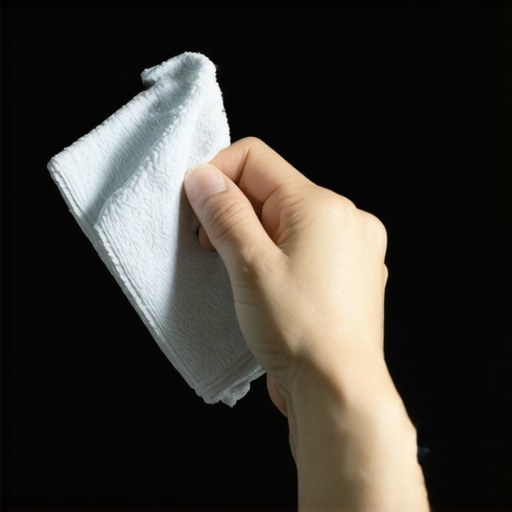
If that dry wipe didn’t get the sticky fingerprints from your toddler’s afternoon snack, it is time for a very controlled amount of moisture. Avoid tap water at all costs; the minerals in it are microscopic rocks that will scratch the coating or leave white crusty residue. Use distilled water. Lightly mist the cloth, never the screen. The cloth should feel barely damp—like a cool breeze, not a wet sponge. This is a variation of the two cloth method for streak-free windows in half the time. Use the damp section to break down the oils of the fingerprint, then immediately follow up with the bone-dry section of the cloth to buff it dry. If you leave the moisture to air dry, you’ve already lost the battle against streaks.
Wipe in Straight Lines Only
This is where most people fail. We are conditioned to scrub in circles, but on a TV screen, circular motions just move the dirt around and create swirl marks that catch the light from every angle. Instead, use long, slow, horizontal or vertical strokes. Start at the top corner and work your way down in a grid pattern. This ensures you don’t miss a spot and keeps the pressure even across the entire surface. If you are integrating this into your daily house cleaning routine to maintain perfection, you’ll find that a quick 30-second straight-line wipe once a week prevents any major buildup from ever occurring. Remember, your goal is to lift the grime, not grind it into the plastic. Keeping your technique linear is the best way to maintain that factory-finish clarity without any hazy leftovers.
Natural Cleaners Might Be Killing Your Display
Here is the truth that most ‘green’ cleaning blogs won’t tell you: just because a cleaner is plant-based doesn’t mean it belongs on your $2,000 OLED. I see people using vinegar or citrus-based solutions all the time because they want to avoid harsh fumes. However, much like why vinegar is not always the best choice for granite countertops, the acidity in these natural alternatives can slowly eat away at the molecular bond of your screen’s anti-reflective coating. According to a technical bulletin from LG Display, even a slightly acidic pH can cause ‘delamination’—where the layers of the screen literally start to separate or peel. This process is often irreversible because these coatings are applied in vacuum-sealed environments at the factory. If your screen has a dull, matte finish that seems to be getting more ‘patchy’ over time, you’ve likely been using something too aggressive, even if it smelled like lemons or was labeled as ‘safe.’
Can You Actually Reverse Damage from the Wrong Chemicals?
This is the question I get most often from panicked homeowners during a move-out cleaning session. The short answer? Unfortunately, no. Once the chemical coating is stripped or scratched at a microscopic level, it cannot be ‘re-applied’ in a living room setting. This is why the ‘Oops’ factor is so high here. I’ve seen people try to ‘buff out’ a chemical stain using car wax or furniture polish, which is a catastrophic mistake. These products contain oils and silicones that will permanently blur the pixels and ruin the light refraction of the panel. It is similar to the precision needed for ultimate upholstery care; once you damage the base fibers or coatings, the integrity is compromised. One stray mist of a degreaser is all it takes to turn a high-definition experience into a foggy mess that will be flagged during a rental inspection.
The Trap of the ‘Dirty’ Microfiber
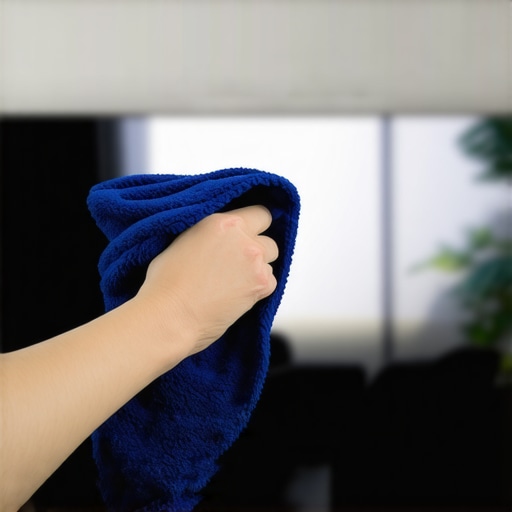
We talked about using microfiber, but here is the expert nuance: not all microfibers are created equal. If you use a cloth that has been through the dryer with a dryer sheet, you are essentially wiping wax onto your screen. The surfactants in fabric softeners coat the fibers, making them lose their ‘grab’ and instead leaving behind a microscopic film. I always recommend using effective house cleaning secrets from cleaning experts like double-rinsing your cloths in plain water. If you feel any resistance or ‘drag’ when wiping the screen, stop immediately. That drag is usually a sign of residue buildup on the cloth or the screen’s surface beginning to soften from heat. This level of detail is also vital when you are going through a move-out clean checklist to simplify your transition, as screens are often the first thing an inspector looks at for neglect. Have you ever fallen into this trap and wondered why the streaks keep coming back no matter how much you wipe? Let me know in the comments below, and we can troubleshoot your specific setup together. Knowing these small details is what separates a standard house clean from a true professional-grade restoration.
The Bare Essentials for a Professional-Grade Setup
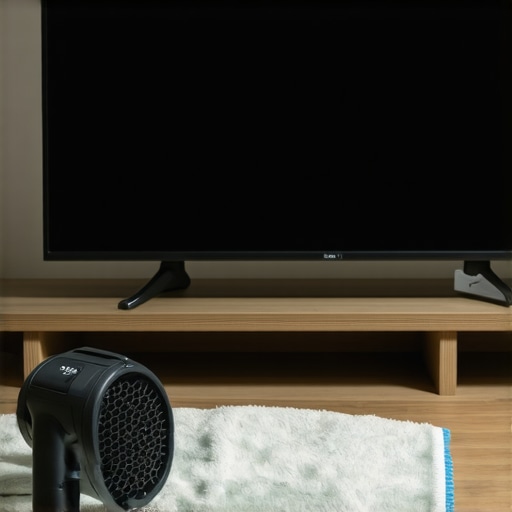
I’ve spent way too much money on ‘screen cleaning kits’ that come in fancy packaging, only to realize I was paying for a $0.50 spray bottle and a low-grade cloth. If you want to scale your maintenance like a pro, you need to invest in a high-GSM (grams per square meter) microfiber. I personally use a 300 GSM silk-edge cloth because it lacks the rough overlocked stitching that can catch on the corners of a bezel. This is one of those effective house cleaning secrets from cleaning experts: the tool is only as good as its weakest thread. I also keep a small manual air blower—the kind photographers use for camera lenses—in my kit. Blowing away loose grit before the cloth ever touches the screen is the only way to guarantee you won’t drag a piece of silica across your expensive panel. This level of care is just as important as knowing how to safely disinfect your remote control without damaging the sensors, which is often the first thing people forget when prepping their living room for guests.
How do I maintain my screen’s clarity over time?
Consistency is your best friend. Instead of waiting for the screen to look like a dusty chalkboard, integrate a five-second dry wipe into your daily house cleaning routine to maintain perfection. If you stay on top of it, you’ll rarely, if ever, need to use distilled water. This proactive approach is exactly what I recommend when discussing move-out cleaning strategies to secure your deposit; if you’ve maintained the tech well, you won’t be scrambling to fix permanent damage right before the landlord walks through. According to technical documentation from the Society for Information Display (SID), the cumulative effect of improper cleaning can degrade the optical clarity of a panel by up to 15% over its lifespan due to micro-abrasions. By simply keeping the dust from settling and reacting with ambient humidity, you’re literally preserving the brightness and color accuracy of your TV for years to come.
The Future of Screens and Self-Cleaning Tech
I’m closely following the rise of ‘oleophobic’ and ‘superhydrophobic’ nano-coatings in the industrial sector. We’re already seeing this in high-end smartphones, where oils from your fingers are designed to bead up rather than smear. I predict that within the next decade, top-tier home displays will feature self-healing surfaces that can ‘melt’ away minor micro-scratches using the screen’s own internal heat management. Until then, we have to be the guardians of our own hardware. If you are currently handling a transition into a new home, don’t forget to check out these sanitizing hacks for safe house transitions to ensure all your sensitive electronics are as clean as your floors. My challenge to you: Go check your microfiber cloth right now. If it feels stiff, scratchy, or has been through a dryer with fabric softener, replace it immediately with a dedicated electronics cloth—it is the cheapest insurance policy you will ever buy for your home theater.
What Professionals Never Tell You About Electronics Care
Reflecting on years of tech maintenance, the biggest lightbulb moment I ever had wasn’t about the soap; it was about the temperature. I used to think a quick wipe while the TV was on was harmless, but I learned that the static charge actually bonds the dust to the screen. If you really want to level up, remember that less is always more. I’ve seen more screens ruined by over-cleaning than by being slightly dusty. It is one of those effective house cleaning secrets from cleaning experts that patience is your most valuable asset. Also, never underestimate the power of a fresh cloth; if you’ve used it to dust the bookshelf, it is officially retired from screen duty to prevent micro-scratches.
[image_placeholder]
My Go-To Gear for a Flawless Finish
I don’t trust those generic kits you find at the checkout lane. Instead, I’ve built a specific toolkit that ensures I never have to worry about streaks. First, I only use 300+ GSM microfiber cloths—specifically those designed for high-end optics—to avoid the issue where your microfiber cloths are leaving lint everywhere. Second, a simple bottle of distilled water is my only ‘chemical.’ Third, I keep a manual air blower, the kind used for camera sensors, to puff away grit before I ever make physical contact. These simple tools are the foundation of a daily house cleaning routine to maintain perfection in a modern, tech-heavy home.
Reclaim the Brilliance of Your Home Cinema
At the end of the day, your electronics are an investment in your relaxation and joy. Taking ten extra minutes to follow the right protocol isn’t just about cleaning; it’s about preserving the quality of your experience. Whether you are prepping for a movie night or executing sanitizing hacks for safe house transitions in a new space, treating your glass and plastic with respect will pay off in years of crystal-clear viewing. You’ve got the knowledge now—go ahead and get that screen looking like the day you unboxed it! Have you ever tried a ‘hack’ that went horribly wrong on your TV? Let me know in the comments below!