
I still remember the smell of acrid, burning plastic wafting from my kitchen three years ago. I thought I was being the ultimate ‘efficient’ parent by tossing a mesh bag of colorful blocks into the dishwasher on a high-heat cycle. Ten minutes later, my kitchen smelled like a chemical factory and my son’s favorite toys were a warped, colorful mess. It was a failure of epic proportions. I wanted a germ-free home, but I ended up with a ruined toy box and a massive headache. That moment changed how I look at effective sanitizing methods entirely. Today, I want to share the hard-won secrets of keeping those playthings safe and clean without the drama.
The Day I Turned a Lego Set into a Melted Puddle
Keeping a house clean with kids feels like trying to brush your teeth while eating Oreos. It is relentless. Between the sticky handprints on the walls and the mystery stains on the upholstery, the toys often get the short end of the stick. I used to think a quick spray of whatever was under the sink was enough. It wasn’t. I made the mistake of assuming that more heat and harsher chemicals always meant a better clean. In reality, I was just damaging the plastic and leaving behind residues I didn’t want near my kids. Finding a balance between ‘clean’ and ‘safe’ is the ultimate goal for any parent navigating house cleaning strategies.
Is it possible to kill germs without toxic fumes?
I know what you’re thinking. You want the germs gone, but you don’t want your toddler sucking on bleach residue. It is a valid fear. We often equate the smell of harsh chemicals with cleanliness, but that is a dangerous game to play with little ones who put everything in their mouths. I spent months researching sanitizing secrets that actually work without turning your playroom into a hazmat zone. The solution isn’t just about what you use, but how you apply it.
Why Your Current Cleaning Routine Might Be Failing
Most of us are just moving dirt around. Did you know that some viruses can live on plastic surfaces for up to 24 hours? According to a study by the American Academy of Pediatrics, toys are one of the primary ways illnesses spread in shared spaces because we rarely clean them deeply enough. If you are just doing a light dusting as part of your daily house cleaning routine, you are likely leaving behind a microscopic zoo. I learned the hard way that sanitizing plastic building blocks requires a bit more finesse than a simple wipe. Have you ever had a ‘cleaning fail’ that resulted in a ruined toy or a lingering chemical smell? I would love to hear I am not the only one. Today, we are diving into the safe, effective methods that actually protect your kids.
Empty the Bin and Sort the Survivors
The first mistake I made was thinking everything in the toy box could handle the same treatment. It can’t. Before you even think about water, you need to sort. Anything with a battery, a motor, or a delicate sticker needs to stay far away from a soak. I learned this the hard way when I tried to wash a talking robot that now only makes a sound like a dying radiator. For those electronic items, you should use the same care you would apply when you sanitize door knobs or remote controls: a light damp wipe with a high-percentage isopropyl alcohol, making sure no liquid seeps into the seams. For the hard plastic blocks, the goal is a deep immersion that reaches into every peg and crevice.
The Low-Heat Soak Strategy
Once you have your pile of durable plastic, fill a large basin or your bathtub with lukewarm water. Notice I said lukewarm. Extreme heat is what caused my ‘melted puddle’ disaster. Add a few drops of mild dish soap or a cup of white vinegar. Think of this mixture like a gentle spa treatment rather than a chemical scrub. This follows the same logic as effective house cleaning secrets from cleaning experts who swear by dwell time over brute force. You want those blocks to sit for at least fifteen to twenty minutes. This allows the solution to break down the sticky residue from juice boxes and whatever mystery substance kids manage to produce. 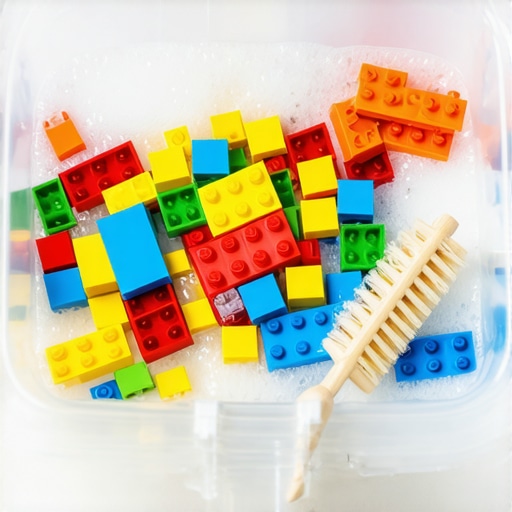
What to Do When the Grime Sticks Around
Sometimes a soak isn’t enough. If you’ve ever looked at the bottom of a well-loved block, you’ve seen that gray, compacted gunk that seems fused to the plastic. This is where you need mechanical action. I keep an old, soft-bristled toothbrush specifically for this task. It’s the perfect tool for getting into those tiny circular pegs. When you are sanitizing your child’s plastic building blocks fast, don’t underestimate the power of a quick scrub. I remember spending an entire Saturday afternoon in the bathroom, splashing around in a ‘Lego soup’ while my kids watched in confusion. It was messy, and I ended up with soaking wet socks, but the water turned a murky brown—proof that the soak alone wasn’t doing all the heavy lifting.
Rinse Like You Mean It
Residual soap or vinegar isn’t dangerous, but it can create a film that actually attracts more dust later. Use a colander or a mesh laundry bag to rinse the blocks under a cold tap. If you are currently working through a move-out clean checklist, you know that the final rinse is what makes surfaces truly shine. The same applies here. Ensure all the bubbles are gone before you move to the next phase. If you notice a lingering smell, a second rinse is usually the cure.
Patience is a Cleaning Virtue
This is the part where most people fail. They want the toys back in the bin immediately. However, moisture trapped inside blocks can lead to mold, which is a much bigger problem than a few germs. Lay a large, clean towel on the floor—ideally a microfiber one, though you should check why your microfiber cloths are leaving lint everywhere before using them on textured toys. Spread the blocks out in a single layer. Do not stack them. Use a fan to circulate the air if you want to speed things up. This air-drying process is a critical part of your daily house cleaning routine for shared items. Avoid the temptation to use a hairdryer; the concentrated heat can warp the plastic faster than you can say ‘oops.’While air-drying is the final physical step, the true expertise lies in the chemistry you choose before the water ever hits the plastic. Many parents fall into the trap of thinking ‘natural’ always means ‘sufficient.’ Don’t get me wrong, I love a good vinegar soak for shine, but it has limits. If you are navigating a nasty flu season, vinegar simply is not an EPA-registered disinfectant. It is a fantastic descaler, but it will not kill the heavy hitters like norovirus or certain strains of staph. When you are performing sanitizing hacks for safe house transitions, you need tools that actually break down the cellular walls of pathogens.
Stop Assuming Vinegar Kills Every Germ in Your Playroom
In my experience, relying solely on ‘green’ cleaners for high-touch items like building blocks is a common mistake that gives a false sense of security. Bacteria often hide under a ‘biofilm’—a microscopic protective layer that simple wipes or light mists cannot penetrate. This is why the mechanical scrubbing with a toothbrush I mentioned earlier is non-negotiable. If you skip the scrub, you are just sanitizing the ‘roof’ of the bacteria’s house while the germs stay cozy inside. This same logic applies to your furniture; if you are managing a mess near the sofa, consult an ultimate upholstery care guide for lasting freshness to ensure you are not just moving bacteria from the toys into the fabric fibers. 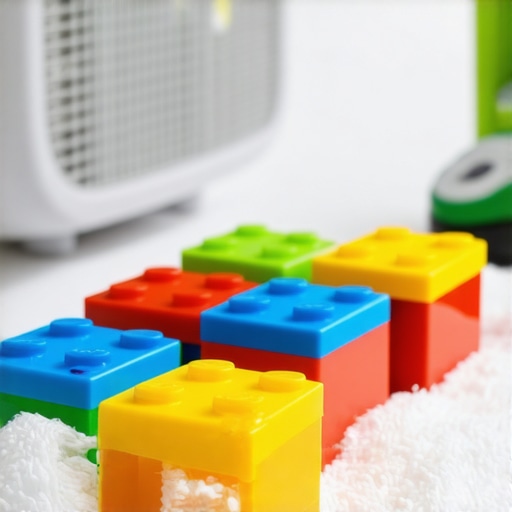
Why Your ‘Quick Wipe’ Strategy is Actually Spreading Bacteria
The most common trap parents fall into is the ‘spray and wipe’ reflex. You should know why you should never spray cleaning products directly on surfaces, especially on toys with intricate shapes. The mist can settle into unreachable cracks, creating a sticky residue that never fully dries. This residue acts like a magnet for skin cells and dust, essentially providing a buffet for new bacteria to grow. If you are in the middle of a high-stakes move-out cleaning strategy to secure your deposit, you know that efficiency is key, but cutting corners on sanitization usually backfires with lingering odors and ‘tacky’ surfaces that look dirty again within hours.
Does your disinfectant stay wet long enough to actually work?
This is the advanced nuance most people ignore: dwell time. The Environmental Protection Agency (EPA) explicitly states that most household disinfectants require a surface to remain visibly wet for anywhere from 3 to 10 minutes to be effective. If you spray a block and wipe it dry five seconds later, you have done almost nothing to the germs. According to the CDC, the distinction between cleaning, sanitizing, and disinfecting is critical. Cleaning removes dirt; sanitizing reduces germs; but disinfecting is what actually kills them. To achieve true disinfection, you must respect the dwell time indicated on the product label. When you apply effective house cleaning secrets from cleaning experts, you learn that patience is your strongest chemical. Have you ever fallen into this trap and realized you were wiping away your disinfectant too early? Let me know in the comments.
My Secret Tool for Drying Thousands of Blocks Fast
Once you have successfully navigated the soak and rinse, you are faced with the most tedious part of the process: drying. If you leave blocks to air-dry on a towel, it can take 48 hours for the internal cavities to shed every drop of moisture. I discovered that a high-capacity salad spinner is the ultimate hack for this. By placing the wet blocks into the spinner and giving them a few vigorous rotations, you use centrifugal force to eject the water from those stubborn circular pegs. This is one of those effective house cleaning secrets from cleaning experts that actually saves you hours of wait time. It is the same level of ingenuity you need when figuring out how to sanitize reusable straws without a special brush. I personally keep a dedicated ‘cleaning spinner’ in my laundry room just for this purpose, and it has been a game-changer for my sanity. 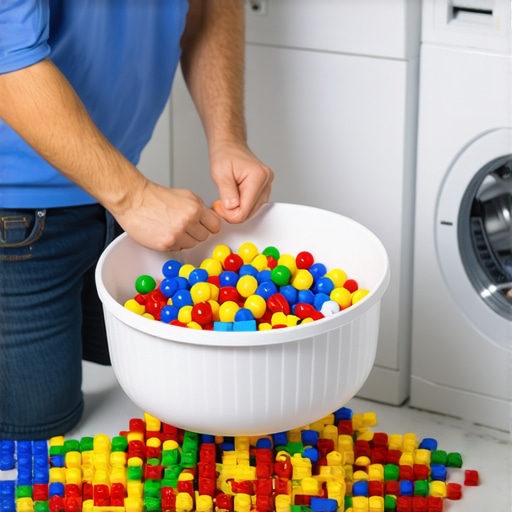
Stop Relying on Luck and Start Using Real Data
To truly scale your cleaning efforts, you need to understand the science of what you are fighting. Dr. Sally Bloomfield of the International Scientific Forum on Home Hygiene (IFH) emphasizes a concept called ‘targeted hygiene.’ This means focusing your energy on ‘high-risk’ moments—like after a playdate or a bout of the sniffles—rather than trying to maintain a sterile environment 24/7. When you are implementing house cleaning strategies for a sparkling home today, remember that consistency beats intensity. I have found that keeping a mesh laundry bag inside the toy bin makes it incredibly easy to scoop up a batch for a quick sanitizing dip whenever I notice the blocks looking a bit dull or feeling ‘tacky.’ This proactive approach prevents the buildup of sticky residue from new appliances or snacks that eventually turns into a permanent grime layer.
How can I keep my toy collection sanitary over the long term?
The key is a ‘rotation and refresh’ system. Instead of having every single toy available at once, I rotate half of the collection into storage every month. This naturally limits the amount of ‘germ real estate’ you have to manage. Before the stored toys come back out, they get a quick refresh. If you are handling larger items like play tents or soft mats, you should treat them with the same care outlined in an ultimate upholstery care guide for lasting freshness. Looking ahead, I predict we will see a surge in residential UV-C sanitizing bins. These devices, which are already used in some high-end nurseries, use specific light wavelengths to deactivate DNA in pathogens without any water or chemicals. While they aren’t a replacement for removing physical dirt, they are the future of daily maintenance for busy parents. For now, focus on the mechanical scrub and the thorough dry. I highly encourage you to try the ‘Salad Spinner Spin-Dry’ method during your next cleanup session; it turns a chore into a surprisingly satisfying experiment. If you are preparing for a bigger transition, don’t forget to integrate these sanitizing hacks for safe house transitions into your broader workflow.
The Hardest Lesson I Learned About Plastic Toy Safety
Reflecting on my melted Lego disaster, I realized that speed is often the enemy of safety. First, I learned that lukewarm water is a non-negotiable rule; anything hotter risks structural damage that can make toys unsafe for play. Second, never underestimate the biofilm—that invisible layer of bacteria that requires physical agitation, like a quick scrub with a toothbrush, to truly break down. If you are following a daily house cleaning routine to maintain perfection, remember that some surfaces need more than just a spray. Finally, the distinction between sanitizing and disinfecting became my north star; I now know exactly when to reach for the vinegar and when the situation calls for an EPA-registered disinfectant to keep my family safe.
My Essential Kit for a Germ-Free Playroom
Over the years, I’ve narrowed down my toolkit to four items that make sanitizing secrets for a safer house in 2025 actually achievable. I swear by a dedicated high-capacity salad spinner; it sounds ridiculous until you see how much water it extracts from hollow blocks in seconds. For general maintenance, I use white vinegar as a natural descaler to keep colors bright, and I always keep 70% isopropyl alcohol on hand for cleaning electronics that can’t get wet. Lastly, I keep a stash of mesh laundry bags; they aren’t just for socks, they are perfect for containing small parts during a soak and allowing them to drip-dry efficiently. These items are just as vital as following an ultimate upholstery care guide for lasting freshness in your living room.
Take Control of Your Playroom Today
You don’t need to be a professional cleaner to achieve a safe environment for your children. By implementing these effective sanitizing methods for a germ-free home, you are protecting more than just the plastic; you are protecting your peace of mind. Start with one bin this weekend, and you will be surprised at how much lighter the room feels when you know the microscopic zoo has been evicted. Have you ever found a mystery substance on a plastic block that refused to budge? Let me know your funniest cleaning fail in the comments below!