
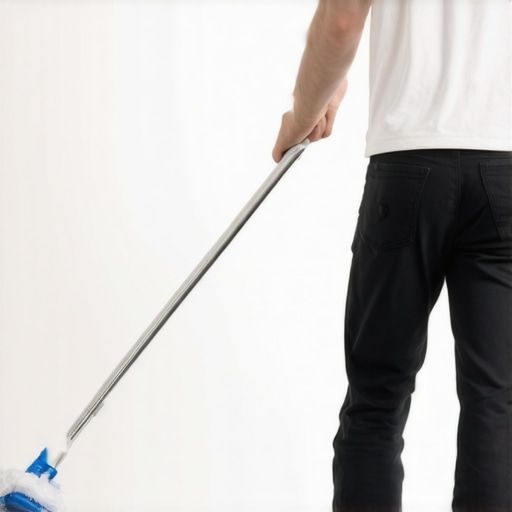
I was on my hands and knees, sweat dripping onto the linoleum, trying to scrub three years of pet hair and dust off the baseboards of my tiny studio apartment. My lower back felt like it was being squeezed in a vice, and my knees were clicking with every miserable inch I moved. That was the moment I realized I was doing it all wrong. I was exhausted, sore, and frankly, grumpy. There has to be a better way to handle a move-out clean without feeling like you have just gone ten rounds in a boxing ring. If you have ever stared at those grimy white strips along the floor and thought, “maybe I just do not need that security deposit back,” then this is for you. Today, I am going to share the exact method I used to reclaim my afternoons and my physical health. We are talking about getting those baseboards gleaming using tools you already own, standing completely upright. Whether you are deep in the middle of house cleaning strategies for your new place or just trying to keep up with the dust, this change is a total game-changer.
Save Your Joints While You Shine Your Home
If you are following a daily house cleaning routine to maintain perfection, baseboards are usually the first thing we ignore because they are quite literally a pain. It is easy to justify skipping them. But those little ledges are magnet for hair, dander, and allergens. When I first started taking my home maintenance seriously, I made the classic rookie mistake of using a soaking wet rag and a bucket of soapy water. Not only did I end up with bruised shins, but the excess water actually started to warp the wood. It was one of those common move-out cleaning mistakes that nearly cost me my refund. I quickly learned that moisture is the enemy and your posture is the priority. According to experts at the Mayo Clinic, repetitive bending and awkward posturing are leading contributors to acute back strain, which is why ergonomics should be at the forefront of your house cleaning secrets. By using a long-handled microfiber mop or even a modified broom with a dryer sheet, you can achieve a professional finish without the physical toll.
Is this hack actually going to get things clean?
I know what you are thinking because I thought it too: is a dry wipe on a stick really enough to get rid of that caked-on kitchen grease? The answer is a resounding yes, provided you use the right friction. Have you ever finished a cleaning session only to find you cannot stand up straight for twenty minutes? If so, it is time to pivot. Before you start, remember that cleaning from the top of the room ensures that any dust you knock loose from the ceiling or fans does not settle on your newly polished baseboards. Let’s dive into the specifics of how to turn a chore into a breeze.
Get Off Your Knees and Grab a Microfiber Mop
To start, you need to treat your baseboards like a delicate surface, much like how you would handle ultimate upholstery care. Instead of scrubbing blindly, we are going to use precision. Grab a microfiber mop with a pivoting head. This tool is your best friend because it mimics the natural movement of your wrist without the strain. If you do not have one, a ‘broom and cloth’ trick is a solid backup. I remember the first time I tried this; I was skeptical that the pole would give me enough leverage. I ended up wrapping a thick rubber band around a clean microfiber cloth and securing it to the head of my broom. It worked like a charm. This simple shift is one of the most effective move-out cleaning hacks to ensure your deposit refund because it allows you to move quickly without the physical fatigue that leads to cutting corners.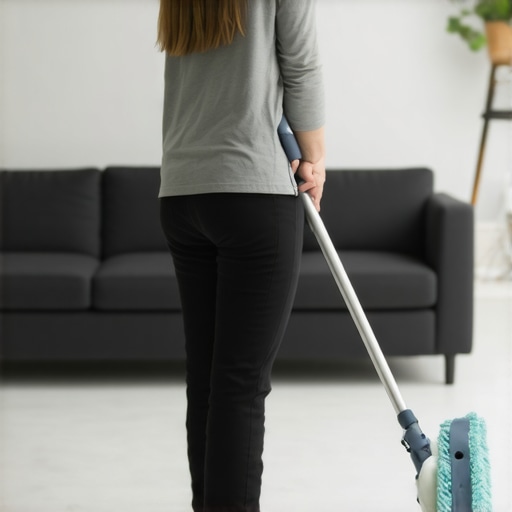
Switch Your Strategy to a Two-Step Dry then Damp Method
The mistake most people make is introducing water too early. If you spray your baseboards while they are covered in thick dust, you just create a muddy sludge that is harder to remove. Start with a dry microfiber cloth or a specialized duster to lift the loose debris. This is one of those effective house cleaning secrets from cleaning experts that saves you half the time. Think of it like pre-vacuuming before you dive into upholstery cleaning tips for a fresh home revival; you want the big stuff gone first. Once the dust is handled, lightly mist your cloth with a gentle cleaner—never the wood itself. I once spent four hours on a Saturday trying to use a standard cotton string mop, and let me tell you, it was a disaster. The strings got caught on the corner beads and left grey streaks on my eggshell-white walls. Since then, I have stuck to flat microfiber surfaces that glide smoothly.
Break Down Kitchen Grime Without the Sweat
Kitchen baseboards are the final boss of cleaning. They are often coated in a sticky layer of aerosolized cooking oil and floor spills. For these, a dry wipe is not enough. You need a degreaser, but you still do not need to scrub on your knees. I use a long-handled scrubby mop head or even a clean sponge mop with a bit of dish soap. Use the pole to apply pressure exactly where you need it. When I was moving out of my last place, I found a spot behind the trash can that looked like it had not been touched since the building was built. By letting the cleaning solution sit for exactly two minutes—a key part of sanitizing hacks for safe house transitions—the grease wiped right off with zero elbow grease required. This is the difference between a frantic clean and a calm, strategic move-out clean.
Why Proper Tool Maintenance Matters
Finally, remember that your tools are only as good as their current state. If your microfiber pads are clogged with old dirt, they will just move the mess around. I have seen people try to clean an entire house with one grey, saturated rag. If you find your floors or baseboards are looking cloudy, it might be the reason why your cloths stopped working effectively. Swap them out frequently as you move from room to room. This ensures you are actually lifting the grime rather than just redistributing it. Keeping a stash of clean cloths on hand is a pillar of any daily house cleaning routine to maintain perfection.While we are on the topic of efficiency, let’s address the elephant in the room: the ‘clean’ smell. Most of us have been conditioned to believe that if a room smells like bleach or heavy pine, it is sanitized. In my years of trial and error, I found out the hard way that this is a total myth. In fact, many professional cleaners will tell you that a truly clean home should not smell like anything at all. When you are rushing through a move-out clean, it is tempting to douse every surface in the strongest chemicals you can find, but this is often where the ‘Oops’ factor kicks in. For instance, did you know that spraying certain cleaners directly on your luxury vinyl plank can cause permanent clouding? It is a common frustration that leads many to wonder about the real reason your luxury vinyl plank floors look cloudy after you mop. The culprit is usually a buildup of surfactant or, worse, a pH imbalance that eats away at the wear layer.
Stop Spraying and Wiping Immediately
Then there is the issue of sanitizing. We see the ‘kills 99.9% of germs’ label and assume a quick wipe does the trick. But according to the Environmental Protection Agency (EPA), most household disinfectants require a ‘dwell time’—the surface must remain visibly wet for anywhere from three to ten minutes to actually kill the bacteria. If you are just spraying and immediately wiping, you are essentially just moving the germs around. This is one of the most overlooked sanitizing secrets for a safer house in 2025. It is better to clean effectively once than to sanitize poorly five times. 
The Dangerous Myth of the ‘Clean’ Smell
The same logic applies to your furniture. I have seen people try to ‘scrub’ a coffee stain out of a sofa, only to find they have permanently frayed the fibers. It is a heartbreaking mistake. If you are looking at upholstery cleaning tips for a fresh home revival, the golden rule is to blot, never scrub. In fact, why you should never scrub a fresh liquid stain is usually the first lesson in professional-grade care. You are trying to lift the liquid out, not push it deeper into the padding. This is why house cleaning strategies must include a light touch.
Why Does Your Home Still Feel Dusty After a Deep Clean?
Have you ever finished a full day of cleaning only to see dust motes dancing in the sunlight an hour later? This happens when your vacuum or your cleaning methods are actually aerosolizing the dust rather than capturing it. This is a common trap during a move-out session where the pressure is high. To avoid this, ensure you are following an ultimate upholstery care guide for lasting freshness by using HEPA-certified filters and damp-dusting instead of using dry feathers. Another common mistake is applying product directly to furniture. Understanding why you should never spray cleaning products directly on surfaces can save you from the oily residue that actually attracts more dust. For high-end materials, always check the professional way to clean leather upholstery without cracking it before you start. Have you ever accidentally ruined a surface by using a cleaner that was ‘too strong’? I once melted the finish off a coffee table trying to remove a sticker. Have you ever fallen into this trap? Let me know in the comments.
Moving from the frustration of ruined surfaces to the precision of a pro requires a shift in the equipment you trust. I used to think a mop was just a mop until I realized that using the wrong one was exactly why your vacuum brush roll is ruining your hardwood floors and my mop was just moving dirty water around. If you want to scale your efforts and stop feeling like you are constantly playing catch-up, you have to look at the maintenance of your tools as much as the cleaning itself.
Invest in Tools That Actually Finish the Job
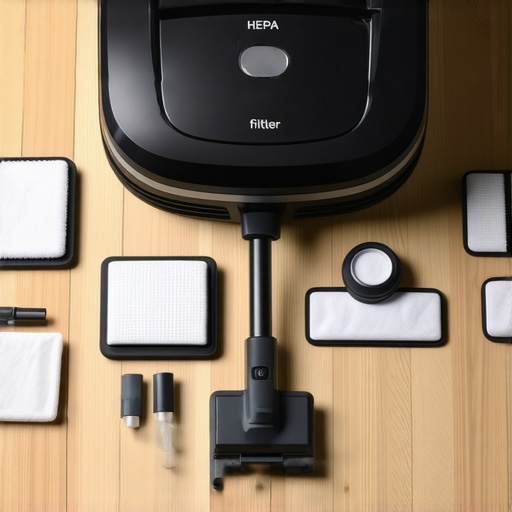
I personally stopped buying the cheap, big-box store vacuums after I realized they were leaking fine dust back into my air. I switched to a high-end canister vacuum with a certified HEPA filter. According to the U.S. Department of Energy (DOE-STD-3020-2015), a true HEPA filter must capture 99.97% of particles that are 0.3 microns in size. This level of detail is non-negotiable if you are dealing with pet hair or allergens during a heavy move-out clean. When your equipment works this efficiently, you spend less time re-dusting surfaces. If you have noticed that your current machine is struggling, it is worth checking why your vacuum isnt picking up dirt like it used to before you toss it. Often, it is just a matter of deep-cleaning the internal components.
The Hidden Cost of Ignoring Your Equipment
Maintenance is the bridge between a one-time deep clean and a permanently fresh home. You cannot expect a clean floor if you are using a dirty tool. This is similar to why you must clean the filter in your washing machine; if the filter is clogged, you are just cycling gray water through your clothes. I make it a habit to wash my microfiber mop heads after every single use. If you do not, the fibers become matted and lose their electrostatic charge, which is a major reason why your microfiber cloths stop working and how to fix them. Taking five minutes to rinse your tools saves you five hours of labor during your next house cleaning strategies session.
How can I keep these results without working every weekend?
The secret is the ‘low-effort, high-frequency’ model. Instead of a monthly marathon, I stick to a daily house cleaning routine to maintain perfection that focuses on high-traffic zones. If you tackle the kitchen sink and the main entryway for ten minutes each night, the dust never has a chance to settle and bond with oils. This is especially vital when you are preparing for move-out cleaning strategies to secure your deposit. You want the inspector to see a home that has been loved, not one that was frantically scrubbed for the first time in three years.
The Future of Home Hygiene is Smarter Not Harder
I predict that the next major trend in home care will be the widespread adoption of UV-C light technology integrated into residential tools. We are already seeing this in robotic vacuums and handheld sanitizers. It offers a level of safety that goes beyond traditional effective sanitizing methods for a germ-free home because it breaks down DNA in bacteria without using a single drop of liquid. As we move into 2025, these sanitizing secrets for a safer house in 2025 will become standard. For now, focus on the basics: quality tools and consistent maintenance. My challenge for you: Go check your vacuum’s filter right now—if it’s grey or dusty, wash it or replace it today. You will be amazed at the difference in suction and air quality during your next session.
The Hard Truths About Deep Cleaning My First Apartment
Looking back at my first few years of solo living, I realized I wasted dozens of hours because I didn’t respect the ‘dry-to-wet’ rule. I used to think a bucket of soapy water was the cure for everything, but all I did was create more work for myself. I also learned that ‘dwell time’ isn’t just a fancy industry term; it is the difference between actually killing germs and just moving them around. If you are applying sanitizing hacks for safe house transitions, patience is your most powerful tool. Finally, I stopped equating the smell of bleach with cleanliness. A truly clean home should just feel fresh, not like a chemical factory. This realization completely changed how I approach my effective house cleaning secrets from cleaning experts.
The Gear That Changed My Cleaning Game Forever
I have narrowed my kit down to three non-negotiables. First, a high-quality canister vacuum with a HEPA filter is essential if you want to stop re-dusting every three days. If you find yours is losing power, check why your vacuum isnt picking up dirt like it used to before replacing it. Second, invest in a dedicated microfiber mop with a pivoting head; it is the only way to save your lower back while reaching those high spots or cleaning high ceilings without a tall ladder. Lastly, keep a stack of clean cloths. I trust these because they actually lift particles rather than dragging them. Just make sure you know why your microfiber cloths stop working and how to fix them so they last for years.
Take Back Your Weekend and Your Health
Cleaning shouldn’t be a form of physical punishment. By shifting to more ergonomic methods and staying consistent with a daily house cleaning routine to maintain perfection, you can keep your home in showing condition without the stress. Whether you are prepping for a move-out clean or just want to breathe easier in your current space, remember that working smarter always beats working harder. You deserve a sparkling home and a body that doesn’t ache. Have you ever tried a cleaning hack that turned out to be a total disaster, or did it actually save your afternoon? Let me know in the comments below!