
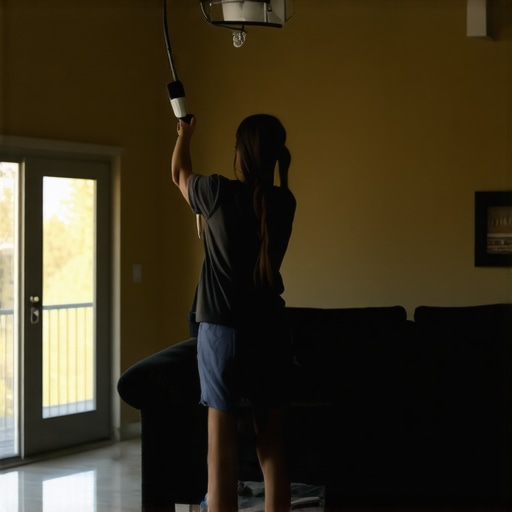
I remember standing on my dining room table, balancing a broom in one hand and holding onto a chandelier for dear life. It was 2019, and I’d just noticed a gray, fuzzy cobweb dancing in the breeze of my vaulted ceiling. It looked like a tiny, sinister ghost. I don’t like ladders. My knees shake, and quite frankly, the thought of hauling a heavy A-frame through my narrow hallway makes me want to just move house instead. But that dust wasn’t going anywhere, and my allergies were screaming. I made the classic rookie mistake of trying to “sweep” the ceiling with a standard broom, which only resulted in a shower of debris landing directly in my eyes. It was a mess. It was painful. And most of all, it was totally unnecessary. Today, I am going to show you how to avoid my mistakes and reclaim your vertical space without ever leaving the safety of the rug.
Reach Those High Spots While Keeping Your Feet on the Ground
We all love the airy feel of a high ceiling until we realize they are essentially giant traps for pet dander and dust mites. If you are preparing for a move-out cleaning hack or just doing a seasonal refresh, the ceiling is the one area most people ignore—mostly because it is terrifying to reach. You do not need to be a circus performer to get a sparkling home. By using specific house cleaning strategies, you can tackle those rafters safely. I used to think that a bit of dust up there did not matter. Then I realized that every time the AC kicked on, those particles were raining down onto my furniture, making my upholstery cleaning tips much harder to put into practice. Keeping the top of the room clean is the first step in sanitizing secrets for a safer house environment. It is all connected. If you have got dusty artificial plants sitting on high ledges, they are likely the source of that musty smell you cannot quite pin down. Have you ever looked at a cobweb and just decided it was part of the decor because you were too scared to climb up there? Let me know in the comments, because I have definitely been there.
Is a specialized telescoping wand actually worth the money?
You might be skeptical. I certainly was. I thought those extendable tools were just cheap gimmicks that would snap the moment they touched a ceiling fan blade. But after I nearly knocked myself out trying to balance on a stack of heavy books, I decided there had to be a better way. According to data from the Consumer Product Safety Commission, more than 160,000 people are treated in emergency rooms each year for injuries related to ladders. That is a staggering number for something as mundane as house chores. This realization changed my entire approach. I stopped looking for the tallest ladder and started looking for the longest reach. My early mistake was assuming power was better than precision; I once tried using a leaf blower to clear a high shelf and ended up breaking a ceramic vase and coating the entire living room in a fine layer of gray soot. Trust me, stay away from the leaf blower indoors. What you need is a system that traps the dust rather than just moving it around. We are going to focus on tools that use static electricity and microfiber to ensure that once you reach those heights, the grime actually stays on the tool and does not end up on your nose.
Grab These Tools Before You Start
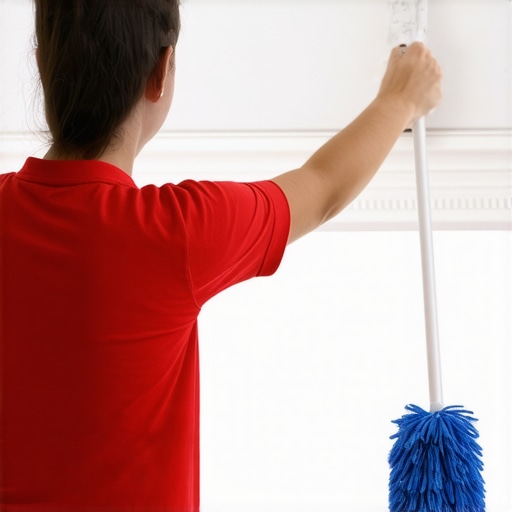
To successfully clean a ceiling without a ladder, you need to think of yourself as a high-altitude surgeon. Precision is key. I highly recommend a telescoping pole that reaches at least 10 feet. Look for one with interchangeable heads: a cobweb duster (the round, prickly one) and a flexible microfiber sleeve. Before you take that first swipe, ensure your cloths are clean, or you will quickly learn why your microfiber cloths are leaving-lint everywhere. Using a dry microfiber head is your best bet because it uses static electricity to ‘grab’ the particles. If you use a wet cloth on a popcorn ceiling, you are going to create a muddy slurry that is nearly impossible to remove. This is a vital part of effective house cleaning secrets from cleaning experts who know that moisture is often the enemy of high-up dust.
Work With Gravity Not Against It
The golden rule of cleaning is to always work from the top down. If you clean your baseboards first and then tackle the ceiling, you are just doubling your workload. When I was prepping for a friend’s party, I spent hours on the floors only to decide the crown molding looked ‘a bit gray.’ One swipe of the duster later, and my pristine floors looked like a construction site. Now, I incorporate high-reach dusting into my daily house cleaning routine to maintain perfection. Start in one corner and move clockwise. For crown molding, use the ‘hook and drag’ technique. Press the microfiber sleeve against the top of the molding and pull it toward you slowly. This prevents the debris from becoming airborne and settles it into the fibers of the cloth. This method is especially important if you are following a move-out clean checklist to simplify your transition, as landlords always check those top ledges for neglect.
Don’t Let Your Ceiling Fan Throw Dust at You
Ceiling fans are the ultimate ‘dust reservoirs.’ If you just swipe at them with a flat duster, you are basically initiating a dust storm. Last summer, I tried to clean my living room fan while it was still on the lowest setting—don’t do that. I spent the next hour sneezing and had to consult an ultimate upholstery care guide for lasting freshness because my velvet sofa was covered in gray flakes. The better way is to use a specialized ‘C-shaped’ fan duster that slides over the blade. This traps the dust on both the top and bottom simultaneously. While you are up there, don’t forget the vents. You should really learn why you should clean your bathroom exhaust fan every month to keep the air flowing and prevent the growth of mold. Once the heavy lifting is done, finishing with effective sanitizing methods for a germ-free home ensures that any lingering spores are neutralized, keeping your sanctuary truly clean.
Stop Ruining Your Countertops with This Popular Natural Hack
Everyone loves to suggest vinegar as the ultimate cleaning solution. It is cheap, eco-friendly, and smells like a salad. But here is the hard truth: vinegar is an acid, and using it indiscriminately is a recipe for disaster. I once watched a friend try to ‘sanitize’ her brand-new kitchen during a deep clean, only to realize why vinegar is not always the best choice for granite countertops. It literally ate through the sealant, leaving dull, etched spots that cost hundreds to repair. If you are applying move-out cleaning strategies to secure your deposit, the last thing you want to do is cause permanent structural damage with a ‘natural’ cleaner. The same applies to high-reach areas; spraying acidic cleaners on metal light fixtures or delicate crown molding finishes can cause oxidation and peeling paint. Have you ever accidentally ruined a surface trying to be ‘extra clean’? Let me know in the comments, because I still feel guilty about that granite countertop mistake.
The Hidden Trap of Direct Spraying
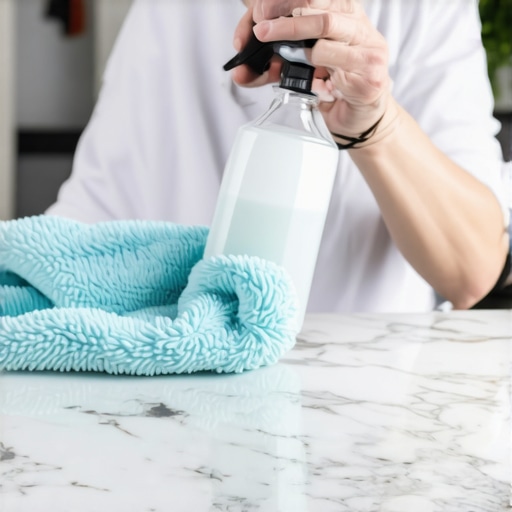
One of the most common errors I see is the ‘point and shoot’ method. We have been conditioned by commercials to spray a thick mist of product directly onto a surface and then wipe. This is a massive mistake. According to a study published by the American Journal of Infection Control, improper application of disinfectants often leads to incomplete sanitization and surface damage. When you spray directly, the liquid often seeps into cracks, electronics, or deep into fabric fibers, which is why you should never spray cleaning products directly on surfaces. Instead, spray your microfiber cloth first. This gives you control. When you are working on high ledges or ceiling fans, spraying into the air just ensures that half the chemicals land in your lungs or on your flooring, making your daily house cleaning routine to maintain perfection a lot more toxic than it needs to be. Controlled application is the hallmark of professional-grade effective house cleaning secrets from cleaning experts.
Why Does That Musty Smell Persist Even After a Deep Clean?
You have dusted the ceilings, wiped the baseboards, and even followed sanitizing secrets for a safer house, yet the room still feels ‘heavy.’ This is usually because the dust has migrated rather than being removed. When we clean high spots, the smallest particles—the ones that carry odors—often settle into soft surfaces. If you haven’t refreshed your fabrics, you’re missing half the battle. I recommend checking out an ultimate upholstery care guide for lasting freshness to address those hidden scent-traps. Furthermore, most people forget that sanitizing and cleaning are two different things. While cleaning removes visible dirt, effective sanitizing methods for a germ-free home are required to kill the bacteria that cause odors. If you are preparing for a transition, using sanitizing hacks for safe house transitions will ensure that the previous tenant’s ‘ghost’ smells don’t become your problem. Always remember to vacuum the soft surfaces *after* the high-reach dusting is done to catch those final microscopic drifters.
Maintaining that ‘just-cleaned’ feeling isn’t about working harder; it is about the quality of the gear you leave in the closet. I used to think a vacuum was just a vacuum until I realized mine was essentially a dust-relocation machine. If you feel like you are cleaning more but seeing fewer results, you should check why your vacuum isnt picking up dirt like it used to. Investing in a true HEPA-sealed system changed my life. According to the Institute of Inspection Cleaning and Restoration Certification (IICRC) in their S100 standard, soil suspension and extraction are the most critical phases of restoration, yet these are the steps most homeowners rush through. By using a vacuum with a sealed bypass, you ensure that the dust you just painstakingly removed from the ceiling does not end up back in your rugs.
Keep Your Home Fresh Without the Weekend Marathon
The secret to staying ahead of the grime is consistency through a daily house cleaning routine to maintain perfection. I spend exactly five minutes every morning with my telescoping microfiber wand. It is my ‘morning walk’ for the house. Because I am doing it daily, the dust never has a chance to bond with the moisture in the air, which is the process that creates that sticky, gray film we all hate. If you are currently using house cleaning strategies that rely on one ‘deep clean’ a month, you are likely working three times harder than you need to. I suspect that in the near future, we will see air filtration systems built directly into our crown moldings, essentially ‘vacuuming’ the air before the particles even have a chance to land on your furniture. For now, however, the human touch remains the best defense.
Stop Dust Before It Even Hits the Floor
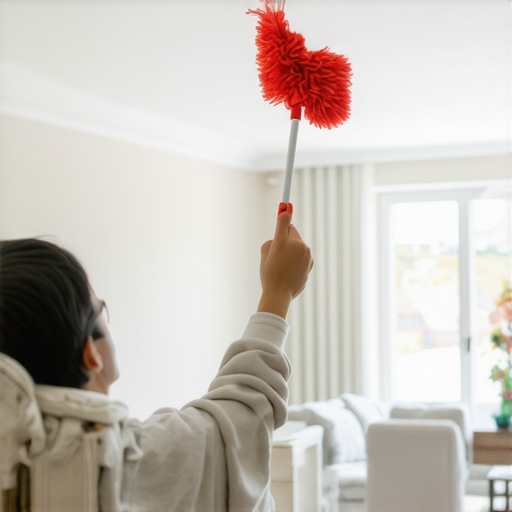
When you focus on the top of the room, you are actually protecting your most expensive investments: your furniture and carpets. By catching debris at the ceiling level, you reduce the need for constant upholstery cleaning tips because the fallout is significantly minimized. I have found that using a high-reach tool with a ‘bendable’ neck is non-negotiable. This allows you to hook over the tops of picture frames and door casings without needing to angle yourself awkwardly. If you are in the middle of a transition, following a move-out clean checklist to simplify your transition will show you that these often-missed spots are exactly what professional inspectors look for. Professional-grade results come from professional-grade effective house cleaning secrets from cleaning experts who prioritize the edges and heights of a room first.
How do I maintain my home’s vertical hygiene over time?
The best way to maintain these results is to treat your high-reach tools like the precision instruments they are. Never store a dirty microfiber head. If it is saturated with dust, you are just painting your ceiling with gray streaks. Furthermore, incorporate effective sanitizing methods for a germ-free home by lightly misting your cleaning cloths with a botanical disinfectant before use. This adds a slight ‘tack’ to the fibers, helping them grab the microscopic spores that dry dusting might miss. If you have recently moved, applying sanitizing hacks for safe house transitions to your high ledges will prevent the previous owner’s dust from circulating in your new environment. My challenge for you: try the ‘Two-Cloth Method’ on your next high-reach session—one slightly damp for the initial pass and one dry for the static finish. You will be amazed at the difference. If you need more specific advice or professional help for those truly unreachable spots, do not hesitate to contact us.
The Truth About Those High-Reach Quick Fixes
Over the years, I have realized that the biggest mistake isn’t using the wrong tool, it’s believing that ‘out of sight, out of mind’ is a valid strategy for the top of your room. When I first started implementing house cleaning strategies for a sparkling home today, I thought a quick wave of a feather duster was enough. It wasn’t. Here is what I know now: dust doesn’t just sit there; it migrates. If you ignore your rafters, you are essentially letting gravity dictate the cleanliness of your floors. I also learned that ‘natural’ doesn’t always mean safe—spraying things blindly toward the ceiling is how I ended up with stained paint and watery eyes. Finally, the best lightbulb moment was realizing that effective sanitizing methods for a germ-free home are useless if the air quality is being compromised by a layer of mold spores on a bathroom fan. High-reach cleaning is the ultimate preventive maintenance for your lungs.
The Gear I Actually Keep in My Utility Closet
I have tested dozens of gadgets, but these are the few that actually earn their keep. First, a high-quality telescoping pole with a pivot head is non-negotiable. It allows you to reach behind pipes and over fans without twisting your wrist. Second, I rely heavily on a HEPA-filter vacuum because if your machine is leaking, you’re just recirculating allergens—if you’re having trouble, check why your vacuum isnt picking up dirt like it used to before you start your next session. Third, I always keep a stash of high-pile microfiber sleeves that can be tossed in the wash. This is a game-changer for those executing move-out cleaning hacks to ensure your deposit refund, as it ensures you leave the home in pristine condition without buying expensive disposable refills.
#IMAGE_PLACE_HOLDER_E#
Take the First Step Toward a Clearer Home
It is easy to feel overwhelmed by the thought of cleaning things that are ten feet in the air, but remember that you don’t have to do it all at once. Start with one room. Once you see how much brighter a space feels when the cobwebs are gone, it becomes addictive. Maintaining your home’s vertical surfaces is one of the most underrated ultimate upholstery care guide for lasting freshness tips I can give you, simply because it stops the mess before it lands. Your home is your sanctuary, and keeping it clean from top to bottom is a way of respecting the space you live in. You’ve got the tools and the knowledge—now it’s time to reach for those heights safely. What is the one spot in your house that feels truly impossible to reach? Let me know in the comments below!