
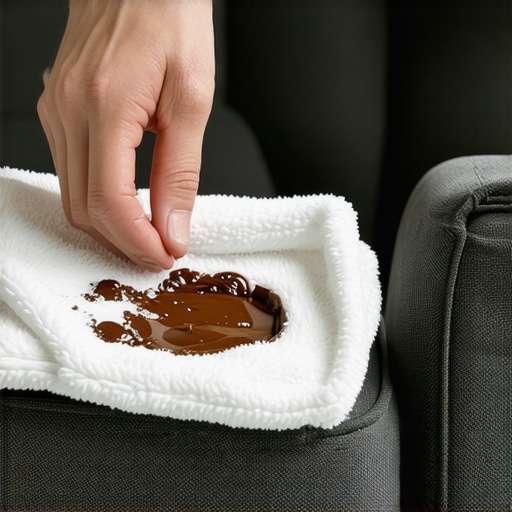
It happened during a quiet Tuesday night Netflix marathon. I was halfway through a decadent piece of dark chocolate when my dog decided my lap was the perfect landing pad for a game of fetch. The resulting smear on my favorite cream-colored armchair looked like a scene from a disaster movie. My first instinct—the one I still kick myself for—was to grab a steaming hot, soapy rag and scrub for dear life. Big mistake. Huge. I didn’t realize then that heat actually cooks the proteins and sets the fats in chocolate, essentially tattooing the fabric. I spent the next three hours making the stain twice as large and ten times more permanent.
Stop Before You Rub That Melted Chocolate
Chocolate is a uniquely devious mess because it is a combination stain. It contains tannins, proteins, and a high concentration of cocoa butter. If you jump the gun and start rubbing, you are simply pushing those oils deeper into the weave of the fabric. I have spent years perfecting upholstery cleaning tips for a fresh home revival, and the most important lesson is that muscle never beats chemistry. Today, I am going to walk you through the exact process to break down those stubborn oils and lift the pigment without leaving that dreaded yellow ‘cleaning ring’ behind. This approach works whether you are doing a routine spruce-up or a high-stakes move-out clean.
Is it actually possible to save a light-colored chair?
It absolutely is, but you have to act with precision rather than panic. Research from the University of Illinois Extension highlights that chocolate’s fat content requires a solvent-based approach or a very specific surfactant to truly release the grip of the cocoa butter from the fibers. In my early days, I used way too much water, which led to mold concerns and a flattened cushion. If you are worried your chair is destined for the landfill, take a breath. We can fix this using the same principles found in my ultimate upholstery care guide for lasting freshness. We will even touch on how the chalk trick for removing grease spots from your sofa can be your secret weapon for that final oily residue. Have you ever tried to scrub a stain only to realize you were just making it three inches wider? I have been there, and I promise there is a better way.
Get the Brown Out Without Spreading the Mess
Before we even think about liquid cleaners, we need to talk about the ‘cold lift.’ We are going to treat this like a surgical operation. If the chocolate is still soft, it is not going anywhere but deeper if you touch it. We need to solidify it first. This is about maintaining the integrity of your furniture. If you are following effective house cleaning secrets from cleaning experts, you know that the ‘dry’ phase of stain removal is often more important than the ‘wet’ phase. If you’re feeling overwhelmed, don’t hesitate to contact us for professional advice, but if you’re ready to DIY, let’s grab some ice and get to work.
Freeze the Mess Before It Sinks Deeper
The very first thing you must do is reach for your freezer, not your cleaning cabinet. Think of melted chocolate like candle wax; if it is warm, it is fluid and ready to bond with every single fiber in your chair. I learned this the hard way years ago when I tried to wipe a warm smudge off a suede ottoman with a damp rag. I ended up creating a ‘permanent brown sun’ that looked like a poorly executed tie-dye project. To avoid my fate, grab an ice cube and wrap it in a thin plastic bag. We use the bag because we want the cold, not the moisture. Press that ice directly onto the chocolate for about sixty seconds. You are waiting for that satisfying moment when the chocolate turns brittle. This is a foundational step in effective house cleaning secrets from cleaning experts: treat the physical state of the mess before you treat the chemical one.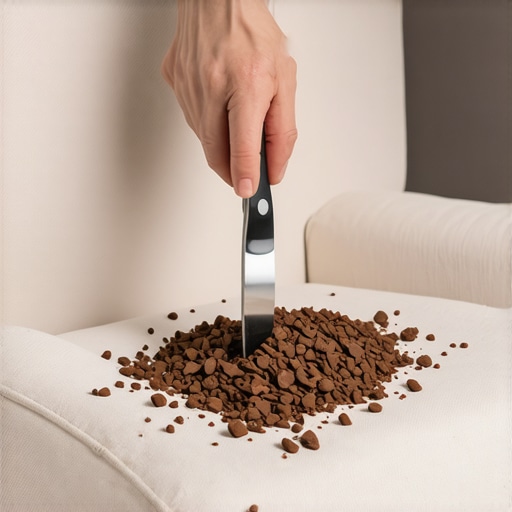
Scrape Like a Surgeon to Save the Fibers
Once the chocolate is frozen solid, you need a dull tool—a butter knife or even a credit card works perfectly. Hold the tool at a slight angle and gently ‘flick’ the hardened pieces away. Do not press down; you are trying to lift the material up and off. When I was prepping for a move-out inspection, I got impatient and used a sharp steak knife on a velvet armchair. I didn’t just remove the chocolate; I removed a quarter-inch of the fabric pile too. If you are following a move-out cleaning hacks ensure your deposit refund strategy, you know that physical damage is much harder to explain away than a faint stain. Work from the outside of the smudge toward the center to ensure you aren’t accidentally widening the perimeter of the mess.
Why Clear Dish Soap Beats Every Fancy Chemical
Now that the solids are gone, we have to deal with the oils. Mix one tablespoon of clear dish soap with two cups of cold water. Avoid warm water at all costs, as it will re-melt any microscopic fat particles and drive them into the cushion foam. Dip a white microfiber cloth into the solution and wring it out until it is barely damp. If you soak the fabric, you risk the dreaded ‘water ring’ and potential interior mold. This is why sanitizing hacks for safe house transitions always emphasize moisture control. Blot the spot repeatedly. Do not rub. Rubbing creates friction heat, which is the enemy of a clean finish. You should see the brown pigment transferring onto your white cloth. Rotate to a clean section of the cloth frequently so you aren’t just re-applying the chocolate you just lifted.
Manage the Residue with the Chalk Trick
If a faint oily shadow remains after the area has dried, do not panic. This is where the chalk trick for removing grease spots from your sofa becomes your best friend. Rub a piece of white blackboard chalk over the dry spot and let it sit for ten minutes. The calcium carbonate in the chalk acts like a magnet for the cocoa butter. This is a crucial part of the ultimate upholstery care guide for lasting freshness because it removes the ‘invisible’ grease that eventually attracts dust and turns into a dark patch later. Vacuum away the powder, and you should see the original color of your fabric restored. By taking these methodical steps, you maintain the integrity of your furniture and ensure your living space remains truly clean.While the ‘cold lift’ saves you from a chocolate disaster, the biggest mistake I see DIYers make isn’t about the chocolate itself—it’s about their misunderstanding of sanitization versus simple cleaning. Most people think if a surface looks shiny, it’s safe. In reality, you’re often just polishing the bacteria rather than removing it. Effective sanitizing methods for a germ-free home require what we professionals call ‘dwell time.’ If you spray a disinfectant and wipe it away three seconds later, you haven’t killed anything; you’ve just lubricated the pathogens. The EPA actually mandates specific contact times—often up to ten minutes—for a product to truly claim it disinfects a surface. This is one of those sanitizing secrets for a safer house in 2025 that most people ignore because we’re all in a rush.
Stop Wiping Your Disinfectant Immediately
If you are performing a move-out cleaning strategy, you might be tempted to douse everything in white vinegar and call it a day. Here is the contrarian truth: vinegar is a terrible sanitizer for high-stakes situations. While it is excellent for breaking down hard water on glass, it is an acid that can slowly eat away at the sealants on your stone or the delicate protective finish on your upholstery. I’ve seen beautiful granite ruined because someone followed a ‘natural hack’ instead of understanding why vinegar is not always the best choice for granite countertops.
What happens if you use the wrong surfactant on a delicate weave?
Using the wrong chemical tension can cause ‘wicking,’ where the stain actually travels vertically up from the padding to the surface as the fabric dries. This is the ultimate ‘oops’ factor for anyone tackling upholstery. You think the chair is clean while it’s damp, but the next morning, the brown spot is back and larger than before. This is why my ultimate upholstery care guide for lasting freshness stresses the importance of using a specialized surfactant to break surface tension without flooding the inner foam. If you’re worried about moisture, you should also know why you should never use a steam cleaner on these specific upholstery fabrics, like certain rayons or high-pile velvets, which can shrink or lose their texture permanently. 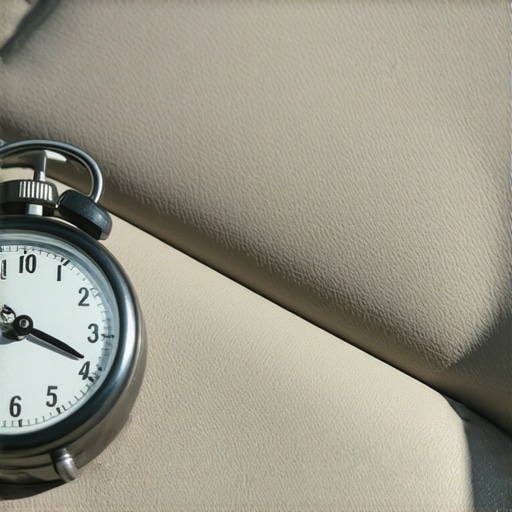
The Hidden Moisture Trap in Your Routine
When you’re under the pressure of a move-out clean checklist, the temptation is to use more water to get things done faster. This is a critical error. Over-wetting is the fastest way to trigger mold growth inside the cushion, a problem you won’t notice until the new tenant moves in and the smell starts to drift. I’ve learned that a ‘less is more’ approach is vital for house cleaning strategies for a sparkling home today. Another specific warning: the ‘residue trap.’ If you use too much soap and don’t thoroughly blot it out with clean water, that soap stays in the fibers. Soap is designed to attract particles. Within a week, your ‘clean’ spot will become a magnet for every piece of dust in the room, turning into a dark smudge. Whether you are learning how to get your security deposit back when you have pets or just trying to maintain your own living room, precision always beats volume. Have you ever fallen into this trap of over-cleaning only to make things worse? Let me know in the comments below!I used to think my heavy-duty shop vac was the ultimate weapon, but I was wrong. The real secret to a home that stays clean—rather than just looking clean for ten minutes—is the quality of your filtration and the specificity of your tools. If you’re serious about your daily house cleaning routine to maintain perfection, you need to ditch the standard bagless uprights that just vent fine dust back into your lungs. I switched to a certified HEPA-sealed system because it captures 99.97% of particles as small as 0.3 microns. This isn’t just marketing; it’s the difference between actually removing allergens and just rearranging them for the next guest. When you are looking for sanitizing secrets for a safer house in 2025, starting with air quality and dry soil removal is non-negotiable.
Invest in a Real HEPA Filter for Long Term Health
Professional-grade maintenance relies on a simple rule: dry soil extraction must happen before moisture ever touches a fiber. The Institute of Inspection Cleaning and Restoration Certification (IICRC) S300 Standard for Professional Upholstery Cleaning explicitly states that up to 79% of soil in fabrics is dry particulate. If you skip the vacuuming and go straight to the soap, you are essentially making mud inside your sofa cushions. This is why you should always vacuum your mattress before you sanitize it. I personally use a horsehair brush attachment for my upholstery because it agitates the weave without causing pilling or fraying, unlike the aggressive plastic bristles found on most consumer models. If you’re wondering how to clean a fabric headboard without getting it too wet, the answer always begins with ten minutes of meticulous, slow-motion vacuuming. 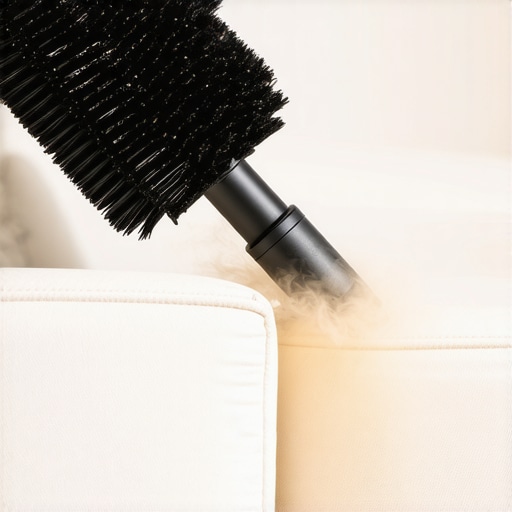
How do I keep my upholstery looking new for years?
The key is managing the friction. Most people wait until they see a gray film on the arms of their chairs before they act, but by then, the grit has already acted like sandpaper on the fibers. To prevent this, I recommend a ‘rotation and fluff’ technique every Sunday. By redistributing the weight and vacuuming the hidden crevices, you prevent the ‘flat cushion’ look and stop the buildup of abrasive dust. If you’re dealing with high-end pieces, you must learn the proper way to vacuum a wool rug without damage to ensure those expensive natural fibers don’t snap. This level of care is what separates a standard home from one that feels like a five-star hotel.
The Future of Smart Cleaning is Already Here
I predict that within the next three years, we will see the widespread adoption of enzymatic ‘living’ cleaners that continue to eat bacteria and odors for days after the initial application. We are moving away from harsh, stripping chemicals toward bio-integrated house cleaning strategies for a sparkling home today. Instead of bleaching the life out of your surfaces, we will be populating them with beneficial microbes that out-compete the bad stuff. It sounds like science fiction, but it’s the most sustainable way to scale home hygiene. For those currently preparing for a transition, these advanced methods are becoming a core part of any move-out cleaning strategy. My challenge to you: next time you vacuum, go three times slower than you think you need to. Give the suction time to work through the density of the fabric. You’ll be shocked at what your ‘clean’ couch was actually hiding.
What I Finally Figured Out About Stubborn Fabric Smudges
Over the years, I’ve realized that the biggest enemy of a clean home isn’t the mess itself—it’s our impatience. I used to think that the harder I scrubbed, the better the result. I was wrong. The real secret is allowing the chemistry to do the heavy lifting while you focus on the prep work. One of my biggest lightbulb moments was discovering how to revive your flat couch cushions with this simple technique after a deep clean, realizing that moisture management is everything.
- The ‘Dry First’ Rule: Never wet a stain until you have vacuumed every possible loose particle. Up to 79% of soil is dry; skipping this turns dust into permanent sludge inside your cushions.
- Know Your Fabric: I learned the hard way that there is one thing you should never do when cleaning a velvet couch, which is applying direct heat or pressure, as it permanently collapses the delicate pile.
- Rinse, Don’t Just Wash: Soap residue is a magnet for new dirt. Always blot with plain cold water until every trace of surfactant is gone, or you’ll see a dark spot return in weeks.
The Tools I Reach for When Disaster Strikes
I don’t rely on luck anymore; I rely on a specific toolkit that has never failed me. First, a certified HEPA vacuum is non-negotiable for anyone following a daily house cleaning routine to maintain perfection. It’s the only way to ensure you aren’t just blowing dust back into the room. #IMAGE_PLACEHOLDER_E# Second, I always keep a stash of high-quality white microfiber cloths. Unlike sponges, they actually lift particles rather than spreading them across the weave. Third, if you ever find yourself wondering how to remove ballpoint pen marks from a fabric sofa, you’ll need a ph-neutral solvent that won’t strip the fabric dye. I trust these tools because they respect the delicate balance of fabric chemistry.
Take the First Step Toward a Fresh Home
Cleaning your furniture doesn’t have to be a source of anxiety. Once you understand the physics of how dirt bonds to fibers, you gain a sense of control that makes maintenance feel like a victory rather than a chore. Whether you are dealing with a chocolate smear or just doing a seasonal refresh, these upholstery cleaning tips for a fresh home revival are your roadmap to a healthier living space. If you ever feel like a stain is beyond your control, don’t hesitate to contact us for professional guidance. You’ve got this!
Have you ever tried to clean a stain only to see it reappear a few days later? Let me know about your experience in the comments below!