
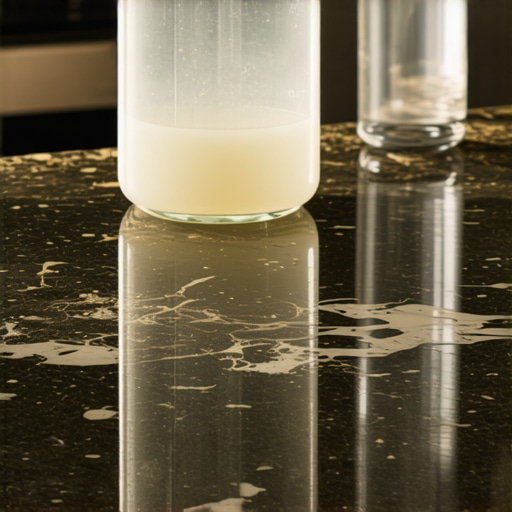
I still remember the first morning I walked into my kitchen after our dream remodel. Those granite slabs were the crown jewels of the room—cool to the touch, flecked with gold, and expensive enough to make my mortgage blush. Naturally, I wanted to treat them with the utmost care. Being a die-hard fan of eco-friendly living, I grabbed my spray bottle of white vinegar and water, feeling quite smug about avoiding harsh chemicals. I sprayed, I wiped, and I felt like a domestic pro. But within a week, I noticed something horrifying. The glossy finish was turning cloudy in patches. My natural cleaning routine was actually dissolving the very stone I loved. It felt like a punch to the gut. I had unknowingly started the process of etching my countertops, and no amount of buffing seemed to bring that mirror-like shine back.
Stop Using Vinegar Before You Etch Your Kitchen Stone
If you have been told that vinegar is the ultimate multi-purpose cleaner, you are not alone. It is cheap, it is effective on glass, and it is a staple in sanitizing secrets for a safer house in 2025. However, granite is a completely different beast. Unlike your laminate or tile, granite is a porous igneous rock composed of minerals like feldspar and quartz that react poorly to acid. When you apply vinegar, the acetic acid creates a chemical reaction called etching. It is not a stain that you can just scrub away; it is actual physical damage to the surface of the stone. I learned this the hard way, thinking I was just dealing with germ hotspots in the kitchen, but I was actually stripping away the professional sealant and the stone’s natural luster. According to the Natural Stone Institute, acidic cleaners with a low pH can cause permanent dulling and pitting in stone surfaces, making them more susceptible to deep stains later on.
We often assume that if it is safe to eat, it is safe to clean with. That logic works beautifully when you are sanitizing your cutting boards, but it is a total disaster for high-end stone finishes. In my early days of DIY home care, I mistakenly thought clean meant acidic and sharp. I was wrong. If you want to keep your kitchen looking like a magazine spread, you need to ditch the pantry staples and embrace the vinegar-free way to clean granite countertops. It saved my kitchen from a total resurfacing bill, and it will save yours too. Real expertise comes from making these messes so you do not have to.
Does This Mean My Counters Are Permanently Damaged?
This is the exact question I asked myself while staring at a hazy ring left by a coffee mug and a splash of salad dressing. The short answer is: not necessarily, but prevention is a whole lot cheaper than a professional stone restoration. When you are in the middle of executing house cleaning strategies for a sparkling home, it is easy to get overzealous. You want that deep-clean feel. But granite requires a strictly pH-neutral approach to stay healthy. I have found that even if you are trying to prep your kitchen for a professional deep clean, using the wrong spray can lead to a long-term cloudy buildup that no retail polish can fix. Have you ever noticed those weird, dull spots on your counters that just will not go away no matter how hard you scrub? Drop a comment below or send me a message—I would love to hear if you have been caught in the vinegar trap too. We are in this together, and I am here to help you avoid the expensive mistakes I have already paid for.
Start with Simple Soap and Warm Water
The biggest secret to maintaining that high-end stone look is surprisingly mundane. You don’t need fancy, expensive chemicals that smell like a chemistry lab. In fact, if you are building a daily house cleaning routine to maintain perfection, the only tool you really need is a mild, pH-neutral dish soap. Think of your granite’s sealant like the protection on a high-end fabric; just as you’d use upholstery cleaning tips for a fresh home revival to avoid stripping fibers, you must treat stone with the same gentleness. Mix a few drops of soap into a bucket of warm water. This solution is gentle enough to break down surface oils without eating through the protective barrier. I’ve found that the truth about castile soap and its cleaning power is particularly relevant here; it is incredibly effective for stone because it lacks the harsh synthetic surfactants found in cheaper cleaners. When you encounter heavier messes, the dish soap trick for removing greasy buildup on kitchen cabinets works perfectly on your countertops too, as long as you rinse the surface thoroughly afterward with plain water.
Master the Two-Cloth Technique for a Perfect Polish
One of my biggest frustrations after I stopped using vinegar was the streaky, cloudy film left behind by soapy water. I felt like I had traded one problem for another. Then I discovered what professional cleaners do: they never let the stone air-dry. You need to use the two-cloth method for streak-free windows in half the time, but applied to your granite. Use one damp microfiber cloth to wash and lift the dirt, and immediately follow up with a completely dry, clean microfiber cloth to buff the surface. This mechanical action removes the soap residue that causes that dreaded haze and restores the mirror-like shine that made you fall in love with the stone in the first place. This approach is a core part of most effective house cleaning secrets from cleaning experts because it relies on physics rather than chemistry to get a shine. 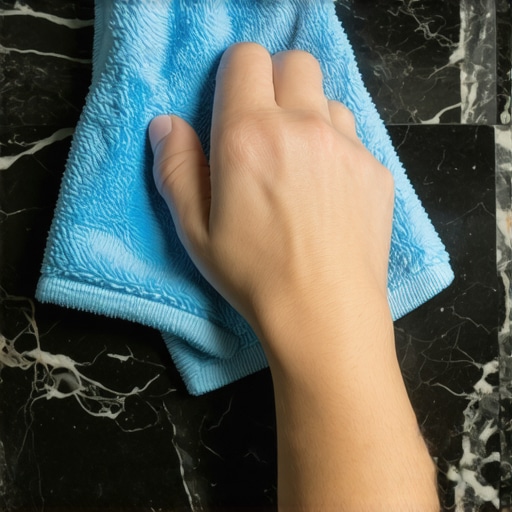
Erase Deep Stains with a Homemade Poultice
I remember a Tuesday night when a full glass of Malbec tipped over right onto the light-grey granite of my island. My heart stopped. Usually, you would think about how to lift red wine spills from a white sofa using only cold water, but stone is different because it is porous. I didn’t scrub; I blotted until the liquid was gone. Then I created a poultice. For oil-based stains, mix baking soda and water into a thick paste. For organic stains like wine or juice, mix baking soda with a tiny bit of hydrogen peroxide. I smeared this paste over the ‘ghost’ of the stain, covered it with plastic wrap, and poked a few holes for ventilation. Twenty-four hours later, as the paste dried, it literally pulled the stain out of the stone’s pores. When I scraped it off with a plastic spatula, the surface was flawless. This is one of those effective sanitizing methods for a germ-free home that doubles as a heavy-duty restoration tool without any acidic damage.
Test Your Sealant to Prevent Permanent Damage
Before you commit to your next big cleaning session, you need to know if your stone is actually protected. When you prep your kitchen for a professional deep clean, perform the water drop test. Place a small bead of water on various spots of your counter and wait ten minutes. If the water is still beading on top, your sealant is healthy. If the stone has darkened or absorbed the water, your ‘armor’ is gone. This is a critical step in any move out clean checklist to simplify your transition, as poorly maintained stone can lead to hefty deductions from your security deposit. Keeping the stone sealed ensures that future spills remain on the surface where they can be easily wiped away with your pH-neutral soap solution.
I still remember the first morning I walked into my kitchen after our dream remodel. Those granite slabs were the crown jewels of the room—cool to the touch, flecked with gold, and expensive enough to make my mortgage blush. Naturally, I wanted to treat them with the utmost care. Being a die-hard fan of eco-friendly living, I grabbed my spray bottle of white vinegar and water, feeling quite smug about avoiding harsh chemicals. I sprayed, I wiped, and I felt like a domestic pro. But within a week, I noticed something horrifying. The glossy finish was turning cloudy in patches. My natural cleaning routine was actually dissolving the very stone I loved. It felt like a punch to the gut. I had unknowingly started the process of etching my countertops, and no amount of buffing seemed to bring that mirror-like shine back.
Stop Using Vinegar Before You Etch Your Kitchen Stone
If you have been told that vinegar is the ultimate multi-purpose cleaner, you are not alone. It is cheap, it is effective on glass, and it is a staple in sanitizing secrets for a safer house in 2025. However, granite is a completely different beast. Unlike your laminate or tile, granite is a porous igneous rock composed of minerals like feldspar and quartz that react poorly to acid. When you apply vinegar, the acetic acid creates a chemical reaction called etching. It is not a stain that you can just scrub away; it is actual physical damage to the surface of the stone. I learned this the hard way, thinking I was just dealing with germ hotspots in the kitchen, but I was actually stripping away the professional sealant and the stone’s natural luster. According to the Natural Stone Institute, acidic cleaners with a low pH can cause permanent dulling and pitting in stone surfaces, making them more susceptible to deep stains later on.
We often assume that if it is safe to eat, it is safe to clean with. That logic works beautifully when you are sanitizing your cutting boards, but it is a total disaster for high-end stone finishes. In my early days of DIY home care, I mistakenly thought clean meant acidic and sharp. I was wrong. If you want to keep your kitchen looking like a magazine spread, you need to ditch the pantry staples and embrace the vinegar-free way to clean granite countertops. It saved my kitchen from a total resurfacing bill, and it will save yours too. Real expertise comes from making these messes so you do not have to.
Does This Mean My Counters Are Permanently Damaged?
This is the exact question I asked myself while staring at a hazy ring left by a coffee mug and a splash of salad dressing. The short answer is: not necessarily, but prevention is a whole lot cheaper than a professional stone restoration. When you are in the middle of executing house cleaning strategies for a sparkling home, it is easy to get overzealous. You want that deep-clean feel. But granite requires a strictly pH-neutral approach to stay healthy. I have found that even if you are trying to prep your kitchen for a professional deep clean, using the wrong spray can lead to a long-term cloudy buildup that no retail polish can fix. Have you ever noticed those weird, dull spots on your counters that just will not go away no matter how hard you scrub? Drop a comment below or send me a message—I would love to hear if you have been caught in the vinegar trap too. We are in this together, and I am here to help you avoid the expensive mistakes I have already paid for.
Start with Simple Soap and Warm Water
The biggest secret to maintaining that high-end stone look is surprisingly mundane. You don’t need fancy, expensive chemicals that smell like a chemistry lab. In fact, if you are building a daily house cleaning routine to maintain perfection, the only tool you really need is a mild, pH-neutral dish soap. Think of your granite’s sealant like the protection on a high-end fabric; just as you’d use upholstery cleaning tips for a fresh home revival to avoid stripping fibers, you must treat stone with the same gentleness. Mix a few drops of soap into a bucket of warm water. This solution is gentle enough to break down surface oils without eating through the protective barrier. I’ve found that the truth about castile soap and its cleaning power is particularly relevant here; it is incredibly effective for stone because it lacks the harsh synthetic surfactants found in cheaper cleaners. When you encounter heavier messes, the dish soap trick for removing greasy buildup on kitchen cabinets works perfectly on your countertops too, as long as you rinse the surface thoroughly afterward with plain water.
Master the Two-Cloth Technique for a Perfect Polish
One of my biggest frustrations after I stopped using vinegar was the streaky, cloudy film left behind by soapy water. I felt like I had traded one problem for another. Then I discovered what professional cleaners do: they never let the stone air-dry. You need to use the two-cloth method for streak-free windows in half the time, but applied to your granite. Use one damp microfiber cloth to wash and lift the dirt, and immediately follow up with a completely dry, clean microfiber cloth to buff the surface. This mechanical action removes the soap residue that causes that dreaded haze and restores the mirror-like shine that made you fall in love with the stone in the first place. This approach is a core part of most effective house cleaning secrets from cleaning experts because it relies on physics rather than chemistry to get a shine.
Erase Deep Stains with a Homemade Poultice
I remember a Tuesday night when a full glass of Malbec tipped over right onto the light-grey granite of my island. My heart stopped. Usually, you would think about how to lift red wine spills from a white sofa using only cold water, but stone is different because it is porous. I didn’t scrub; I blotted until the liquid was gone. Then I created a poultice. For oil-based stains, mix baking soda and water into a thick paste. For organic stains like wine or juice, mix baking soda with a tiny bit of hydrogen peroxide. I smeared this paste over the ‘ghost’ of the stain, covered it with plastic wrap, and poked a few holes for ventilation. Twenty-four hours later, as the paste dried, it literally pulled the stain out of the stone’s pores. When I scraped it off with a plastic spatula, the surface was flawless. This is one of those effective sanitizing methods for a germ-free home that doubles as a heavy-duty restoration tool without any acidic damage.
Test Your Sealant to Prevent Permanent Damage
Before you commit to your next big cleaning session, you need to know if your stone is actually protected. When you prep your kitchen for a professional deep clean, perform the water drop test. Place a small bead of water on various spots of your counter and wait ten minutes. If the water is still beading on top, your sealant is healthy. If the stone has darkened or absorbed the water, your ‘armor’ is gone. This is a critical step in any move out clean checklist to simplify your transition, as poorly maintained stone can lead to hefty deductions from your security deposit. Keeping the stone sealed ensures that future spills remain on the surface where they can be easily wiped away with your pH-neutral soap solution.
Why Steam Cleaning Might Be Your Sofa’s Worst Enemy
Let’s dig deeper into the nuances that even seasoned homeowners miss. While we’ve covered the dangers of acid on stone, the world of upholstery is just as treacherous. Everyone tells you to steam clean your furniture to kill bacteria, but in my experience, that advice can be a death sentence for your living room set. If you own a couch with an ‘S’ cleaning code, using water or steam will leave permanent rings and potentially dissolve the internal adhesives. I’ve seen beautiful linen ottomans ruined because someone tried to follow generic upholstery cleaning tips for a fresh home revival without checking the tag first. You must know how to treat s-coded upholstery fabric without ruining it, which usually requires a solvent-based cleaner rather than your typical soap and water mix. This is precisely why you should never use a steam cleaner on these specific upholstery fabrics. Have you ever accidentally shrunk or stained a cushion by being ‘too clean’? Let me know in the comments—it’s more common than you think. 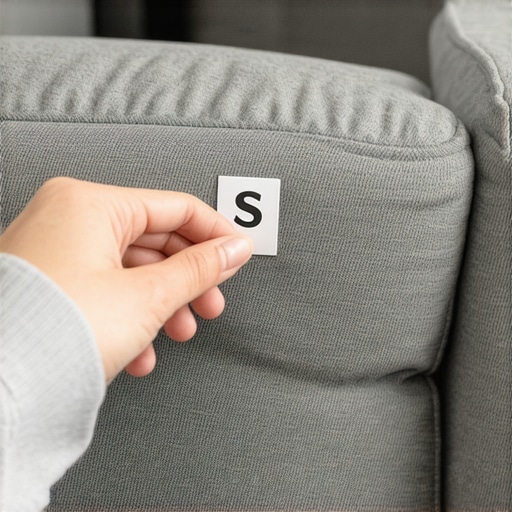
The Microscopic Residue Sabotaging Your Shine
The ‘Oops’ factor doesn’t stop at fabric. One of the most advanced mistakes people make during a move out clean checklist to simplify your transition is the over-application of sanitizers. We’ve been conditioned to think that more product equals more ‘clean,’ but the IICRC (Institute of Inspection, Cleaning and Restoration Certification) warns that chemical over-saturation actually attracts dirt like a magnet. When you use too much product to follow effective sanitizing methods for a germ-free home, you leave behind a sticky surfactant film. This is why your floors might feel tacky or your counters look streaky even after you’ve ‘cleaned’ them. When you are looking for move-out cleaning hacks to ensure your deposit refund, the real nuance isn’t the heavy scrubbing; it’s the rinsing. Landlords aren’t just looking for dirt; they are looking for the feel of the home. If I’m inspecting a property and the floor feels gummy, I know the tenant used too much cleaner.
Are You Cleaning the Invisible Zones Your Landlord Is Watching?
And don’t forget the ‘invisible’ zones. I’ve found that 7 spots behind the toilet your landlord always checks first are the most frequent reason for a withheld deposit. Finally, if you’re dealing with biological messes, stop reaching for the hot water. It’s a common myth that heat ‘disinfects’ as it cleans, but if you’re trying to lift a protein-based stain, heat will cook the proteins into the fibers. You need to understand why you should never use hot water on a fresh blood stain—cold water is your only ally there. Real expertise is knowing when to put the kettle down and pick up the ice water. Moving from a basic daily house cleaning routine to maintain perfection to a truly professional standard requires unlearning these obvious habits that actually do more harm than good.
If you’re serious about a long-term result, you have to stop trusting the $40 vacuum you bought on a whim. I realized this after testing my air quality and finding that my old machine was just recirculating fine particles back into my lungs. This is precisely why your vacuum is actually spreading more dust around. Professionals rely on HEPA (High-Efficiency Particulate Air) filtration that captures 99.97% of particles as small as 0.3 microns. According to the Carpet and Rug Institute’s (CRI) Seal of Approval program, the right vacuum doesn’t just suck up visible crumbs; it protects the indoor air quality of your home by preventing the blowback of allergens. If you are executing sanitizing secrets for a safer house in 2025, a certified HEPA vacuum isn’t an option—it’s a requirement.
Stop The Grit Before It Destroys Your Fabric
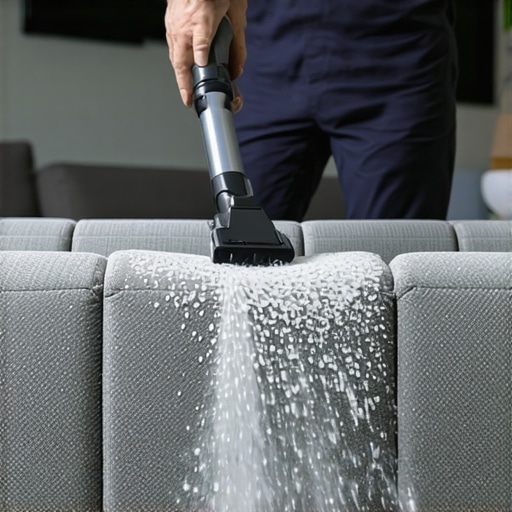
I’ve seen too many high-end sofas lose their life because homeowners waited for a visible stain to take action. The real enemy of your furniture isn’t the occasional wine spill; it’s the invisible atmospheric dust that acts like sandpaper on the fibers. When you sit down, you grind that dust deep into the weave, snapping the threads over time. This is why following an ultimate upholstery care guide for lasting freshness is more about mechanical removal than chemical treatment. I personally use a high-powered upholstery attachment twice a week, and the difference in fiber resilience is staggering. If you are aiming for effective house cleaning secrets from cleaning experts, start with the vacuum, not the spray bottle.
How do I maintain my stone and upholstery over time?
Consistency is the boring truth behind every beautiful home. You don’t need a deep-clean marathon every weekend if you have a daily house cleaning routine to maintain perfection. For stone, this means a quick wipe-down with a damp microfiber cloth every night to remove salts and oils. For fabric, it means flipping your cushions monthly to distribute wear. I’ve seen so many people desperate for upholstery cleaning tips for a fresh home revival simply because they let dust settle for years. If you’re planning a transition, integrating these small habits into a move out clean checklist to simplify your transition makes the final scrub-down a breeze rather than a nightmare. It’s about scaling the effort so you aren’t overwhelmed at the finish line.
The Future of Smart Cleaning Technology
Looking ahead, I expect we’ll see more ‘smart’ stone sealants that change color slightly or send a notification to your phone when they need a re-application, removing the guesswork of the manual water drop test. We are already seeing robotic mops that can distinguish between hardwood and granite, adjusting their pH levels on the fly. Until those become affordable for everyone, my top advanced tip is to buy a digital pH tester. They are inexpensive and take the mystery out of ‘neutral’ cleaners. Try testing your favorite ‘natural’ cleaner today; if it’s not between 6 and 8, keep it away from your stone. Knowing your chemistry is the quickest move out cleaning hack to ensure your deposit refund and a pristine home for years to come.
The Expensive Mistakes That Taught Me How to Actually Clean
Looking back at my etched granite and my once-ruined linen ottoman, I’ve realized that the most expensive damage often comes from a place of love mixed with a lack of specific knowledge. First, never assume that ‘natural’ equals ‘safe’—acid doesn’t care if it’s organic; it will still eat through your stone sealants. Second, I learned that frequency is more important than force. You don’t need to scrub harder if you are following an ultimate upholstery care guide for lasting freshness. Finally, the greatest ‘hack’ isn’t a new product; it’s the patience to let a gentle solution work its magic rather than rushing with harsh chemicals that strip away the protection you paid for.
Tools That Stop the Damage Before It Starts
If you want to stop the cycle of ‘cleaning and regretting,’ your toolkit needs a serious upgrade. I recommend ditching the multi-purpose sprays for a high-quality pH-neutral stone soap and a dedicated HEPA-filter vacuum. These are essential for anyone practicing sanitizing secrets for a safer house in 2025. I also swear by color-coded microfiber cloths; one set for the kitchen stone and another for delicate fabrics. This simple system prevents cross-contamination and ensures you’re always using the right tool for house cleaning strategies for a sparkling home today. #IMAGE_PLACEHOLDER_E#
Give Your Surfaces the Respect They Deserve
Maintaining a home is about more than just aesthetics; it’s about preserving the history and the value of your sanctuary. Whether you are working through a move out clean checklist to simplify your transition or just trying to survive a busy week, remember that your home responds best to a light touch. By implementing a daily house cleaning routine to maintain perfection, you eliminate the need for the aggressive chemicals that caused my ‘gut-punch’ moments in the first place. You’ve got the tips and the tools—now go give your home the care it deserves. Have you ever had a ‘heart-drop’ moment where you realized a cleaning product was actually damaging your furniture or floors? Let me know in the comments below!