
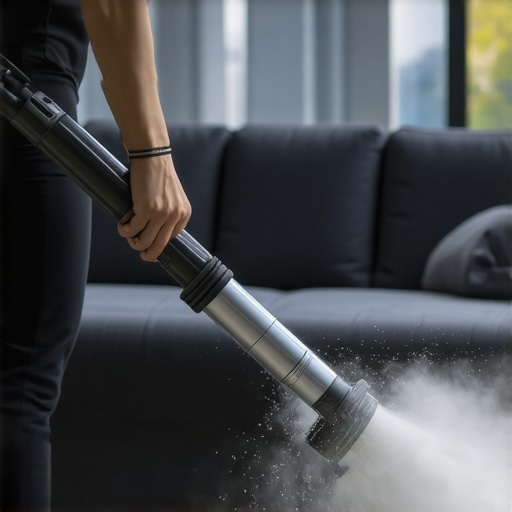
The Simple Vent Cleaning Step That Finally Keeps Your Sofa Dust-Free
You’ve spent the better part of your Saturday morning vacuuming every crevice of your sectional. You’ve used the lint roller, the specialized upholstery attachment, and perhaps even a fabric refresher. Yet, by Sunday evening, you notice it again: a fine, greyish film of “phantom dust” settling across the back cushions and armrests. It’s a frustrating cycle that leaves many homeowners in South Ogden and Farr West wondering if their cleaning efforts are simply in vain.
My name is Brock Kap, and as an HVAC Installer at BUILT TUFF HVAC LLC in South Ogden, Utah, I’ve spent years looking inside the “lungs” of local homes. What most people don’t realize is that your sofa isn’t the problem – your HVAC system is. While we often think of our heating and cooling systems as mere temperature regulators, they are actually the primary drivers of indoor air quality. If your upholstery is constantly dusty, the root cause isn’t your cleaning schedule; it’s a hidden accumulation within your ductwork that is being blasted directly onto your furniture every time the fan kicks on. To stop the cycle, you need to look beyond the cushions and toward the vents.
The Science of the “Dust Cycle”
To solve the dust problem, we first have to understand what dust actually is. Contrary to popular belief, it isn’t just “dirt” from outside. Research indicates that indoor dust is a complex biological soup consisting of dead skin cells (up to 50% of the volume), pet dander, microscopic fabric fibers, pollen, and outdoor pollutants tracked in on shoes. In a closed environment, this particulate matter doesn’t just sit still; it enters what I call the “Dust Cycle.”
Your HVAC system operates on a pressure loop. The return vents pull air in from your rooms to be heated or cooled, while the supply vents blow that conditioned air back out. If your home is older or hasn’t had regular hvac system maintenance, the interior of your ducts acts as a reservoir for years of accumulated debris. When the furnace or AC starts, a high-velocity burst of air picks up these fine particles and distributes them. Because sofas are usually placed along walls – often directly beneath or across from supply registers – they act as giant horizontal filters, catching the fallout of this airborne debris. Why Your House Still Feels Dusty No Matter How Much You Wipe often comes down to this mechanical redistribution of particles.
The “Secret” Step: Deep Cleaning Your Vent Covers
Most homeowners believe that running a vacuum brush over the slats of their vent covers is sufficient. It isn’t. Over time, particularly in homes where cooking oils are used or where there is high humidity, a microscopic “sticky” film develops on the metal or plastic of the vent covers. This film is a magnet for dust. Even if the air coming through the ducts is relatively clean, it picks up the “fuzz” hanging off the sticky slats and launches it onto your sofa.
The “Secret Step” that finally breaks this cycle is the Deep Soak Method. Instead of just wiping them, you must physically remove the vent covers throughout your home. Here is the process we recommend at BUILT TUFF HVAC LLC:
- Removal: Unscrew the vent covers from the walls, floors, or ceilings. If they are stuck due to years of paint, carefully score the edges with a utility knife.
- The Dish Soap Hack: Fill a bathtub or a large utility sink with warm water and a generous amount of degreasing dish soap. Soak the covers for at least 30 minutes. This breaks down the “sticky” kitchen grease and oils that hold onto dust.
- Scrubbing: Use a soft-bristled brush to ensure every slat is free of debris.
- Duct Entry Vacuuming: While the covers are soaking, use a high-powered vacuum with a crevice tool to reach as far into the duct opening as possible. This removes the “settled” dust that sits right at the mouth of the vent, waiting to be blown out.
While vacuuming vent covers weekly is a “fast fix” for aesthetics, this deep soaking is the “permanent fix” that prevents the sticky buildup from acting as a dust launcher. If you find that your vents are excessively clogged or the air smells musty, it might be time to consider hvac ductwork installation or a professional cleaning to address deeper issues.
Why Your HVAC Filter Isn’t Enough
A common misconception is that a high-quality air filter will solve all dusting woes. While HEPA filters and high MERV (Minimum Efficiency Reporting Value) ratings are excellent for trapping airborne particles, they only clean the air that passes through them. They do nothing for the dust already residing in the “downstream” portion of your ducts – the part between the filter and your living room.
If your ducts are dirty, even a brand-new MERV 13 filter won’t stop dust from settling on your sofa. Furthermore, using a filter with too high a MERV rating can actually restrict airflow in older systems, leading to a need for heating and cooling emergency repair. The system has to work harder to pull air through the dense filter, which can cause the blower motor to overheat. It is a delicate balance between filtration and system health that requires professional oversight.
Local Spotlight: South Ogden & Farr West Air Quality
Living in Utah presents unique challenges for indoor air quality. In areas like South Ogden and Farr West, our climate is notoriously dry. This lack of humidity makes dust particles more buoyant; they stay airborne longer rather than settling quickly, which gives them more opportunity to be sucked into the HVAC system and redistributed.
Furthermore, seasonal winds coming off the Wasatch Front carry fine silt and agricultural dust into our homes. This is why local hvac companies often recommend more frequent maintenance schedules than those in more humid coastal regions. In the dry Utah air, dust becomes a “static” problem – literally. Static electricity in dry homes causes dust to cling to synthetic sofa fabrics like polyester and microfiber. Using a whole-home humidifier as part of your heating and air conditioning services can help dust settle faster so it can be captured by your vacuum rather than your lungs.
When “DIY” Isn’t Enough: Identifying System Failures
Sometimes, no matter how much you soak your vents, the dust persists. This is often a sign of a mechanical failure within the system. If you notice “puffs” of dust when the system starts, you may have a leak in your return ducts. These leaks often occur in unconditioned spaces like crawlspaces or attics, sucking in insulation fibers and outdoor dirt and pumping them directly into your living room.
In these cases, DIY cleaning won’t help. You may need air conditioning ductwork replacement to seal the system properly. Similarly, if your furnace is over 15 years old, it may be losing its ability to manage airflow effectively, requiring furnace installation services to restore a clean, pressurized environment. Excessive dust near your registers is a “check engine light” for your home; ignore it, and you may soon be looking for a heater repair service near me when the system finally chokes on its own debris.
Upholstery Maintenance Tips for a Dust-Free Home
Once you have addressed the HVAC issues, you can focus on maintaining the sofa itself. To keep your upholstery pristine, follow the Top-Down Method used by professional cleaners: always start cleaning from the highest point in the room (ceiling fans and crown molding) and work your way down to the sofa and floors. This ensures that any dust disturbed during cleaning doesn’t land on a surface you’ve already finished.
Another critical tip: The Microfiber Rule. Never use cotton cloths or old t-shirts to dust. Cotton fibers are round and simply move dust around or push it into the fabric of your sofa. Microfiber, on the other hand, is designed with split fibers that create a positive charge, physically grabbing and holding the dust. For more specialized advice, check out our Ultimate Upholstery Care Guide for Lasting Freshness. If your vacuum has started to contribute to the problem, you might want to read about Why your vacuum smells like feet and how to fix it to ensure you aren’t just blowing bacteria back into the room.
For those with pets, the challenge is doubled. Dander is oily and sticks to upholstery fibers. Learning How to get the dog smell out of your favorite armchair often involves first tackling the dust that traps those odors. And don’t forget the hidden areas; The forgotten dust trap behind your refrigerator coils can also contribute to the overall particulate load in your kitchen and living areas.
Conclusion: A Breath of Fresh Air
A dusty sofa is rarely just a cleaning problem; it is a symptom of an HVAC system that needs attention. By implementing the “Deep Soak” method for your vent covers and ensuring your system is professionally maintained, you can break the dust cycle once and for all. Not only will your furniture stay cleaner, but the air you breathe will be significantly healthier.
If you’ve tried these steps and still find yourself overwhelmed by indoor pollutants, it may be time for an air conditioning system repair or a professional duct inspection. Don’t let your home’s “lungs” work against you. Clean the vents, seal the leaks, and finally enjoy a sofa that stays as fresh as the day you cleaned it.