
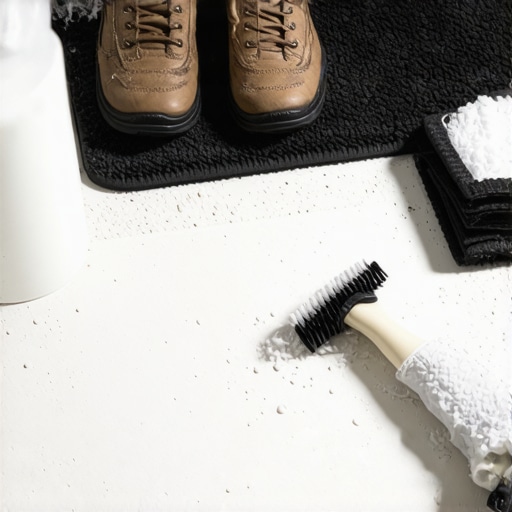
I remember last February vividly. I’d just bought this beautiful navy runner for the foyer, and three days later, it looked like a salt flat in Utah. Those white, crusty rings weren’t just ugly; they felt like sandpaper under my feet. I panicked and grabbed a bucket of steaming hot water and dish soap, thinking I’d just “wash it away.” Big mistake. I ended up with a soggy, salty mess that took days to dry and left the fibers feeling stiffer than a frozen board. It was a classic case of trying too hard and making things worse, a lesson I’ve applied to everything from rug care to a move-out clean checklist to simplify your transition.
Why Winter Salt Is a Rug’s Worst Nightmare
It’s more than just a cosmetic issue. That road salt—usually a mix of sodium chloride and calcium chloride—is incredibly abrasive. If you don’t tackle it quickly, those crystals act like tiny knives, slicing through rug fibers every time you step on them. I’ve learned the hard way that a daily house cleaning routine to maintain perfection has to change the moment the first snowflake hits the ground. Today, I’m going to show you how to neutralize that salt without damaging your rug, using simple household items. We are going to treat your entryway with the same care you’d use when learning upholstery cleaning tips for a fresh home revival.
Is it actually possible to save a rug that’s already turned white?
The short answer is yes, but you have to stop scrubbing. My biggest early mistake was thinking elbow grease solved everything. In reality, salt requires a chemical reaction to dissolve properly. According to the Carpet and Rug Institute, calcium chloride—a common de-icer—is hygroscopic, meaning it attracts moisture from the air, which can keep your rug perpetually damp and lead to fiber rot if not neutralized. This is why just vacuuming isn’t enough. You need a specific strategy, much like knowing how to lift muddy paw prints from a cream rug without spreading the dirt.
Stop Drowning Your Rug in Excess Water
When you see those white stains, your first instinct is to douse them. Don’t do it. Too much moisture pushes the salt deeper into the backing where it can stay for years. I’ve found that a light, controlled touch is always the winner. Whether you’re prepping for guests or working through house cleaning strategies for a sparkling home today, the goal is extraction, not saturation. Have you ever looked at your rug in March and realized the “clean” spot you made in January is now a giant, crunchy hole? I’d love to hear your own winter cleaning horror stories in the comments! Now, let’s get into the actual tools you’ll need to fix this mess.
The Simple Solution Hiding in Your Pantry
To fix a salt-damaged rug, you don’t need expensive chemicals; you need a chemistry lesson. Road salt is alkaline, and to neutralize it, you need a mild acid. Plain old white vinegar is your best friend here because it breaks the bond between the salt and the fibers, allowing the residue to go back into solution so you can actually lift it away. I learned this after discovering some effective house cleaning secrets from cleaning experts who specialize in harsh climates. If you skip the vinegar and just use water, the salt often remains trapped in the backing even after the surface looks dry.
Start by Sucking Up the Surface Grime
Before you even think about getting the rug wet, you have to get the loose crystals out. I once tried to clean my mudroom rug without vacuuming first, and I essentially created a salt-water slurry that acted like a permanent gray dye. Use a high-quality vacuum with a beater bar or, better yet, a shop vac. You want to hear those salt crystals hitting the plastic tube—that’s the sound of victory. This is a critical part of a daily house cleaning routine to maintain perfection during the winter months when the salt is being tracked in hourly.
Mix the Only Liquid That Actually Dissolves Salt
Take a spray bottle and mix a 50/50 solution of lukewarm water and white vinegar. Don’t use hot water. Just as why you should never use hot water on a fresh blood stain is about preventing the stain from setting deeper, lukewarm water prevents the salt from becoming even more aggressive. Lightly mist the white areas. You aren’t trying to soak the rug to the floorboards; you just want to dampen the fibers so the vinegar can start the neutralization process.
#IMAGE_PLACE_HOLDER_B#
Blotting is the Secret to Fiber Survival
Once the solution has sat for about three minutes, take a clean white microfiber cloth and press down firmly. Do not rub. Rubbing is how you fray the fibers and turn a beautiful rug into a fuzzy, distorted mess. I remember helping my sister move out of her old apartment; she had a gorgeous wool rug that had a massive salt patch. I was so determined to get it out that I scrubbed until the pile actually started to bald. She didn’t get her deposit back, and I felt terrible. We could have avoided that if we followed a proper ultimate upholstery care guide for lasting freshness or simply been more patient with the blotting process.
Keep Your Entryway From Becoming a Salt Trap
Prevention is half the battle. If you can stop the salt at the door, you save yourself hours of labor. I’ve started implementing the 5-minute daily habit that keeps your entryway mud-free, which involves a double-mat system: a coarse coir mat outside and a high-absorption rug inside. This layering keeps the heaviest deposits away from your decorative rugs. It is one of those sanitizing secrets for a safer house in 2025 that sounds too simple to work, but it changes everything once the slush hits the floor.
While my vinegar-and-water trick works wonders for neutralizing alkaline salt, there is a dangerous trap I see people fall into: assuming that ‘clean’ means ‘sanitized.’ Most homeowners think that if a surface looks spotless, the job is done. However, according to a study published in the Journal of Environmental Health, common household pantry items like vinegar often fail to eliminate the same spectrum of bacteria as EPA-registered disinfectants. If you’re dealing with more than just road salt—perhaps some winter-flu germs or salt-mixed slush from a busy street—you need to integrate effective sanitizing methods for a germ-free home alongside your stain removal.
Stop Assuming Vinegar is a Universal Cure-All
I used to be a total vinegar evangelist until I realized that relying solely on it can be a recipe for a failed move-out inspection. Vinegar is amazing for salt because it’s an acid meeting a base, but it can actually strip the protective finishes off certain materials. I’ve seen people try to clean salt off their baseboards with a heavy vinegar solution and end up needing house cleaning strategies for a sparkling home today just to fix the dull, etched wood. Another ‘oops’ factor is the pH level of your cleaning agents. If you keep applying vinegar to a wool rug without a final rinse of plain water, you can actually cause ‘acid burn’ or weaken the fibers over time. This makes the rug more susceptible to future stains and wear.
Can You Use These Salt-Dissolving Tricks on Delicate Silk or S-Coded Fabrics?
This is where the real experts separate themselves from the weekend warriors. Before you touch a salt stain on a high-end armchair, you must check the tag. If you see an ‘S’ code, using my vinegar-and-water mix will likely leave a permanent water ring that is harder to remove than the salt itself. In those cases, you have to know how to treat s-coded upholstery fabric without ruining it, which usually involves dry-cleaning solvents rather than water-based solutions. I once saw a beautiful velvet sofa ruined because the owner tried to ‘blot’ a salt stain with a damp cloth, ignoring the delicate nature of the pile. Have you ever fallen into this trap where you over-cleaned and caused more damage? Let me know in the comments!
#IMAGE_PLACE_HOLDER_C#
Don’t Let Your Restoration Effort Ruin the Pile
One nuance people miss is the ‘crunch factor’ that remains even after the salt is gone. This is often caused by residual soap or minerals left behind in the fibers. If you’ve followed a ultimate upholstery care guide for lasting freshness, you know that the final step should always be a ‘grooming’ of the carpet pile with a soft brush once it’s dry. This breaks up any remaining stiffness and restores the soft hand-feel you expect from a quality rug. If you’re prepping for a move, remember that landlords don’t just look for stains; they look for neglect. This is why why the space behind the oven costs most renters their deposit—it’s about the hidden details that suggest the home wasn’t maintained. The same applies to your rugs; a crunchy, stiff entryway rug is a red flag for a deep-seated salt problem that hasn’t been properly neutralized.
I used to think my standard upright vacuum was invincible, but winter salt taught me otherwise. To truly maintain a home that feels professional-grade, you need to upgrade your toolkit beyond the basic grocery store aisle. I personally swear by a high-efficiency particulate air (HEPA) filtered vacuum because salt crystals, when crushed, turn into a fine dust that standard bags often cough back into the room. If you’ve ever wondered why your vacuum is blowing dust back into the air, it’s usually because the filtration can’t handle the microscopic abrasive particles tracked in from the driveway. For my entryway, I use a small, portable spot extractor. These machines aren’t just for spills; they are the ultimate weapon for a move-out cleaning strategy to secure your deposit because they pull the moisture and the dissolved salt out of the backing entirely, something a cloth alone can never achieve.
The Specialized Gear That Keeps My Entryway Professional-Grade
When I’m dealing with heavy buildup, I rely on a carpet pile brush—a tool most people ignore. It looks like a giant, stiff-bristled comb. By brushing the rug before and after cleaning, I ensure the vinegar solution reaches the base of the fibers. This is one of those effective house cleaning secrets from cleaning experts that prevents the ‘crunch’ I mentioned earlier. According to the Carpet and Rug Institute (CRI) in their Seal of Approval technical guidelines, using equipment that fails to extract at least 90% of the applied water can lead to secondary damage like browning or wicking. This is why I always follow my vinegar mist with a ‘dry pass’ using my extractor, ensuring no liquid lingers long enough to cause trouble.
#IMAGE_PLACE_HOLDER_D#
How do I maintain a salt-free floor without daily scrubbing?
The secret isn’t more cleaning; it’s smarter barriers. I’ve moved toward using washable Ruggable-style systems in my high-traffic zones. Being able to throw the entire top layer into the washing machine is a game-changer for a daily house cleaning routine to maintain perfection. However, even with these, you still need to treat the sub-floor. I’ve started applying a hydrophobic fabric protector to my more expensive wool runners every October. It creates a molecular barrier that gives you an extra few minutes to blot a slush puddle before it sinks in. This kind of proactive care is essential if you want to master upholstery cleaning tips for a fresh home revival without constantly hiring professionals.
The Future of Self-Cleaning Fibers and Smarter Vacuums
I predict that in the next five years, we are going to see a massive shift toward ‘active’ flooring. We are already seeing silver-ion-infused fibers in high-end commercial carpets, which provide a permanent layer of protection. This aligns with the growing demand for sanitizing secrets for a safer house in 2025. I also expect consumer-grade vacuums to include built-in pH sensors that can tell you exactly when a salt stain has been neutralized. Until then, we have to rely on our own chemistry and the right tools. If you’re ready to take your home care to the next level, I challenge you to try the ‘double-extraction’ method this week: mist your rug with your vinegar mix, wait three minutes, and then use a shop-vac to pull the liquid out before blotting with a dry microfiber. You’ll be shocked at the gray sludge you pull out of a rug that looked ‘clean.’ If you need more specific advice for your space, feel free to contact us for a personalized consultation.
What I Finally Understood After Three Ruined Entryway Rugs
One thing I learned too late is that road salt isn’t just ‘dirt’—it’s a chemical reaction waiting to happen. If you leave it sitting in the pile until the spring thaw, the abrasive damage to the fibers is often permanent. I’ve realized that integrating a daily house cleaning routine to maintain perfection is significantly easier than trying to resurrect a dead rug in April. Another lightbulb moment was the ‘rinse’ step; while vinegar neutralizes the alkaline salt, if you don’t remove the vinegar residue with a final water-only pass, you’re simply trading one residue for another. Finally, never underestimate the power of air circulation. Setting a small desk fan to blow across the damp spot after cleaning prevents that musty ‘winter basement’ smell from setting into the backing.
The Gear That Makes My Salt-Removal Routine Actually Work
I don’t leave my foyer to chance anymore. I keep a dedicated ‘winter caddy’ ready to go so I can catch salt before it dries. My toolkit includes a soft-bristled pile brush to lift the fibers and a high-quality portable spot extractor. These machines are the real MVPs because they pull the dissolved salt out of the rug entirely, which is one of the most effective house cleaning secrets from cleaning experts for high-traffic zones. I also recommend keeping a stack of white microfiber cloths—colored ones can sometimes bleed dye when they hit the acidic vinegar solution. If you’re feeling overwhelmed by the seasonal mess, learning how to schedule a deep clean that actually lasts more than a week will help you maintain your sanity while the snow continues to fall.
Don’t Let the Slush Dictate the Life of Your Rugs
Winter is undeniably tough on our homes, but it doesn’t have to be a death sentence for your favorite decor. By staying proactive and using the right chemistry instead of brute force, you can keep your floors looking as fresh as they did in the middle of summer. Remember that a truly clean home is also a healthy one; mastering sanitizing secrets for a safer house in 2025 starts with the very first step you take inside your door. If the stains are deeper than you expected or you’re worried about delicate fibers, don’t hesitate to contact us for expert guidance. Have you ever found a salt stain months later that you thought was gone? Drop your rug-saving success stories in the comments below!