
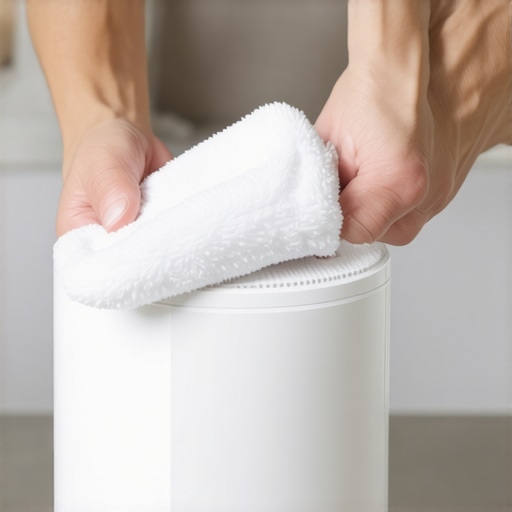
I’ll never forget the morning I woke up feeling more congested than when I went to sleep. It was mid-January, the air was bone-dry, and my trusty humidifier had been humming all night. But as I leaned over to turn it off, a faint, musty odor hit me—a smell like damp basement socks. I unscrewed the tank, peered inside, and saw it: a thin, slippery film of pink slime clinging to the base. I’d been breathing that in for eight hours. It was a total wake-up call. I thought I was doing something good for my health, but my laziness was actually turning my bedroom into a petri dish. If you’ve been feeling sluggish or noticed a weird smell in your room lately, it might be time to look at your misting machine through a different lens.
My Humidifier Was Making Me Sicker Than the Dry Air
In my early days of homeownership, I committed the ultimate cleaning sin: the ‘top-off.’ I’d just keep pouring more water into the tank every night without ever emptying the leftover dregs or scrubbing the corners. I figured since it was just water, it couldn’t be that dirty. I was wrong. That stagnant water is basically a luxury resort for bacteria. I learned the hard way that missing even a few days of a daily house cleaning routine to maintain perfection can lead to a buildup that you can’t just rinse away. Eventually, that film turns into hard mineral scale, which traps even more gunk. Today, I’m going to show you how to break that cycle and get into the real sanitizing secrets for a safer house in 2025 that will actually keep your lungs happy and your air fresh. Trust me, once you see what’s hiding in the heating element, you’ll never skip a deep clean again.
Can a Little Bit of Pink Slime Really Hurt You?
It’s easy to look at a small patch of discoloration and think it’s harmless. I used to think the same about the hidden reason your shower curtain has pink slime—it just looks like a cosmetic issue. However, when that slime (often Serratia marcescens) gets atomized and sprayed into the air you breathe, it’s a whole different ballgame. According to the Consumer Product Safety Commission (CPSC), bacteria and fungi can grow in the water tanks of humidifiers and become airborne, leading to ‘humidifier fever’—a flu-like illness that can really knock you sideways. It’s one of the most important essential sanitization steps for your home after a family illness or even just during the peak of winter. Have you ever caught a whiff of something ‘off’ while your humidifier was running and just ignored it? Don’t feel bad if you have; we’re going to fix it right now. We’re about to dive into the exact process I use to keep my unit crystal clear without using harsh chemicals that leave a funky residue.
The Two-Step Approach to a Sterile Mist
To get your humidifier back to a safe state, you have to treat it like a surgical instrument. You cannot just splash some soapy water around and call it a day. The process requires a two-pronged attack: first, you dissolve the mineral ‘armor’ that protects bacteria, and second, you annihilate the pathogens themselves. I learned this the hard way when I tried to use a simple dish soap scrub. I felt accomplished until I looked into the tiny crevices of the transducer with a flashlight and saw the same green film laughing back at me. This is where effective sanitizing methods for a germ-free home become non-negotiable. If you don’t strip the minerals first, the sanitizer can’t reach the bacteria hiding underneath.
Strip the Machine Down to Its Skeleton
Start by unplugging the unit—safety first. Empty every drop of water from the tank and the base. Most people forget the ‘chimney’ or the mist nozzle, which are prime real estate for mold. Take apart every removable piece. If your model has a filter, check it now. If it’s crusty or discolored, toss it. There is no ‘saving’ a moldy filter; it’s like trying to wash a single-use paper plate. This is the same level of detail required in house cleaning strategies for a sparkling home today where we look beyond the surface to the components that actually do the work.
Dissolve Mineral Armor with White Vinegar
Fill the base with undiluted white distilled vinegar and do the same for the tank. Let it sit for at least 30 minutes. Vinegar is the ultimate tool here because its acidity breaks down the calcium and lime scale that builds up from tap water. I remember one winter when my humidifier started making a high-pitched whistling sound. I thought the motor was dying, but it was just heavy scale blocking the ultrasonic element. After a 45-minute vinegar soak and a gentle scrub with a soft-bristled toothbrush, it ran as quiet as the day I bought it. This is one of those sanitizing hacks for safe house transitions that works just as well for seasonal maintenance.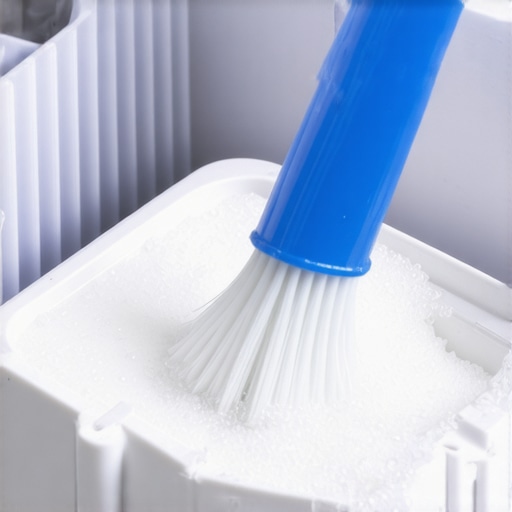
Kill the Biofilm Once and for All
Once the minerals are gone, it’s time to disinfect. You can use a diluted bleach solution (one teaspoon per gallon of water) or 3% hydrogen peroxide. Swish it around the tank and let it sit in the base for 10 to 20 minutes. This is the critical step to prevent the ‘pink slime’ from returning. Be extremely careful here—never mix vinegar and bleach, as it creates toxic chlorine gas. Always rinse thoroughly between the vinegar step and the disinfection step. I always use a dedicated set of brushes for this to avoid the risk of how to stop cross-contamination while cleaning the bathroom or other areas of the house. After the timer goes off, rinse everything until the smell of the cleaner is completely gone. I usually rinse at least four times. If you can still smell bleach or peroxide, your lungs will feel it later. Shake out the excess water and let every piece air dry completely on a clean towel before reassembling. Pockets of moisture trapped in a closed machine are just an invitation for the next mold colony to move in.Most advice columns will tell you that using distilled water is just a luxury to prevent ‘white dust’—those mineral deposits that settle on your TV stand. But here is the truth: tap water minerals are the literal ‘apartment complexes’ for bacteria. When minerals build up on the internal walls, they create a porous surface that bacteria cling to far more easily than smooth plastic. It’s the same logic behind why your vacuum filter might be making your allergies worse when it’s clogged with fine particles—you’re basically creating a breeding ground. If you use tap water, you’re not just cleaning out dirt; you’re fighting an uphill battle against chemistry. To truly master the air you breathe, you have to look beyond the surface level.
Stop Trusting Your Tap Water for a Cleaner Mist
I once made the mistake of thinking I could just ‘power through’ a dirty unit by scrubbing the ultrasonic transducer with a stiff wire brush. Big mistake. These components are incredibly delicate. If you scratch the metal surface, you create microscopic pits where mold can hide, making it impossible to truly sanitize later. This is where effective sanitizing methods for a germ-free home transition from basic chores to high-precision maintenance. Instead of scrubbing, let the vinegar do the heavy lifting to dissolve the scale without physical force. If you are integrating this into a daily house cleaning routine to maintain perfection, remember that consistency beats intensity every time.
Protect the Transducer from Your Own Cleaning Tools
The ‘Oops’ factor most people miss is the reassembly phase. If you put that machine back together while it’s still damp, you’re just sealing in the problem. Even a tiny pocket of moisture can jumpstart the growth of Serratia marcescens. If you’ve ever wondered why your living room still smells like pets after you vacuum, the answer usually lies in internal moisture or filters that never fully dried out. It is exactly the same with your misting machine. Give it a full 24 hours to air-dry on a clean towel if you can. Rushing the process is the fastest way to invite mold back into your master suite.
Can Biofilms Survive a Standard Vinegar Soak?
Surprisingly, yes. While vinegar is a champion at breaking down mineral scale, some stubborn biofilms can actually survive a quick rinse. According to research from the Environmental Protection Agency (EPA), microbial growth can persist in the ‘dead zones’ of household appliances where water flow is stagnant. This is why a simple soak isn’t enough; you need a two-step process of descaling first, then disinfecting with a secondary agent like hydrogen peroxide. 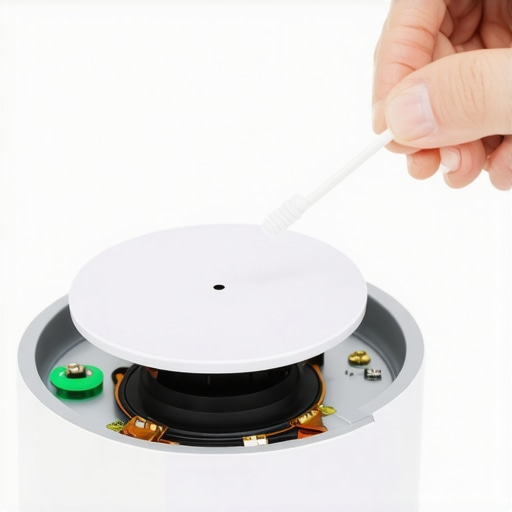 When you are managing air quality, remember that the moisture doesn’t just stay in the air—it settles. I always check my ultimate upholstery care guide for lasting freshness to make sure my couches aren’t acting as giant sponges for contaminated mist. And if you’re cleaning a unit in a sensitive area, look into the safest way to disinfect a nursery without bleach to keep things non-toxic for the little ones. Have you ever fallen into this trap of thinking tap water was ‘good enough’? Let me know in the comments.
The Gear That Makes My Weekly Scrub a Breeze
I’ve realized that having the right tools is the only way I actually stick to a maintenance schedule. If I have to hunt for a brush, I’ll skip it. My specialized kit includes a set of narrow-profile bottle brushes and flexible pipe cleaners. Why pipe cleaners? They are the only things thin enough to snake through the mist chimney where mold loves to hide. I also keep a digital hygrometer on my nightstand. This isn’t just for show; ASHRAE (American Society of Heating, Refrigerating and Air-Conditioning Engineers) suggests in their Position Document on Indoor Air Quality that keeping indoor relative humidity between 30% and 60% is the sweet spot to minimize microbial growth while keeping you comfortable. If you aren’t measuring, you’re just guessing. This level of precision is exactly what I recommend when following how to schedule a deep clean that actually lasts more than a week because it prevents the problem before it starts. For the tiny crevices around the transducer, I use the toothbrush trick for removing pet dander from baseboard crevices which works wonders on mineral buildup too.
How do I keep my machine running like new for years?
Consistency is your best friend here. I’ve found that a quick rinse every morning—what I call the ‘fresh start’—is more effective than a massive monthly scrub. If you’re preparing to move, don’t forget to treat your humidifier as part of your move-out cleaning strategies to secure your deposit. Landlords notice those crusty white rings on the nightstand or a smelly unit left behind. I always suggest doing a deep descale and letting it dry for 48 hours before packing it away. This ensures you don’t open a box of mold at your new place. It’s the same logic I apply to a daily house cleaning routine to maintain perfection: five minutes today saves five hours of scrubbing next month.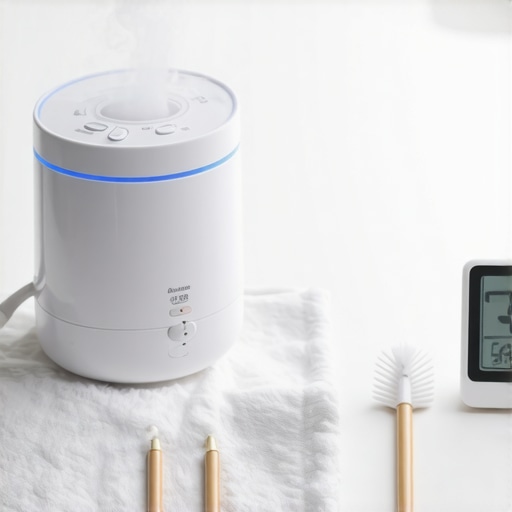
What’s Next for the Tech in Your Bedroom?
Looking ahead, the trend is moving toward ‘self-cleaning’ units that use internal UV-C light or silver-ion infused plastics to kill bacteria on contact. While these are great, they aren’t a total replacement for manual cleaning yet. We’re seeing more smart-home integration where your humidifier will ping your phone the moment it detects a drop in output—usually a sign of scale buildup. Until those become the standard, stick to the basics. My advanced tip for you this week: try using a dedicated gallon of distilled water specifically for your humidifier for just seven days. You will be shocked at how much less ‘pink slime’ appears compared to tap water. It’s a small investment that radically changes the air you breathe. Try it tonight and see if you notice the difference in your morning congestion.
After years of trial and error, I have realized that maintaining a healthy home environment is about more than just surface aesthetics; it is about the invisible quality of the air we breathe. My journey from a congested sleeper to a clean-air advocate taught me that your misting machine can either be your best friend or your lungs’ worst enemy. Taking the time to sanitize your humidifier properly is a small price to pay for waking up refreshed and healthy every single morning.
Hard-Won Lessons from the Humidifier Trenches
One of the most important effective house cleaning secrets from cleaning experts I ever learned is that the ‘sniff test’ is a total lie. If you can actually smell a musty odor, the bacterial colony has already reached a critical mass. I used to wait for a smell to trigger a cleaning session, but by then, I was already breathing in millions of spores. Now, I stick to a strict schedule regardless of how ‘clean’ the water looks.
Another lightbulb moment was realizing that the base of the unit is often more dangerous than the tank. Because the base holds stagnant water in tiny, hard-to-reach narrows, it becomes a breeding ground for biofilm. I now treat every nook and cranny with the same level of scrutiny I use when following move-out cleaning strategies to secure your deposit. If you leave even a tiny patch of slime, it will recolonize the entire unit within forty-eight hours.
The Small Kit That Changed My Cleaning Game
You do not need a closet full of chemicals to keep your air sterile. My essential toolkit is surprisingly simple but highly effective. First, a digital hygrometer is non-negotiable. It allows me to keep my room’s humidity between 40% and 50%, which is the ‘Goldilocks zone’ where viruses struggle to survive but your skin stays hydrated. Second, I always keep a dedicated gallon of distilled water on hand; it is the single best way to prevent mineral scale from forming in the first place.
For the physical scrubbing, I rely on the toothbrush trick for removing pet dander from baseboard crevices because those small, soft bristles are perfect for cleaning the delicate ultrasonic transducer without scratching the metal. Finally, I trust effective sanitizing methods for a germ-free home that prioritize non-toxic agents like white vinegar and hydrogen peroxide over harsh industrial cleaners that can irritate the respiratory system.
Take Control of the Air You Breathe
Your home should be a sanctuary, especially during the dry winter months. By taking these extra steps to sanitize your humidifier, you are doing more than just cleaning an appliance; you are protecting your family’s long-term respiratory health. It might feel like a chore at first, but once you experience the clarity of truly sterile mist, you will never want to go back to the ‘top-off’ method again. Incorporate these steps into your daily house cleaning routine to maintain perfection and enjoy the peace of mind that comes with a truly healthy home. Have you ever found that mysterious pink slime in your machine or noticed a weird smell you couldn’t quite place? Let me know your humidifier horror stories in the comments below!