
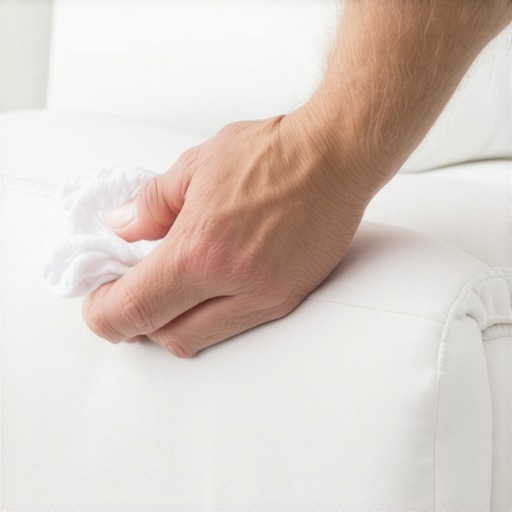
I’ll never forget the cold sweat that broke out on my forehead the moment I saw it. There, right on the center cushion of my pearl-white sectional, was a jagged blue line that looked like a lightning bolt made of permanent ink. My first instinct? Total panic. My second? I grabbed a wet rag and started scrubbing like my life depended on it. Big mistake. Huge. I didn’t just move the ink; I pushed it deeper into the weave, nearly guaranteeing myself a permanent shadow on the fabric. If you’ve ever had that ‘oh no’ moment where your heart drops into your stomach, you know exactly what I’m talking about. We spend so much energy on our daily house cleaning routine to maintain perfection, only for one slip of a ballpoint pen to feel like a total catastrophe. Today, I’m going to share the exact method I used to erase that nightmare from my life. We aren’t just ‘cleaning’ it; we are making sure we don’t leave the dreaded, faint ghost mark behind.
That Sinking Feeling When Ink Meets White Fabric
The thing about white upholstery is that it is absolutely unforgiving. It is the ultimate test of your house cleaning strategies. When ink hits a light surface, it doesn’t just sit there. It migrates. It bleeds into the surrounding fibers. Most people make the same mistake I did—they think friction is the answer. However, according to cleaning experts at the American Cleaning Institute, rubbing a stain can actually cause it to spread and damage the fabric’s nap permanently. This is a nightmare scenario, especially if you are working through a move-out cleaning where your security deposit is hanging in the balance. I learned through a very expensive trial-and-error process that patience and the right chemistry beat brute force every single time. It is all about lifting the pigment rather than pushing it into the padding.
Will my couch ever actually look normal again?
I get the skepticism. I really do. Once you see that blue or black smear, it feels like the fabric is scarred for life. You’re probably worried that even if the visible ink goes away, a faint, yellowish ring—the ghost mark—will stay behind as a permanent reminder of the accident. I’ve been there, staring at a ‘cleaned’ spot that looked more like a bruise on my furniture than a clean cushion. But the secret isn’t just about removing the pigment; it is about neutralizing the carrier liquid and using a blotting technique that respects the fibers. Whether you’re doing a deep upholstery cleaning or just a quick spot fix, the goal is total disappearance. Have you ever stared at a fresh ink blotch and felt like just throwing the whole couch away? Don’t do it yet. Before you try any weird DIY ‘hacks’ you saw on a 30-second social media clip, you need to understand why you should never scrub a fresh liquid stain. We’re going to walk through the exact steps to lift that ink out safely, ensuring your white sofa stays as bright as the day you brought it home.
High-Proof Alcohol is Your Secret Weapon
To save your sofa, you need to understand the chemistry of the mess. Most ballpoint inks are oil-based, meaning water will just bead off them like rain on a waxed car. If you want to how to remove ballpoint pen marks from a fabric sofa effectively, you need a solvent that breaks down the ink’s carrier. Reach for 70% or 90% isopropyl alcohol. Think of the alcohol as a specialized transport system: it grabs the dried pigment and suspends it in liquid again so you can lift it off. When I first tried this on my sectional, I was terrified the alcohol would melt the fibers. I tested a tiny, hidden spot on the back of the cushion first—which you should always do—and once I saw the fabric stayed intact, I went to work. I found that using a cotton swab for precision is far better than dumping the liquid directly onto the stain. This prevents the solvent from soaking into the foam padding, which can trap odors or damage the structural integrity of your furniture.
Blot Like You Are Handling a Rare Manuscript
The biggest hurdle in upholstery cleaning is the urge to move your hand back and forth. You have to fight every instinct you have to scrub. Scrubbing is the fastest way to turn a small dot into a giant, blurry smudge. Instead, you need to use a vertical ‘press and lift’ motion. Imagine you are trying to pick up a delicate piece of gold leaf without tearing it. By pressing a clean white cloth into the alcohol-soaked spot and lifting straight up, you pull the ink into the cloth. 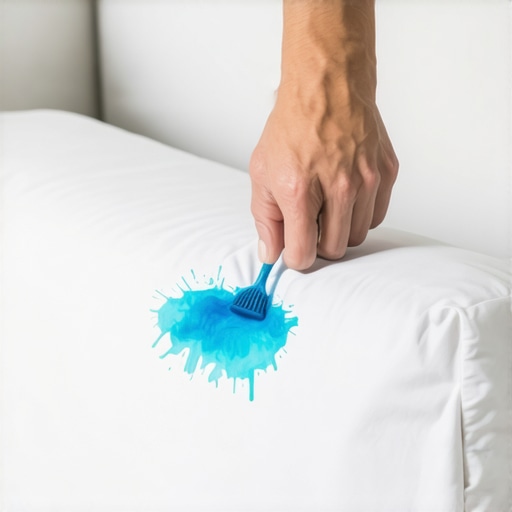 I remember one afternoon where I spent forty-five minutes on a single three-inch line. Every time I lifted the cloth, a bit more blue came up. It was tedious, but it worked. If you get impatient and start swirling the cloth, you’re just painting the fabric with diluted ink. This is a core concept in any ultimate upholstery care guide for lasting freshness: patience is the most effective tool in your kit.
Work From the Outside In to Stop the Bleed
One trick I learned the hard way is that ink loves to travel. As soon as you apply a liquid cleaner, the ink wants to migrate toward the dry fibers. To prevent a ‘halo’ or a ghost ring, always start your cleaning at the very edges of the mark and move toward the center. This effectively corrals the pigment and keeps the mess contained. If you start in the middle, you’re essentially pushing the ink outward into ‘fresh’ territory. This strategy is also vital during a high-stakes move-out cleaning where you can’t afford to make the situation worse.
Neutralize the Residue to Prevent Yellowing
Once the ink is gone, you aren’t actually finished. Leftover alcohol or cleaning agents can attract dirt over time, leading to a dingy gray spot that looks like a ghost of the original stain. This is why you must ‘rinse’ the area with a damp (not dripping) cloth of plain water, followed immediately by a dry towel. In my own home, I follow this up with a light misting of a fabric-safe sanitizer to ensure the area stays fresh, following the latest sanitizing secrets for a safer house in 2025. By removing the chemical residue, you ensure the white fabric stays truly white, rather than developing that tell-tale yellow ring that screams ‘I spilled something here.’ Remember, the goal is to make it look like the accident never happened in the first place.While the internet loves to recommend vinegar and baking soda for every household disaster, I have to be the bearer of bad news: it’s often the worst thing you can do for ink on a white sofa. This is a common point of confusion in many house cleaning strategies. Acetic acid (vinegar) can sometimes act as a mordant—a substance used to set dyes—meaning you might be literally locking that ink into the fabric fibers. According to the IICRC (Institute of Inspection Cleaning and Restoration Certification) S300 Standard, using the wrong cleaning agent on a specific fiber type can cause permanent color changes or ‘browning’ that is impossible to reverse. This is exactly why effective house cleaning secrets from cleaning experts always prioritize pH-neutral solvents for synthetic blends. Have you ever tried a ‘natural’ hack only to watch the stain get darker? I’d love to hear your horror stories in the comments below.
Does your sofa’s ‘Cleaning Code’ actually matter?
Yes, and ignoring it is the fastest way to lose your security deposit. Before you even touch a bottle of alcohol, you must find the tag usually hidden under the seat cushions. If you see an ‘S,’ you must use solvents only. If you see a ‘W,’ you can use water-based solutions. But here is the advanced nuance: many modern ‘performance’ fabrics have a ‘WS’ code, leading people to believe they can soak the area with anything. The ‘oops’ factor here is over-saturation. If you get the backing of the fabric too wet, you risk ‘wicking,’ where the stain travels down into the padding and then migrates back to the surface as it dries, creating a mysterious new ring. This is a crucial detail to remember during a high-pressure move-out cleaning when every minute counts. 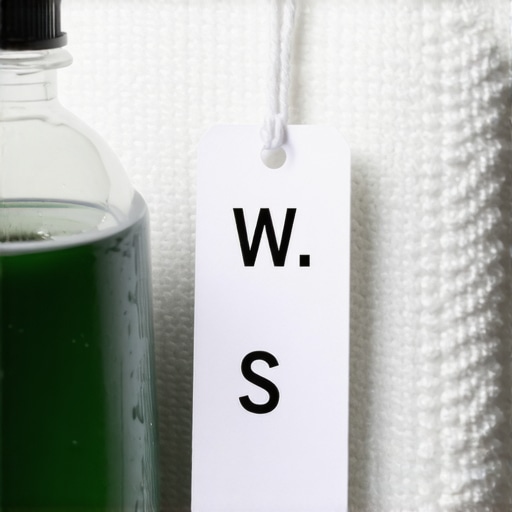 Furthermore, people often confuse ‘cleaning’ with ‘sanitizing.’ Especially if you are prepping a home for new tenants, simply removing a visual stain isn’t enough. You need to understand the sanitizing secrets for a safer house in 2025, which involves dwell time—the amount of time a product must sit on a surface to actually kill pathogens. If you’re working through a move-out clean checklist to simplify your transition, don’t just spray and wipe. Give your cleaners the time they need to work. This attention to detail is what separates a DIY attempt from a professional-grade restoration. Maintaining a daily house cleaning routine to maintain perfection is about the little things, like knowing when to walk away and let the chemistry do the heavy lifting.To truly graduate from ‘panic cleaning’ to professional-level restoration, you need to upgrade your arsenal. I used to think any old rag would do, but I quickly realized that the quality of your tools dictates the quality of your results. My secret weapon isn’t a fancy machine; it is a high-density, 300 GSM white microfiber cloth. Using colored cloths is a rookie mistake because the alcohol solvent can actually bleed the dye from the rag onto your white sofa, creating a whole new disaster. I always keep a dedicated stash of these cloths specifically for my daily house cleaning routine to maintain perfection. If you find your cloths are falling apart, it might be time to investigate why your microfiber cloths are leaving lint everywhere, as those tiny fibers can get trapped in the fabric weave and dull the finish of your furniture.
The Specific Tools That Save My Furniture Every Time
Beyond the alcohol and the cloths, I rely on a soft-bristled horsehair brush. This is essential for ‘grooming’ the fabric after it dries. When you wet and blot a spot, the fibers often dry stiff or matted. Once the area is completely dry, I lighty brush it in circular motions to restore the original texture. This is a trick I picked up from a guide on how to clean a suede couch with only a soft brush and vinegar, and it works wonders on almost any fabric blend. If your cushions feel a bit limp after a heavy cleaning session, you can also learn how to revive your flat couch cushions with this simple technique to bring back that showroom loft. 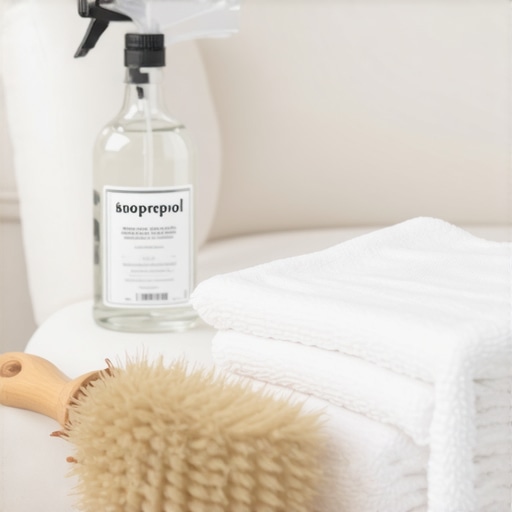 For those really stubborn, deep-set ink marks, I sometimes use a specialized stain extractor, but only if the ‘S’ code allows for it. I personally follow the technical documentation from Sunbrella, which emphasizes that for heavy-duty stains, a diluted bleach solution can sometimes be used on their specific high-performance acrylics—but never on standard polyester or cotton blends. This is where most people fail; they treat every white couch the same. Whether you are dealing with ink or learning the best way to lift coffee stains from a white sofa, you must respect the chemistry of the fiber.
How do I keep my white sofa looking pristine year after year?
Maintenance is about proactive defense, not just reactive scrubbing. Once I have successfully removed a stain, I always apply a fluorocarbon-free fabric protector. This creates a microscopic barrier that gives you a ‘buffer’ period. Instead of the ink soaking in immediately, it beads up on the surface, giving you those precious few seconds to grab a paper towel. This is the cornerstone of my house cleaning strategies. I’m also seeing a major shift in the industry toward bio-enzymatic cleaners that ‘eat’ organic matter, which I predict will soon replace many of the harsh solvents we use today. This transition toward ‘green chemistry’ is making effective sanitizing methods for a germ-free home much safer for our kids and pets. If you’re currently prepping for a move, integrating these tools into your move-out clean checklist to simplify your transition will ensure you leave the home in better condition than you found it. I challenge you to try the ‘edge-to-center’ blotting technique on the next small mark you find—even if it’s just a smudge of dirt—and see how much more control you have over the process. Don’t wait for a catastrophe to practice your technique; start with a small win today.
The Hardest Lessons Learned from My Own Ink Disasters
After years of managing a white living room, I have realized that the ‘white sofa lifestyle’ is less about being perfect and more about being prepared for the inevitable. One major epiphany I had was that the type of ink actually dictates the urgency; gel pens, for instance, are the ‘final boss’ of stains compared to standard ballpoints because of their high pigment density. I also learned the hard way that lighting is a cleaning tool itself—always check your work under a warm flashlight to catch those ‘ghost rings’ before the fabric fully sets. If you are in the middle of a high-pressure move-out cleaning, remember that speed is your friend, but reckless scrubbing is an absolute dealbreaker. Testing a hidden area isn’t just a suggestion; it is a critical step to ensure you don’t strip the optical brighteners that give your sofa its snowy glow. Most importantly, I discovered that the dreaded ghost mark is often just trapped residue, which is why a final rinse with distilled water is the secret to a truly invisible repair.
Tools and Resources I Trust for High-Stakes Cleaning
To get professional results, you have to stop relying on whatever is under the kitchen sink. My emergency kit always includes 91% Isopropyl alcohol, which I prefer over the 70% version because it evaporates faster and significantly reduces the risk of ‘wicking’—where the stain travels into the padding and back up. I also swear by 300 GSM white microfiber cloths to avoid any dye transfer from the rag to the sofa. For more nuanced advice on fiber science, I often look toward effective house cleaning secrets from cleaning experts who emphasize pH-neutral solvents for synthetic blends. #IMAGE_PLACEHOLDER_E# To keep things looking fresh year-round, I integrate these deep-cleaning sessions into my daily house cleaning routine to maintain perfection. I also highly recommend looking into fluorocarbon-free fabric protectors; they create a microscopic barrier that gives you those few extra seconds to blot a spill before it becomes a permanent part of the furniture’s history.
Take the First Step Toward a Spotless Home
You don’t need to be a professional restorer to achieve professional-grade results in your own living room. Taking that first step with a simple cotton swab and a focused, patient mindset can save you thousands of dollars in replacement costs or professional cleaning fees. Mastering the art of how to remove ballpoint pen marks from a fabric sofa is essentially a superpower for anyone who loves the aesthetic of a bright, clean home but lives a real, messy life. Don’t let a single pen stroke ruin your peace of mind or your décor. Have you ever tried a cleaning ‘hack’ you saw online that actually made a stain ten times worse? Let me know your stories in the comments below!