
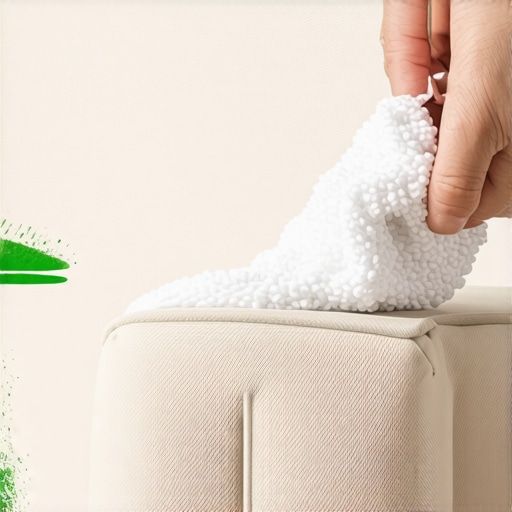
It was a sunny Saturday in the Midwest, the kind of day where the kids are perpetually almost clean. Then it happened. My son, still in his grass-stained soccer uniform, decided my favorite cream-colored cotton armchair was the perfect place to execute a victory slide. I stared at that vibrant green streak across the cushion and felt my heart sink. Cotton is a sponge for nature’s dyes, and grass is essentially the permanent marker of the plant world. I remember standing there, frozen, thinking about how much I’d paid for that chair and how quickly a three-inch smear of chlorophyll had ruined it. It’s a visceral panic every homeowner knows.
Stop Scrubbing Before You Ruin Your Chair
Most people panic and reach for the nearest bottle of all-purpose cleaner and a scrub brush. I did that once. I scrubbed so hard on a linen ottoman that I actually fuzzed the fibers and turned a small green dot into a permanent fuzzy smudge. It was a disaster. If you’ve been there, you know the feeling of watching a piece of furniture you love slowly succumb to a DIY fail. But here is the good news: I’ve learned the hard way how to lift those stains without calling in a professional replacement crew. Today, we are going to walk through the exact steps to save your upholstery. Whether you are prepping for a move-out cleaning or just trying to survive a weekend with the kids, these methods work. Cotton is a double-edged sword; we love it because it is breathable and soft, but those same open fibers drink up liquid like a thirsty traveler. When grass hits cotton, it is bonding with the cellulose, which is why your approach must be delicate yet effective.
Is This Actually Possible Without Bleach?
You might be skeptical. Grass contains chlorophyll and xanthophylls, which are incredibly effective natural dyes. In fact, according to the University of Illinois Extension, grass stains are particularly difficult because they are a combination of protein and organic pigments that require specific enzymatic breakdown. But you don’t need harsh chemicals that strip the life out of your cotton. We are talking about simple household items and the right technique. I used to think bleach was the only answer, but that just leads to yellowing and weakened fabric. Instead, mastering upholstery cleaning tips for a fresh home revival is about reclaiming your peace of mind. Have you ever looked at a stain on your sofa and just considered throwing a decorative pillow over it forever? I certainly have. But before you give up, remember that even the most stubborn marks can be beaten with patience. You might even find that the shaving cream trick or a bit of vinegar is more powerful than you imagined. This matters because our homes are meant to be lived in, not treated like a museum. Knowing how to handle these messes is a core part of any house cleaning strategy. Let’s get that green out and get your living room back to looking its best.
Tackle the Stain Before It Sets Permanently
Once you’ve processed the initial shock of a green smudge on your armchair, it’s time to move from panic to precision. Think of your cotton upholstery like a delicate ecosystem. If you flood it with water or harsh chemicals, you disrupt the balance and risk permanent damage. I remember a specific Tuesday afternoon when I thought more was better. I poured half a bottle of club soda onto a grass stain on my mother-in-law’s couch. The stain didn’t budge, but I created a massive water ring that looked like a topographical map of a small island. It took twice as much work to fix my ‘fix’ as it did to remove the original grass mark. The key is to act with a daily house cleaning routine to maintain perfection mindset: small, controlled actions lead to better results.
Clear the Surface with a Dry Vacuum
Before you introduce any liquid, you must remove the dry organic matter. Grass is essentially shredded plant material. If you add water immediately, you’re just making ‘grass soup’ and pushing it deeper into the cotton weave. Use your vacuum’s upholstery tool—the one with the soft bristles—and go over the spot four or five times from different angles. This is a foundational part of any house cleaning strategy. You want to lift the microscopic blades of grass that haven’t yet bonded with the fibers. It’s like clearing the dust off a car before you wax it; you don’t want to grind the grit into the finish.
Mix a Gentle Enzyme-Breaking Solution
You don’t need a lab. A simple mixture of one tablespoon of clear dish soap and two cups of cool water is your best friend. Why cool water? Heat can actually cook the proteins in the grass, setting the color like a dye in a kiln. Much like the dish soap trick for removing greasy buildup, this solution breaks down the surface tension of the organic pigments. If the stain is particularly stubborn, you can add a tablespoon of white vinegar. The mild acidity helps neutralize the alkaline components of the plant matter without the harshness of bleach.
Dab Like You Are Applying Expensive Eye Cream
This is where most people fail. You must blot, never rub. Rubbing creates heat and friction, which pushes the chlorophyll deep into the cotton’s hollow core. Take a clean, white microfiber cloth—white is essential so you can see the stain transferring—and dip it into your solution. Press it firmly onto the green mark, hold for three seconds, and lift. It’s a rhythmic motion, like a gentle heartbeat. As the cloth picks up the green, rotate it to a clean section. If you keep using the dirty part of the cloth, you’re just redistributing the mess. This patience is what separates a successful upholstery cleaning from a DIY disaster.
Dissolve Remaining Pigments with Rubbing Alcohol
If a faint green shadow remains, it’s time for the heavy lifter: 70% isopropyl alcohol. Chlorophyll is soluble in alcohol, meaning the liquid actually dissolves the pigment so the cloth can whisk it away. I learned this from reading effective house cleaning secrets from cleaning experts. Lightly dampen a cotton ball with alcohol and tap the stain. You’ll see the green leap onto the cotton ball. This is especially vital for a move-out clean where every tiny blemish counts toward your security deposit. Just be sure to test a hidden spot first to ensure your fabric’s dye is colorfast.
Control the Moisture to Prevent Rings
Finally, once the stain is gone, you must address the moisture. Cotton loves to hold onto water, which can lead to that dreaded ‘tide mark’ or even a mildew smell if left damp too long. Take a dry towel and press it into the area with all your weight to soak up the excess. Use a hairdryer on the ‘cool’ setting to speed up the process. Managing moisture is a critical part of ultimate upholstery care. If you leave it too wet, you might find yourself needing effective sanitizing methods later to deal with bacterial growth.
While the steps we’ve covered are a solid baseline for a fresh spill, there is a dangerous trap most homeowners fall into when they try to be ‘extra thorough.’ Many people believe that heat is the ultimate disinfectant. They think if they fire up a steam cleaner, they’re not just lifting the stain; they’re ensuring a deep, sterile clean. But in my experience, bringing high heat to a fresh grass stain on cotton is the quickest way to turn a temporary mistake into a permanent fixture. Heat behaves like a catalyst for the organic compounds in grass, effectively ‘curing’ the pigment into the cotton fiber. Once that color is thermally bonded, even the best professional might struggle to lift it. This is why you should check out the guide on why you should never use a steam cleaner on these specific upholstery fabrics before you reach for the power button.
Expert technicians at the Institute of Inspection Cleaning and Restoration Certification (IICRC) warn that natural fibers like cotton are particularly susceptible to ‘cellulosic browning.’ This happens when the fabric stays wet too long or is exposed to high alkalinity, causing brown lignin to rise to the surface. It looks like a tea stain or a muddy halo and is incredibly frustrating to fix because the very act of cleaning it often makes the ring larger. I call this the ‘ring of doom.’ If you’ve ever noticed your sofa looking dingy and yellow after a DIY session, you’ve likely triggered this reaction. It’s a core reason why I focus so heavily on pH balance in the ultimate upholstery care guide for lasting freshness. This is the difference between a surface clean and understanding the chemistry of your furniture.
Does sanitizing really require boiling temperatures?
The short answer is no. You can achieve a germ-free environment without risking the structural integrity of your furniture. If you are worried about bacteria from the grass or dirt, look into effective sanitizing methods for a germ-free home that use cold-water-compatible solutions. During a high-stakes move-out clean, people often get desperate and mix chemicals like bleach and ammonia or vinegar, which is not only dangerous for the fabric but potentially toxic for you. Instead, look for sanitizing secrets for a safer house in 2025 that rely on targeted enzymes rather than raw heat. These enzymes work like little biological Pac-Men, eating away at the protein structures of the stain without harming the cotton cellulose.
Another nuance people often miss is the ‘wicking’ effect. Sometimes a stain looks gone while the fabric is wet, but as it dries, the pigment travels from the deep padding back up to the surface. This is why drying the area quickly with a cool fan is not just a suggestion; it’s a requirement. If you ignore this, you’ll wake up the next morning to a ghost of the stain you thought you’d killed. The biggest “Oops” factor I encounter? The ‘colored towel’ trap. I once saw a friend try to clean a cream-colored cotton armchair with a festive red holiday dish towel. The cleaning solution acted as a solvent for the towel’s cheap dye, transferring a bright pink smear onto the chair that was ten times more difficult to manage than the original green mark. Always, without exception, use a white microfiber cloth. This ensures that the only thing moving is the stain off the sofa and onto the rag. Have you ever fallen into this ‘more is better’ trap and accidentally made a stain worse? Let me know in the comments.
After avoiding the common pitfalls of over-wetting, I realized that the best defense is a curated set of tools. I don’t just grab a sponge anymore; I have a dedicated horsehair brush. Why horsehair? Because it’s soft enough to agitate the fibers of a cotton sofa without snapping them, which I learned is a common cause of ‘pilling.’ This level of detail is what separates a standard chore from effective house cleaning secrets from cleaning experts. I also keep a small bottle of pH-neutral fabric shampoo. Most people don’t realize that standard dish soaps, while great for grease, can be slightly too alkaline for long-term cotton health. By using a pH-balanced solution, you ensure the fibers don’t become brittle over time, which is a key component of the ultimate upholstery care guide for lasting freshness.
How do I keep my upholstery looking new for years?
The secret isn’t a massive deep-clean every six months; it’s the micro-actions you take every week. I’ve adopted the 5-minute daily habit that keeps your entryway mud-free to stop the dirt before it even reaches the living room. Every Friday, I use my vacuum’s soft brush attachment—the one I keep specifically for furniture—to remove the ‘atmospheric soil’ that settles on the cushions. This is the invisible dust that, if left alone, acts like sandpaper when you sit down, grinding away at the cotton. Just be careful with your equipment; as I’ve discussed before, why your vacuum brush roll is ruining your hardwood floors is the same logic that applies here: the wrong tool can cause mechanical damage. When you are prepping for a move-out clean, these small habits pay off in dividends. I recently read a technical bulletin from The Crypton Companies, leaders in performance textiles, which highlighted that once dirt is ’embedded’ through mechanical pressure, it becomes significantly harder to remove without damaging the fabric’s structural integrity. This is why I advocate for a daily house cleaning routine to maintain perfection rather than waiting for a disaster. Looking ahead, I see the industry moving toward ‘smart fabrics’ and even more advanced enzymatic cleaners. We are already seeing sanitizing secrets for a safer house in 2025 and effective sanitizing methods for a germ-free home focusing on probiotic cleaners that continue to ‘eat’ organic matter long after you’ve finished wiping. It’s a fascinating shift from ‘kill everything’ to ‘manage the microbiome of your home.’ If you want to see a real change today, I challenge you to try the dry-vacuum-first method on your favorite chair this weekend. You’ll be shocked at how much ‘invisible’ dirt you lift before it ever becomes a permanent stain. If you find yourself in over your head, you can always reach out through our contact us page for professional advice.
What Nobody Tells You About Chasing Chlorophyll Stains
After years of scrubbing, I realized that a grass stain is less of a smudge and more of a biological event. Here are the lightbulb moments that changed my approach forever: First, the ‘ghost stain’ is real; if you don’t use a cool fan to dry the area, the pigment will wick back up from the cushion padding as it evaporates. Second, cotton is surprisingly fragile when wet; never use a stiff plastic brush, or you’ll snap the fibers and create a permanent ‘fuzzy’ patch. Third, the most effective house cleaning strategies focus on pH balance—if you use a cleaner that’s too alkaline, you risk ‘cellulosic browning’ which looks worse than the original green mark.
The Secret Kit I Keep Under My Sink
I don’t rely on expensive gadgets. My toolkit is built on logic and professional standards. I always keep a stack of high-quality white microfiber cloths—never dyed ones—to ensure zero color transfer. For the tough stuff, 70% isopropyl alcohol is my go-to solvent because it evaporates quickly without soaking the foam. I also highly recommend keeping a copy of a move-out clean checklist to simplify your transition, as it reminds you of the high-traffic areas we often overlook until it’s too late. Finally, I trust the expert guidelines from professional cleaners to ensure I don’t damage natural fibers. #IMAGE_PLACEHOLDER_E#
Stop Fearing the Next Grass Streak
At the end of the day, your home should be a place where memories are made, not a museum where you’re afraid to sit down. Knowing you have the skills to handle a mess allows you to actually enjoy your space. By implementing a daily house cleaning routine to maintain perfection, you’re not just cleaning; you’re preserving the life of your furniture. Use these upholstery cleaning tips for a fresh home revival whenever life gets a little messy. You’ve got this! Have you ever managed to save a piece of furniture you thought was a total goner? Let me know your success story below!