
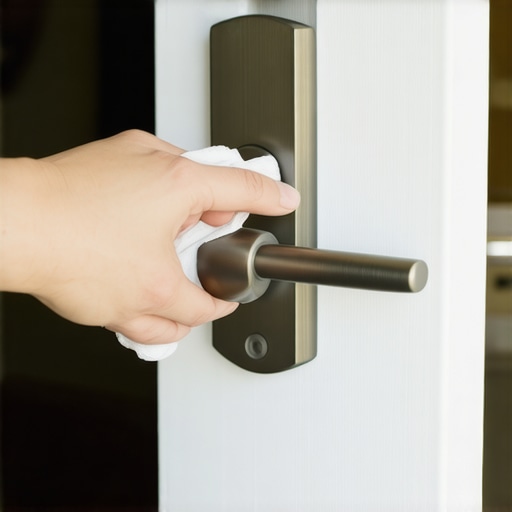
Last winter, my house felt like a petri dish. My youngest came home with the sniffles, and within forty-eight hours, we were all down for the count. I thought I was being clean—I was vacuuming like a madman and spraying the air—but I completely ignored the one thing everyone touches fifty times a day: the front door handle. It was a classic rookie mistake. I was so focused on the big stuff that I let the literal gateway for germs stay contaminated while I obsessed over the floors. I learned the hard way that a sparkling home isn’t necessarily a safe one if you ignore the high-traffic touchpoints.
Stop Inviting Germs to Stay on Your Hardware
We spend so much time on effective house cleaning secrets that we often overlook the most obvious surfaces. Think about it. You go to the grocery store, touch the cart, come home, and the first thing you grab is that brass knob. If you aren’t hitting those handles with the right stuff, you’re basically just handing the flu a VIP pass to your living room. During the peak of the season, it’s not just about a quick wipe; it’s about a tactical strike. According to the Centers for Disease Control and Prevention, viruses like the flu can live on hard surfaces for up to 48 hours, making your door hardware a primary transit hub for illness. You need sanitizing secrets for a safer house in 2025 to ensure your efforts actually yield results. I used to think a quick spray of whatever was under the sink worked, but I was wrong.
Is sanitizing every single handle actually worth the hassle?
I get it. You’re tired, and the last thing you want to do after a long day is go around the house with a spray bottle. You might think, “My kids are already sick, what’s the point?” or “Doesn’t my regular soap handle it?” I used to think the same until I realized that cross-contamination is why the “stomach bug” circles a family for three weeks straight. I once made the mistake of thinking a quick dust with a dry microfiber cloth was enough—it wasn’t. All I did was move the germs around. You need essential sanitization steps for your home that actually kill the pathogens, not just give them a ride to the next room. While you’re at it, don’t forget that the hidden grime on your light switches usually carries the same bacterial load. Have you ever felt like you’re cleaning constantly but the “winter crud” just won’t leave your house? Let’s look at how to actually break that cycle without losing your mind.
Strip Away the Grime Before You Attack the Germs
You wouldn’t put a band-aid on a dirty knee without cleaning the scrape first, and the same logic applies to your door handles. Germs love to hide under a microscopic layer of skin oils, food residue, and dust. If you just spray a disinfectant over that layer, the germs underneath are basically wearing a raincoat. The active ingredients can’t reach the surface of the metal where the real bio-load lives. This is why I always start with a basic microfiber cloth and a gentle surfactant. It’s one of the most effective sanitizing methods for a germ-free home because it removes the barrier. Think of it as clearing the brush before you build the fence.
Why the Spray and Wipe Habit is Failing You
Most of us are guilty of ‘speed cleaning.’ We spray the handle, wipe it immediately, and move on. However, if you read the fine print on a bottle of EPA-registered disinfectant, it usually requires a ‘dwell time’ of anywhere from three to ten minutes. If the surface isn’t visibly wet for that entire duration, the germs are likely still throwing a party. I learned this the hard way during a particularly bad flu season. I was ‘cleaning’ every day, but everyone was still getting sick. Once I started letting the solution sit—actually timing it with my phone—the cycle finally stopped. It’s a key part of house cleaning strategies for a sparkling home today that actually stays healthy. You have to let the chemistry do the heavy lifting so your elbow grease doesn’t go to waste.
#IMAGE_PLACE_HOLDER_B#
Protect the Finish While You Kill the Bacteria
Here’s where it gets messy. I once decided to ‘super-sanitize’ my entryway by using a harsh, bleach-based bathroom cleaner on my expensive antique brass handles. Within two hours, the beautiful patina had turned a sickly, mottled grey. It was a total disaster and an expensive mistake to fix. You have to be careful because what kills a virus can also eat through your hardware’s protective lacquer. If you’re dealing with electronics, like keypad entries, you have to be even more surgical. Knowing how to sanitize your tv remote without damaging the electronics actually gives you the perfect blueprint for those smart locks: use a damp—not dripping—alcohol-based wipe rather than a direct spray.
Match Your Cleaner to the Material
For stainless steel and modern chrome, a 70% isopropyl alcohol solution is usually your best friend. It evaporates quickly and kills most pathogens on contact without leaving a sticky film. However, for those tricky porous surfaces or older finishes, stick to specialized wipes that are labeled as safe for metal. Just like you’d look for upholstery cleaning tips for a fresh home revival before drenching a silk sofa, check the manufacturer’s guide for your door hardware. If you’re unsure, a quick test on the underside of the handle (where nobody looks) can save you a lot of heartache. Integrating this check into your daily house cleaning routine to maintain perfection ensures you’re building a habit that protects both your family’s health and your home’s aesthetic. Also, remember that the best way to clean grimy light switches without shorts involves the same ‘damp-not-wet’ philosophy you should use for any wall-mounted hardware.
Stop Assuming Vinegar Kills Everything
Here’s a hard truth: while we all love the eco-friendly appeal of DIY cleaners, your favorite vinegar-and-water mix isn’t a disinfectant. I see this all the time—people thinking they are deep cleaning when they are really just descaling. Vinegar is an acid, which makes it great for hard water stains, but it doesn’t meet the EPA standards for killing viruses like SARS-CoV-2 or the common flu. In fact, research from the American Journal of Infection Control indicates that while acetic acid has some antimicrobial properties, it is significantly less effective than registered chemical disinfectants for high-touch surfaces. One nuance most people miss is the concept of bio-film on door handles. If you use a heavy, wax-based polish on your brass knobs, you are essentially creating a sticky ‘apartment complex’ for bacteria to move into. The wax traps skin cells and oils, protecting the germs from your quick wipes. This is why I always recommend a ‘strip and sanitize’ approach once a month. It’s one of those effective house cleaning secrets from cleaning experts that really makes a difference. If you want effective sanitizing methods for a germ-free home, you have to look beyond the pantry. Just like why vinegar is not always the best choice for granite countertops due to etching, it’s not the silver bullet for germs on your door hardware either.
Avoid the Lethal Mistake of Mixing Cleaners
In a rush to make the house ‘extra’ clean, many people fall into the most dangerous trap in the book: the chemical cocktail. I once walked into a friend’s house and immediately felt my eyes watering because she had mixed bleach with a vinegar-based cleaner. She thought she was doubling the power; in reality, she was creating toxic chlorine gas. This is a massive ‘oops’ factor that can lead to serious respiratory issues. Never, ever mix cleaning products unless the label explicitly says you can. If you are preparing for a transition, like using move-out cleaning hacks to ensure your deposit refund, stick to one product at a time. It’s better to be safe and thorough than fast and hazardous.
#IMAGE_PLACE_HOLDER_C#
Should you really steam clean every fabric in your house?
Advanced homeowners often ask me if high-heat steam is the ultimate sanitizer for upholstery and door-adjacent fabrics like curtains. The answer is a frustrating ‘maybe.’ While heat kills many bacteria, it can also set stains permanently or shrink delicate fibers. You have to check the cleaning codes on your furniture first. I’ve seen beautiful linen ottomans ruined because someone didn’t know why you should never use a steam cleaner on these specific upholstery fabrics. For a truly professional result, consult an ultimate upholstery care guide for lasting freshness before you pull out the heavy machinery. The nuance lies in the material, not just the temperature.
Master the Move-Out Sanitization Strategy
When you’re moving, the stakes are higher. You aren’t just cleaning for your family; you’re cleaning for an inspector’s checklist. Most people focus on the big floors and windows but forget the ‘invisible’ touchpoints like the garage door keypad or the basement pull-chains. Using sanitizing hacks for safe house transitions means thinking like a germ. Where is the first place a new tenant will touch? That’s where your focus should be. Have you ever fallen into this trap of over-cleaning the wrong things or damaging a finish with the wrong chemical? Let me know in the comments. It’s these small, expert-level shifts in your daily house cleaning routine to maintain perfection that separate a clean-looking house from a truly sanitized one.
After years of trial and error, I’ve realized that the difference between a clean house and a sterile one isn’t just about effort; it’s about the precision of your gear. I completely stopped using those cheap, multi-purpose yellow sponges and switched to 300+ GSM (grams per square meter) microfiber cloths. According to researchers at UC Davis Health, high-quality microfiber is capable of physically removing 99% of bacteria from a surface even without the use of harsh chemicals. That is an absolute game-changer when you’re trying to keep up with a daily house cleaning routine to maintain perfection. I also started implementing a color-coded system—red for the bathrooms, blue for the glass and handles, and green for common areas—so I never accidentally wipe a kitchen counter with a cloth that touched a germ-heavy touchpoint in the hallway. This is one of the most effective house cleaning secrets from cleaning experts that scales perfectly whether you’re managing a small apartment or preparing a large property for new tenants. 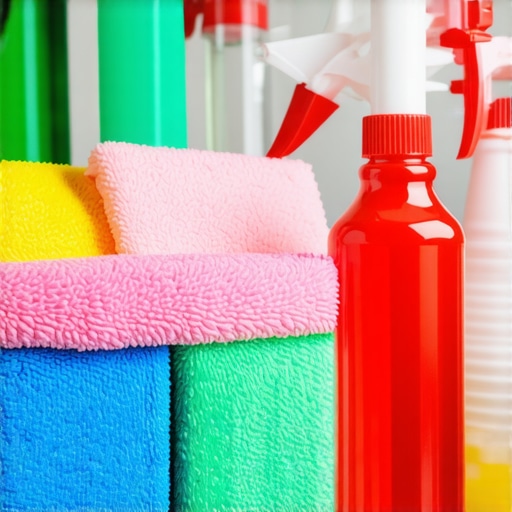
Ditch the Sponges for Medical-Grade Microfiber
Sponges are basically germ hotels; they are porous, stay damp, and provide the perfect environment for bacteria to multiply. When I switched to a dedicated cleaning caddy with segmented sections, my efficiency tripled. If you really want to level up, look into sanitizing secrets for a safer house in 2025 by investing in an electrostatic sprayer for those hard-to-reach areas during cold and flu season. This ensures that the disinfectant wraps around the entire handle, not just the front-facing part. This level of detail is vital when you are cross-referencing your progress with a move-out clean checklist to simplify your transition, as property managers will check the ‘hidden’ undersides of fixtures. I find that using tools like a dedicated crevice brush for the hinges of handles prevents the buildup of that dark, sticky residue that often harbors mold.
How do I maintain a germ-free home without spending hours on it?
Maintenance is all about the ‘touchpoint blitz.’ Every Sunday evening, I spend exactly twelve minutes going through the house with a high-quality microfiber cloth and a 70% alcohol solution. I don’t wait for the house to look dirty; I proactively disrupt the bacterial colonies before they can establish a foothold. By making this a part of your house cleaning strategies for a sparkling home today, you prevent the ‘seasonal crud’ from ever getting started. It’s significantly less stressful than a four-hour deep clean every month. If you are prepping for a sale or rental inspection, this habit ensures that you don’t have to panic about move-out cleaning hacks to ensure your deposit refund at the last minute.
The Future of Sanitization is Hiding in Plain Sight
I predict that within the next decade, we will see a massive shift toward self-sanitizing materials in residential homes. We are already seeing antimicrobial copper and silver-ion coatings moving from hospitals into high-end residential kitchen and bathroom hardware. These materials naturally kill pathogens on contact without human intervention. Until then, we have to rely on smart systems and disciplined routines. Using sanitizing hacks for safe house transitions isn’t just about the here and now—it’s about creating a legacy of health for whoever lives in your space next. I highly recommend you try the color-coded cloth system this week. It’s a simple, low-cost shift that immediately professionalizes your cleaning process and protects your family from cross-contamination. Investing in a few high-quality tools now will save you countless hours of scrubbing and, more importantly, fewer days spent in bed sick.
The Hardest Lessons I Learned About Keeping a Clean House
Looking back at my first few attempts at deep cleaning, I realized that I was working harder, not smarter. The biggest lightbulb moment was realizing that visible dirt is just the tip of the iceberg. I spent years assuming that if a handle didn’t feel sticky, it was clean. Now, I understand that the most effective sanitizing methods for a germ-free home are often the ones you can’t see. I also learned that patience is a cleaning tool in itself; rushing the dwell time of your disinfectant is the same as not cleaning at all.
- The 10-Minute Rule: I stopped guessing and started using my phone timer. If the label says ten minutes, I give it eleven to ensure evaporation doesn’t cut the process short.
- Dry Dusting is a Trap: Moving dust around just relocates the germs. Always use a damp, high-quality microfiber to trap the particles before they can become airborne.
- Texture Matters: Not all handles are created equal. Deeply textured or ornate hardware requires a soft-bristle brush to get the disinfectant into the grooves where wipes often fail.
What Stays in My Professional Sanitizing Toolkit
I’ve ditched the generic grocery store all-purpose cleaners for a more targeted approach. My current setup is focused on sanitizing secrets for a safer house in 2025, emphasizing efficiency and surface safety. Here is what I personally trust and use every single week: I use 70% Isopropyl Alcohol for its rapid kill rate and streak-free finish on chrome and stainless steel. I only use 300+ GSM microfiber cloths, as they have enough grab to physically pull bacteria away from the metal. I also keep a digital timer attached to my caddy to ensure I never cheat the chemistry. If you’re preparing to move, following a move-out clean checklist to simplify your transition will help you organize these tools for maximum impact.
#IMAGE_PLACEHOLDER_E#
Make Your Living Space a Healthier Haven Today
Sanitizing your home doesn’t have to be an overwhelming chore that eats up your entire weekend. It’s about building small, intentional habits that protect the people you love. When you integrate these steps into your daily house cleaning routine to maintain perfection, you’re not just cleaning for aesthetics—you’re cleaning for wellness. Don’t be afraid to start small with just the front door and the kitchen handles. Once you see how easy it is to maintain a truly germ-free environment, you’ll never go back to speed cleaning again. If you ever feel like the job is too big to handle alone, you can always reach out to our team for professional support. Have you ever accidentally ruined a metal finish with a harsh cleaner? Let me know in the comments below!