
I woke up at 3:00 AM again, rubbing my eyes until they were raw. It wasn’t the flu, and it definitely wasn’t the neighbor’s cat. It was my pillow. For years, I’ve been a bit of a stickler for a clean home, but I completely ignored the very thing I press my face against for eight hours every night. I learned the hard way that a “clean-looking” pillowcase is just a mask for the microscopic colony living underneath. If you’ve been waking up with a scratchy throat or a “heavy” head, you aren’t alone, and you aren’t crazy. We’re going to reclaim your sleep today by tackling the hidden ecosystem in your bedding. [image_placeholder]
Your Pillow is Likely a Microscopic Zoo
Let’s get visceral for a second. Over time, your pillow absorbs sweat, oils, and—most importantly—dead skin cells. This is the primary buffet for dust mites. I remember reading that a pillow can actually double its weight over several years just from the accumulation of these critters and their waste. It sounds like a horror movie, right? When I first realized this, I panicked and threw everything in the wash on the hottest setting, only to ruin my favorite down inserts because they never dried properly and started smelling like a damp basement. Proper care is about more than just heat; it’s about effective sanitizing methods that don’t destroy your comfort.
My biggest mistake was thinking my HEPA vacuum was doing all the work. I didn’t realize that why your vacuum filter might be making your allergies worse if it isn’t maintained correctly, potentially blowing those allergens right back into your face. We need a strategy that actually removes the problem, not just moves it around the room. Have you ever noticed your “seasonal” allergies seem to get worse the moment your head hits the bed?
Is this just a scare tactic to make me buy new bedding?
I get the skepticism. It sounds like something a mattress salesman would cook up. But the science is pretty firm. According to the Asthma and Allergy Foundation of America (AAFA), dust mites are a leading cause of indoor allergy symptoms. They thrive in the warm, humid environment of our beds. You don’t necessarily need to throw your pillows away every month, but you do need to follow a real ultimate upholstery care guide for the items that stay close to your skin. If you’ve been feeling sluggish or congested every morning, the “fix” might be simpler than you think, but it requires more than just a new case. You might even need to learn why you should always vacuum your mattress before you sanitize it to keep the whole sleep environment in check. Today, I’m going to show you exactly how to deep clean these essentials without ruining them, so you can finally breathe easy again.
Stop Just Moving the Dust Around
Sanitizing your bedding isn’t just about making it smell like lavender; it’s about structural hygiene. Think of your pillow like a filter in a car. If you never change or clean the filter, the engine works harder and eventually blows dirty air back into the cabin. Following effective house cleaning secrets from cleaning experts means recognizing that different materials need different treatments. Down pillows are the sensitive souls of the bedding world, while synthetics can usually handle a bit more heat.
Do the Squeeze Test First
Before you even touch the detergent, fold your pillow in half. If it doesn’t spring back immediately, it’s not just dirty; the structural fibers are broken down, and it’s likely packed with enough organic debris to justify a replacement. I once tried to save an old memory foam pillow by soaking it in a tub. It turned into a twenty-pound waterlogged brick that took three days to dry and eventually grew a colony of mold that smelled like a damp cave. If you have a musty smell already, you need to know how to get rid of the musty odor in your washing machine first, or you’re just transferring old problems to clean fabric.
Wash Two at a Time to Balance the Load
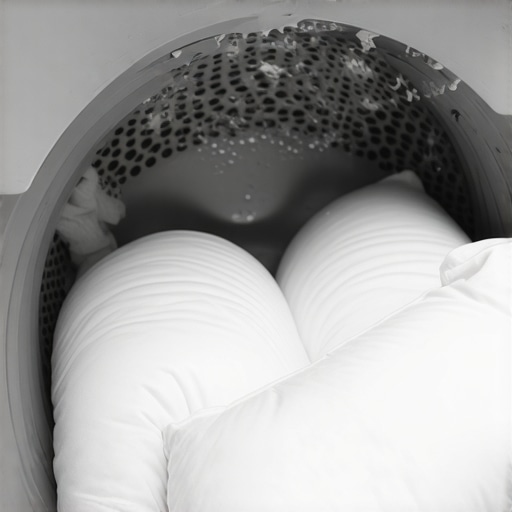
The secret to getting pillows truly clean without your washing machine sounding like it’s about to launch into orbit is balance. Always wash them in pairs. This keeps the drum centered and ensures the water and soap circulate through the fibers rather than just splashing around a lopsided heavy mass. Use a mild liquid detergent because powders can get trapped in the fill and leave a crunchy residue. If you are dealing with stubborn marks on the covers, you might want to look into how to remove yellow sweat stains from white t-shirts naturally as the same principles often apply to cotton pillow shells. A gentle cycle with an extra rinse is your best friend here.
Tennis Balls are Your Best Friend in the Dryer
Heat is a great sanitizer, but moisture is the absolute enemy of a healthy pillow. To prevent clumpy pillow syndrome, toss three clean tennis balls or dryer balls into the dryer with your pillows. As they tumble, the balls beat the pillows like a rug, breaking up clumps of down or polyester fill. It sounds like a drum set is falling down the stairs, but it’s the only way to ensure the core is dry. If the core stays damp, you’re just creating a greenhouse for bacteria. This is similar to why you need a specific ultimate upholstery care guide—deep cleaning is only successful if the drying process is absolute. While the pillows are drying, take the opportunity to tackle the mattress. You should learn why you should always vacuum your mattress before you sanitize it to prevent turning surface dust into a muddy paste once you apply any sanitizing sprays.
Use the Sunlight Method for Delicate Inserts
Some pillows, especially solid latex or certain memory foams, cannot be submerged in water at all. For these, I rely on UV sanitization. I’ll strip the cases and leave the bare pillows on a clean sheet in direct sunlight for four hours, flipping them halfway. The sun’s UV rays are naturally antimicrobial and help dissipate odors. I started doing this after a particularly bad flu season, and the difference in air quality in the bedroom was immediate. It’s a low-tech version of the sanitizing secrets for a safer house in 2025 that pros use. It won’t remove the zoo of dead skin, but it will neutralize living organisms without risking the structural integrity of expensive foam.
High Heat Won’t Save a Dirty Pillow
Common wisdom suggests that cranking your water heater to the max is the ultimate way to kill allergens. However, in my experience, heat alone is a bit of a trap. If you don’t physically remove the organic matter—the sweat, skin, and oils—you’re essentially just cooking those proteins into the fabric. The Environmental Protection Agency (EPA) makes a clear distinction that many miss: sanitizing only reduces bacteria to a safe level, while disinfecting is what actually kills the organisms. If you aren’t using effective sanitizing methods for a germ-free home that include a mechanical flush (meaning enough water and a proper rinse), those dead dust mites stay trapped in the fibers, and their decaying bodies can be just as allergenic as the live ones. You need a complete cycle that lifts the debris away, not just a hot bath that sits still.
Stop Using Fabric Softener if You Want to Breathe
Here is the biggest ‘oops’ factor I see with people trying to keep their bedding fresh: they overload on fabric softeners and scent beads. These products work by coating fibers in a thin layer of wax or oil. While it feels soft, that coating acts like a glue for dust and skin cells. Over time, this creates a ‘biofilm’ that becomes a feast for bacteria. This is often the hidden reason why your washing machine smells like a swamp and how to fix it. That gunk builds up in the drum and transfers back to your ‘clean’ pillows. If you want a truly fresh result, swap the softener for a half-cup of white vinegar in the rinse cycle. It breaks down detergent residue and keeps the fibers absorbent and breathable, which is a core principle in any ultimate upholstery care guide.
Is it Possible to Achieve a Clinical Clean in a Shared Laundry Room?
This is a question I get from a lot of apartment dwellers who are understandably nervous about using communal machines. You have no idea what the person before you washed—it could have been oily shop rags or pet bedding. To bridge this gap, you should follow the pre-move checklist for sanitizing a shared laundry room even if you’ve lived there for years. Running an empty hot cycle with a cup of bleach or a specialized drum cleaner before you toss in your pillows is a non-negotiable step for high-level hygiene. It ensures you aren’t just swapping your domestic dust for someone else’s grime. These sanitizing secrets for a safer house in 2025 are what separate a ‘visual clean’ from a truly healthy environment. We often focus so much on the pillow itself that we forget the machine is the very tool supposed to be helping us. By following effective house cleaning secrets from cleaning experts, you learn to treat the tool as carefully as the fabric. Have you ever fallen into the trap of thinking a ‘clean’ scent meant a clean pillow? Let me know in the comments below!
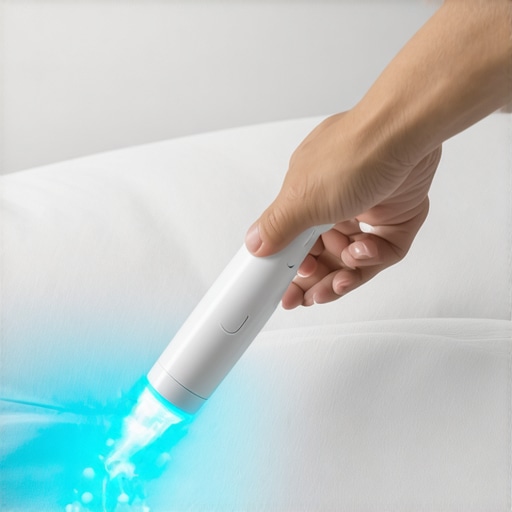
I’ve spent a small fortune on gadgets that promised to turn my home into a cleanroom, but only a few actually earned their spot in my cabinet. One tool I swear by is a high-intensity UV-C handheld sanitizer. Unlike the cheap knockoffs you find on social media ads, a quality device emitting light at exactly 253.7 nanometers—a wavelength proven by the International Ultraviolet Association (IUVA) to disrupt the DNA and RNA of pathogens—can neutralize what your washer misses. I use it on my pillows every Sunday night. It’s my ‘insurance policy’ for those delicate memory foam cores that can’t handle the tumble dryer. If you want to keep your bedroom from reverting to a dust-mite hotel, you need a daily house cleaning routine to maintain perfection that includes these minor, high-impact touches.
The Gear That Actually Makes a Difference
Most people assume any vacuum works, but if yours smells ‘dusty’ while running, you’re failing. I personally use a vacuum with a fully sealed HEPA system—not just a HEPA filter, but a sealed chassis. This prevents air from leaking out of the seams before it hits the filter. If you aren’t careful, you’ll find why your vacuum filter might be making your allergies worse as it exhausts fine particles right back into your breathing zone. This level of detail is a cornerstone of effective house cleaning secrets from cleaning experts. For those moving soon, these tools are essential for a move-out clean checklist to simplify your transition. Using a sealed system ensures you aren’t just recirculating the debris you’re trying to remove.
How do I keep my sleep environment sanitized for the long haul?
The secret isn’t a one-time deep clean; it’s a ‘layering’ approach. Every three months, I perform a deep reset of my upholstery using the ultimate upholstery care guide for lasting freshness. This involves stripping everything down to the mattress. But the real trick is the ‘six-month rotation.’ I have two sets of pillows. While one set is in ‘active duty,’ the other is stored in a vacuum-sealed bag after being professionally sanitized. This prevents the compression of fibers and gives the materials a break from constant body heat and moisture. It’s an advanced move, but if you want to how to schedule a deep clean that actually lasts more than a week, this rotation is non-negotiable.
The Future of Self-Cleaning Bedrooms
I predict we are moving toward a world of ‘biostatic’ textiles. We’re already seeing silver-ion infused threads in high-end athletic wear, and I believe that by 2030, our pillows and mattresses will come standard with permanent, non-toxic antimicrobial coatings. We won’t just be cleaning away the mess; the fabric itself will be hostile to life. Until then, you have to rely on sanitizing secrets for a safer house in 2025 to bridge the gap. Try this tonight: before you put on fresh cases, give your bare pillow a light mist of a 70% isopropyl alcohol solution and let it air dry for twenty minutes. It’s the fastest way to drop the microbial load without a full wash cycle. This simple maintenance hack can double the lifespan of your pillows while keeping your skin clear and your lungs happy.
The Harsh Truths I Learned While Battling Bedding Bacteria
One thing that surprised me is how much we focus on the pillowcase while ignoring the ‘sponge’ inside. If your pillow smells slightly sweet or musty, you aren’t just dealing with old sweat; you’re likely smelling the byproduct of bacteria breaking down skin cells. It’s a wake-up call to start a daily house cleaning routine to maintain perfection that extends to your sleep gear.
I also realized that ‘breathability’ isn’t just a marketing buzzword for comfort. A pillow that doesn’t breathe traps moisture, which is the literal lifeblood of dust mites. I spent years buying high-thread-count cases that were actually suffocating my pillows and trapping allergens inside. Switching to natural fibers was a game-changer for my morning congestion.
Finally, I learned that a pillow protector is not optional. It’s the barrier that keeps your pillows from doubling in weight due to organic buildup. Think of it as a pre-filter. It’s much easier to wash a thin protector every week than it is to deep clean a heavy down insert.
My Battle-Tested Kit for a Clinical Sleep Sanctuary
To maintain a high standard of hygiene, I rely on a few specific tools. First, a reliable handheld UV-C light is my go-to for mid-week refreshes when a full wash isn’t possible. It’s one of those sanitizing secrets for a safer house in 2025 that actually works on a microscopic level.
Second, I always keep a gallon of white vinegar in my laundry room. It’s the best way to strip away the waxy buildup left by commercial softeners. If you’ve ever wondered how to remove old sweat stains from a silk pillowcase, a gentle vinegar soak followed by cold water is often the most effective route.
Third, I’ve swapped tennis balls for wool dryer balls. They are quieter and more efficient at lofting the fill without the plastic smell. This is a crucial step in the ultimate upholstery care guide for lasting freshness because it ensures the core of your bedding is bone-dry.
Take Back Your Rest One Layer at a Time
You deserve to wake up feeling refreshed, not like you’ve spent eight hours in a dusty attic. By implementing these effective sanitizing methods for a germ-free home, you are investing in your long-term respiratory health. Don’t feel like you have to boil every piece of fabric in your house today. Start with the two pillows you use most often and see how much better you breathe tomorrow morning. The peace of mind that comes with a truly clean bed is worth every minute of effort.
Have you ever tried the squeeze test on your current pillows and been shocked by the results? Let me know your cleaning wins in the comments below!