
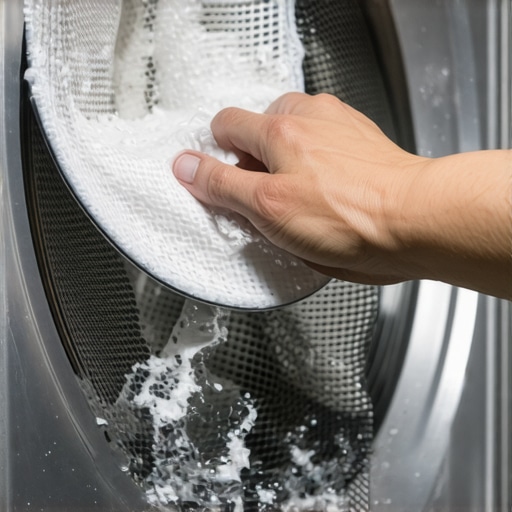
I was standing in my laundry room last Tuesday, staring at a pile of damp jeans that had already been through two full high-heat cycles. I was beyond frustrated. My dryer isn’t even that old, and I am religious about swiping that little mesh screen after every single load. But there I was, smelling a faint, metallic singe in the air and wondering why my clothes were still cold and clammy. It wasn’t until I grabbed a flashlight and peered into the dark abyss behind the lint trap housing that I realized I had been neglecting a massive, fuzzy secret. Most of us think we are being responsible homeowners by cleaning the visible trap, but there is a secondary ‘ghost’ filter—a buildup of felt-like grime deep within the machine—that most people never touch. Today, I’m going to show you exactly how to find it and why ignore it is the fastest way to kill your appliance.
That little mesh screen is lying to you
It sounds dramatic, but your lint trap is only catching about 70% of the debris flying off your clothes. The rest? It sneaks past the edges of the filter and settles into the internal cabinet or the blower housing. I made the mistake of thinking my machine was ‘self-contained’ for years until I realized my energy bill was creeping up because the motor had to work twice as hard to push air through a wall of gray gunk. This isn’t just about efficiency, though. According to the National Fire Protection Association, nearly 16,000 home fires are started by clothes dryers every year, usually because of lint buildup. If you are prepping for a transition, knowing how to deep clean the interior of a dryer to prevent lint fires is just as important as scrubbing the floors. In fact, if you’re a renter, this is one of the 3 spots in the laundry room rental inspectors always check when they want to be picky about your deposit.
Is digging into the dryer chassis actually worth the hassle?
I know what you’re thinking: ‘I am not a mechanic, and I don’t want to break my expensive appliance.’ I had that exact same fear. I was terrified that if I started unscrewing panels, I’d end up with a pile of scrap metal and a $800 bill. But here is the reality: the ‘filter’ I’m talking about isn’t always a removable part, but a specific area where lint traps itself. Using move-out cleaning strategies to secure your deposit often requires this kind of deep-dive maintenance. Once I actually saw the thick layer of dander and fabric fibers choking the heating element, I realized the real risk was doing nothing. Have you ever noticed your dryer cabinet feeling unusually hot to the touch, or does it take forever to dry a simple load of towels? Tell me in the comments if you’ve ever dared to look inside the actual cabinet of your machine.Before you even think about grabbing a screwdriver, pull the plug. It sounds obvious, but I once skipped this while trying to fix a dishwasher and ended up with a shock that I felt in my teeth for an hour. Once the power is dead, pull the dryer about two feet away from the wall. This is where most people realize their laundry room isn’t as clean as they thought. If you see a thick layer of gray fuzz on the floor, it’s a sign that your vent is leaking or the internal seals are failing.
How to suck out years of hidden lint
The real ‘ghost’ filter lives inside the cabinet. Most dryers have a handful of screws on the back panel or a hidden clip under the top lid. Pop that open, and you’ll likely see a ‘lint blanket’ draped over the motor and the heating element. This is where effective house cleaning secrets from cleaning experts come into play: you need a narrow crevice tool or a flexible dryer lint brush to reach the tight spots. I remember the first time I did this; I pulled out a wad of lint the size of a nerf football and three crusty pennies that had been rattling around the blower wheel for years. The difference in airflow was immediate—it was like the machine could finally breathe again. 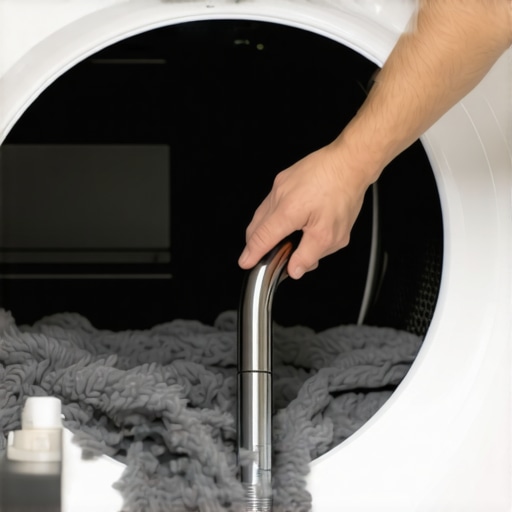 When you’re vacuuming, be careful around the electrical wires. Think of it like a surgical extraction. If you’re not thorough, you’re just leaving fuel for a potential fire. This is a crucial part of how to deep clean the interior of a dryer to prevent lint fires. If you notice your vacuum isn’t picking everything up, check your filters; why your vacuum is blowing dust back into the air is usually due to a clogged HEPA filter or a poor seal, which just makes the laundry room messier.
Don’t ignore the accordion tube behind the machine
That flexible silver tube is the weakest link in your laundry system. Lint loves to settle in the ridges of the foil. I’ve seen tubes so heavy with wet lint they were actually sagging and crimping the airflow entirely. While you have the dryer pulled out, detach this tube and vacuum it from both ends. This is also the perfect time to employ the secret to cleaning your dryer vent from the outside to ensure the entire path to the exterior wall is clear. If you’re a tenant, remember that the 3 spots in the laundry room rental inspectors always check usually include this exact connection. A clean, lint-free vent is a clear signal that you’ve maintained the property responsibly.
Check the blower wheel for hard clogs
Sometimes the problem isn’t just fluffy lint; it’s a ‘caked’ layer of fabric softener and dander that acts like cement. This happens more often if you use too many dryer sheets. I once had to use a plastic putty knife to scrape this gunk off the blower fan blades because the weight of the debris was causing the whole machine to vibrate. If your dryer sounds like a jet engine taking off or vibrates excessively, this is likely your culprit. Integrating this deep-dive into your daily house cleaning routine to maintain perfection might be overkill, but performing it once a year is non-negotiable for appliance longevity and home safety.Most people think that a gallon of hot water and a bottle of multi-purpose spray are the ultimate weapons for a move-out clean, but that is where the most expensive mistakes begin. We are often taught that ‘more is better’ when it comes to sanitizing, yet I have seen more security deposits lost to over-saturation than to actual dirt. When you are tackling a deep clean, the common belief is that a steam cleaner is a universal fix-all. In reality, using a steam mop on the wrong surface is the fastest way to warp your home’s value. I learned this the hard way when I saw someone try to ‘sanitize’ their hallway, only to realize why your steam mop might be ruining your laminate floors by forcing moisture into the fiberboard core. If you want to show real expertise, you have to stop cleaning for the eyes and start cleaning for the materials.
Can you really sanitize upholstery without a professional rig?
This is the question that separates the amateurs from the pros. Most homeowners assume that if a couch smells fresh, it is clean. However, the IICRC (Institute of Inspection Cleaning and Restoration Certification) notes that improper drying times are a leading cause of secondary mold growth in upholstery. If you soak a cushion to get a stain out but don’t have the extraction power to pull that moisture back out, you’re just creating a petri dish. This is why knowing ultimate upholstery care guide for lasting freshness is about moisture control, not just soap application. If you are dealing with a specific fabric, you must check the tag for an ‘S’ code. If you see it, water is your enemy. I have seen beautiful sofas ruined because someone didn’t know how to treat s-coded upholstery fabric without ruining it and used a water-based foam that left permanent rings.
The hidden chemical traps that eat your security deposit
The biggest ‘oops’ factor I see during transitions is the ‘mixing’ trap. People get desperate to remove bathroom stains and start layering bleach on top of ammonia-based glass cleaners. Not only is this a health hazard, but it can also permanently etch the very fixtures you are trying to save. When you’re trying to achieve a professional result, effective house cleaning secrets from cleaning experts always prioritize pH-neutral cleaners for stone and specific solvents for oils. If you use vinegar on your kitchen tops, you might be falling for the myth that it’s a universal cleaner; however, why vinegar is not always the best choice for granite countertops is a lesson usually learned after the stone loses its shine. Instead of scrubbing harder, focus on your technique. For example, how to stop cross-contamination while cleaning the bathroom involves a color-coded rag system so you aren’t moving bacteria from the toilet to the sink handles. This level of detail is what landlords look for when they decide whether to walk through with a white glove or a checkbook. Have you ever accidentally ruined a piece of furniture or a floor while trying to ‘deep clean’ it? Let me know in the comments. To ensure you aren’t missing any other critical steps, follow a move-out clean checklist to simplify your transition and keep your stress levels low.When I finally stopped buying the ‘latest and greatest’ cheap sprays and invested in a high-end, sealed HEPA vacuum, my life changed. I used to think that as long as the carpet looked flat, it was clean. But I was wrong. Most vacuums are essentially dust-moving machines that lack a true airtight seal, which explains why your vacuum is blowing dust back into the air and onto your freshly wiped surfaces. I now swear by a Miele or a high-end Dyson specifically because of their filtration efficiency. According to the IICRC S100 Standard for Professional Carpet Cleaning, soil that remains in the fibers acts like sandpaper, grinding down the pile every time you walk across it. If you want to keep your home in ‘move-in’ condition, you need a tool that actually extracts the microscopic grit, not just the visible crumbs. This is the bedrock of effective house cleaning secrets from cleaning experts: the tool must be as high-performance as the technique.
The upcoming shift toward sensor-driven sanitization
I predict that in the next few years, we are going to see a massive shift toward ‘smart’ cleaning surfaces. Imagine a kitchen counter that changes color when it detects bacteria, or a dryer that refuses to start because its internal sensors detect a lint blockage. We are already seeing the beginning of this with laser-guided vacuums that show you exactly where the dust is hiding. Integrating these technologies into your daily house cleaning routine to maintain perfection will soon be the standard. It’s no longer about guessing if a surface is clean; it’s about having the data to prove it. For those of us moving between homes, sanitizing secrets for a safer house in 2025 will likely revolve around UV-C light wands and electrostatic sprayers that provide a 360-degree germ-kill without the need for harsh chemicals.
How do I maintain these deep-clean results over time?
Maintaining a home’s value isn’t about one massive annual scrub; it’s about preventatively managing the ‘load’ on your house. For example, if you have pets, using upholstery cleaning tips for a fresh home revival like a simple rubber squeegee to pull hair before it gets woven into the fabric can save you hundreds in professional fees later. I personally use a small handheld extractor once every three months on high-traffic areas. This prevents the ‘graying’ effect that happens on furniture. If you’re a renter, following a move-out clean checklist to simplify your transition starting three months before your lease ends will prevent that frantic, last-minute panic that leads to missed spots and lost deposits. 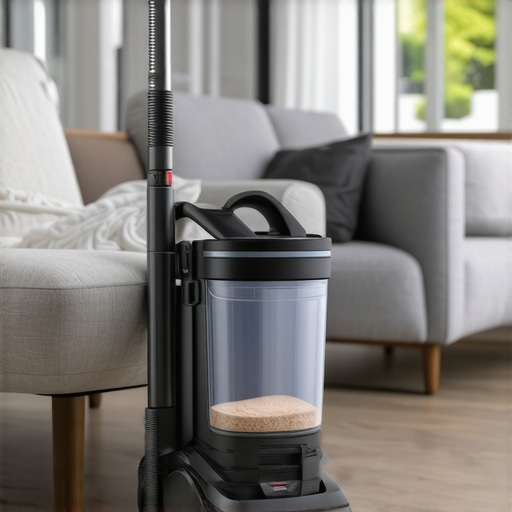 For those dealing with delicate pieces, knowing ultimate upholstery care guide for lasting freshness means you aren’t just reacting to spills, but actively protecting the fibers from UV damage and skin oils. Even something as simple as the window track cleaning hack you actually need for a move out—using a vacuum crevice tool once a month—prevents the buildup that eventually jams the sliders. My biggest piece of advice? Pick one high-traffic area this weekend—maybe the space behind your dryer or that one ‘S’ coded chair—and apply the specific extraction or vacuuming method we discussed. You’ll be shocked at how much easier your daily maintenance becomes when the hidden grime is finally gone.
Lessons from the Trenches of a Failed Security Deposit
After years of scrubbing, I’ve realized that the biggest mistake isn’t being messy—it’s being inconsistent with technical knowledge. I once lost a significant portion of my deposit because I focused on the shiny surfaces but ignored the airflow. Relying on move-out cleaning hacks ensure your deposit refund by teaching you to look where the dust actually settles, not just where the light hits. Another lightbulb moment was realizing that ‘scent’ does not equal ‘sanitized.’ If you are just spraying perfume, you aren’t removing the bio-load. True sanitizing hacks for safe house transitions focus on dwell time and physical removal of particulates.
#IMAGE_PLACEHOLDER_E#
The Gear That Separates Amateurs from Pro Cleaners
If you are still using the same rag for the kitchen and the bathroom, you are just moving germs around. I highly recommend a color-coded system to how to stop cross-contamination while cleaning the bathroom and other sensitive areas. For floors, stop using harsh acids; instead, use the vinegar-free way to clean granite countertops and delicate stone to preserve that factory shine. Finally, don’t skimp on your vacuum. A cheap machine with a leaky seal is worse than no vacuum at all, as it spreads allergens. Understanding why your vacuum filter might be making your allergies worse 2 is the first step in upgrading to a sealed HEPA system that actually protects your air quality.
Reclaim Your Space One Deep Clean at a Time
Taking on a full house cleaning strategies for a sparkling home today can feel overwhelming, but remember that every square inch you reclaim from dust and grime is a win for your health and your wallet. Whether you are prepping for a move or just trying to breathe easier in your current living room, these technical details matter. You’ve got the knowledge now—it’s just a matter of applying it. Have you ever discovered a ‘hidden’ mess in a place you thought was clean? Let me know in the comments below!