
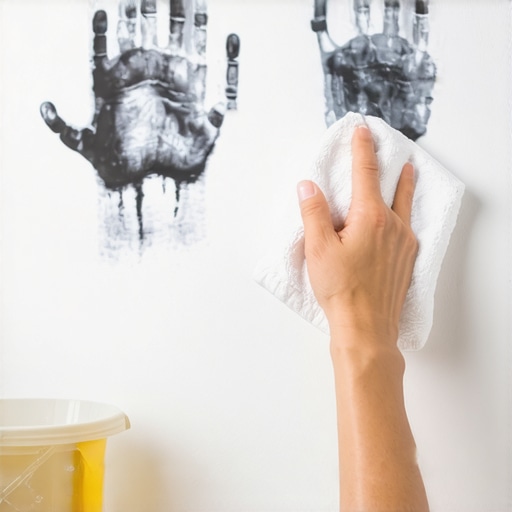
I was standing there, coffee in hand, watching the afternoon sun hit the hallway at just the right angle. My heart sank. There it was: a perfect, oily map of my toddler’s hand right next to the light switch. I grabbed a wet rag, gave it a vigorous rub, and… disaster. I didn’t just move the dirt; I created a permanent shiny smudge on my beautiful eggshell finish. If you’ve ever tried to scrub crayon marks off walls, you know that heart-dropping feeling when the ‘clean’ spot looks worse than the original mess. It’s a battle between cleanliness and chemistry, and for a long time, the chemistry was winning. [image]
How to Stop Scrubbing Your Paint Away
Most of us reach for the harshest spray in the cabinet when we see a greasy smudge. I’m guilty too. Years ago, I used an industrial-strength degreaser on a satin-finish wall and literally melted the top layer of pigment. It was a lesson learned the hard way. When you are dealing with oils from hands, you need effective house cleaning secrets that emulsify the grease without dissolving the binder of the paint itself. According to experts at the Paint Quality Institute, aggressive scrubbing can cause ‘burnishing,’ a permanent change in the paint’s gloss level that no amount of cleaning can fix. We want to lift the grime, not the wall. This is especially vital if you’re trying to master move-out cleaning hacks to get your security deposit back.
Is a magic eraser actually worth the hype?
It is the most common question I get from neighbors. Those little white sponges are amazing, but they are also abrasive. If you use them with too much pressure, you are essentially sanding your wall. My goal today is to give you a method that is gentler than a sponge but tougher than a toddler’s curiosity. Whether you are tackling the area around grimy light switches or cleaning up after a busy weekend, this approach works. Have you ever accidentally scrubbed a shiny ‘halo’ onto a matte wall, or is it just me? Tell me your worst wall-cleaning fail in the comments!
The Dry Dusting Rule You Can’t Skip
Before you even think about touching water to that smudge, you have to remove the surface debris. Think of your wall like a piece of fine art; if you mix water with dust, you aren’t cleaning, you’re making mud. I always use a clean, dry microfiber cloth to gently whisk away the loose particles. This is a foundational step in adopting modern house cleaning strategies for a sparkling home today. If you skip this, the grease from the handprint will trap the dust and create a grey, smeary mess that is much harder to remove. 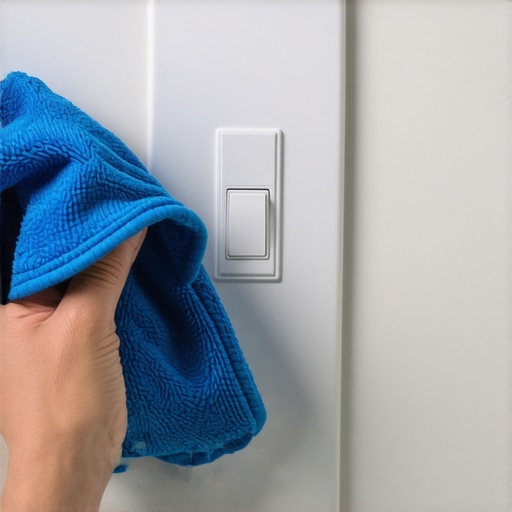
Create a Gentle Grease-Cutting Solution
You don’t need a bucket of chemicals to win this fight. In fact, professional results usually come from the simplest mixtures. I use two cups of warm water and just one or two drops of clear, degreasing dish soap. The goal is to create ‘slippery’ water, not a bubble bath. This approach is very similar to the secret to cleaning greasy handprints from wood cabinets where the finish is equally delicate. You want enough surfactant to break down the skin oils but not so much that you leave a sticky residue that attracts more dirt later.
Spray Your Cloth and Not the Paint
This is the most common mistake I see. There is a crucial reason why you should never spray cleaning products directly on surfaces, especially vertical ones. When you spray the wall, the liquid can run down in long ‘tears,’ creating permanent drip marks in the paint or soaking into the baseboards. I learned this the hard way back in 2019. I was in a rush to clean the hallway before guests arrived and sprayed a heavy-duty cleaner directly onto the eggshell-finish wall. Within seconds, I had vertical streaks that looked like the wall was weeping. No matter how much I wiped, the ‘paths’ the cleaner took remained visible after the wall dried. I ended up having to spot-prime and repaint that entire section. Now, I always spray the cloth until it’s damp, never dripping.
Master the Blotting Technique to Save Your Finish
Instead of a vigorous back-and-forth scrub, which acts like sandpaper on your paint’s sheen, try the ‘blot and roll’ method. Press the damp cloth onto the smudge and roll your wrist so a fresh part of the cloth touches the grease. This lifts the oil away from the wall rather than pushing it deeper into the texture. While you are at it, consider incorporating sanitizing secrets for a safer house in 2025 by ensuring your cloths are fresh and your water is at the right temperature to kill bacteria without damaging the binder. Finally, always have a second, dry microfiber cloth ready for the ‘buff-off.’ Use it to dry the area immediately to prevent any water spots. By understanding why your microfiber cloths are leaving lint everywhere, you can select a high-quality, tightly woven cloth that leaves the wall looking factory-fresh rather than covered in tiny white fuzzies.
Everyone tells you that vinegar and baking soda are the ultimate ‘green’ cleaning duo, but here is a truth that might save your paint job: on a matte or eggshell finish, that gritty baking soda paste is essentially liquid sandpaper. I have seen homeowners try to be eco-friendly only to find they have literally stripped the pigment right off their drywall. It is a classic trap where the desire for ‘natural’ products overrides the chemistry of the surface you are trying to protect. When you are refining your daily house cleaning routine to maintain perfection, you have to prioritize the pH balance of your solutions over the marketing on the bottle.
The pH Trap That Softens Your Paint
Most people assume that if a cleaner is ‘safe,’ it can stay on the wall as long as needed. However, the American Cleaning Institute points out that highly alkaline cleaners can actually react with the binders in latex paint, causing it to soften or become permanently tacky. If you leave a high-pH soap on the wall for more than a few minutes, you aren’t just cleaning grease; you are chemically compromising the paint’s integrity. This is why I always emphasize ‘neutral’ cleaners. Have you ever noticed a spot on your wall that feels slightly sticky even after it is dry? You have likely fallen into the alkaline trap. Let me know in the comments if you’ve ever had a ‘safe’ cleaner backfire on you!
Why a Clean Spot Can Look Like a New Stain
Here is an advanced mistake even seasoned cleaners make: only cleaning the smudge itself. If your walls haven’t been wiped down in a year, they have a microscopic layer of ‘house patina’—a fine dusting of environmental particulates. When you clean just one six-inch circle, that spot becomes ‘too clean’ compared to the rest of the wall, creating a reverse stain. To avoid this, you must use a ‘feathering’ technique, lightly wiping outward from the center of the clean area so the transition is invisible to the eye. This level of detail is what separates a quick wipe-down from effective sanitizing methods for a germ-free home that still preserve your aesthetic.
Does this same logic apply to your favorite velvet or silk upholstery?
I get this question constantly, especially during deep cleans. The answer is a resounding no. While walls are relatively forgiving of moisture, fabrics are not. If you apply the ‘blot and roll’ method to a velvet sofa with the same saturation you’d use on a wall, you will likely cause permanent water spotting or ‘crushing’ of the pile. You should never scrub a fresh liquid stain on delicate fabrics because the mechanical action breaks the fibers. Instead, for furniture, you need to consult an ultimate upholstery care guide for lasting freshness to understand how solvent-based cleaners differ from the water-based ones we use on walls. Expertise isn’t just about knowing how to clean; it’s about knowing when to stop before you do more harm than good.
Transitioning from delicate upholstery back to the solid surfaces of your home requires a shift in mindset and, more importantly, a different set of specialized tools. I’ve spent hundreds of dollars on ‘revolutionary’ cleaning gadgets, but the tool that actually changed my life cost less than ten bucks. It’s a high-quality, 300 GSM split-fiber microfiber cloth. Most people buy the cheap multipacks from big-box stores, but those are basically plastic rags that just move oil around. If you want to avoid frustration, you need to know why your microfiber cloths are leaving lint everywhere and switch to a professional grade. The split fibers act like tiny hooks that grab grease rather than just sliding over it. I also keep a dedicated handheld LED work light in my cleaning kit. When you shine it parallel to the wall, every smudge and ‘ghost’ mark pops into view. It’s a trick I picked up from professional painters to find imperfections before the final coat, and it works wonders for spotting the hidden grime on your light switches.
#IMAGE_PLACE_HOLDER_D#
How do I maintain my wall’s finish over the long haul?
Maintenance isn’t about a massive deep scrub once a year; it’s about consistent micro-interventions. I’ve integrated a quick ‘walk-through’ into my daily house cleaning routine to maintain perfection. Every Friday, I spend exactly five minutes checking high-traffic touchpoints. According to the technical data sheets from Benjamin Moore regarding ASTM D2486 ‘Scrub Resistance’ testing, even the highest-quality paints have a finite limit to how many cycles of abrasion they can handle before the resin breaks down. By catching a smudge while it is fresh, you can use a damp cloth alone, preserving those precious scrub cycles for the future. This approach is a total game-changer when you are finally preparing a move-out clean checklist to simplify your transition. If the walls are kept up weekly, you won’t be facing a full weekend of scrubbing—and potentially losing your security deposit—when your lease is up. I also recommend keeping a small ‘touch-up’ jar of your wall paint in the back of the pantry. Sometimes, you just need to know how to remove scuff marks from baseboards without using chemicals, and if the mark is too deep, a tiny dab of paint is always better than a giant shiny spot caused by over-cleaning.
The Future of Self-Cleaning Surfaces
Looking ahead, I predict we’re going to see a massive shift toward photocatalytic ‘self-cleaning’ paints in residential homes. These coatings use ambient light to break down organic matter—like hand oils and bacteria—on contact. Until that becomes the affordable standard, however, we have to rely on our own technique and tools. My challenge for you this week: grab a bright flashlight, find those hidden smudges in your hallway, and try the ‘blot and roll’ method I mentioned earlier. You will be shocked at what you’ve been missing and how much better the room feels once that oil is gone. Your paint job will thank you for the gentle touch!
The Hardest Lessons My Hallway Taught Me
Over the years, I have learned that the most effective way to maintain a home isn’t through force, but through understanding. One major lightbulb moment occurred when I realized that my wall paint is actually a delicate resin film. When you treat a smudge like a stain on a concrete floor, you are doomed to fail. I used to think a ‘clean’ wall meant a scrubbed wall, but now I know that a truly clean wall is one where the texture and sheen remain completely untouched. If you are currently working through a move-out clean checklist to simplify your transition, remember that preserving the paint’s original look is far more important than a five-second fix that leaves a permanent mark.
- Texture is everything: Once you flatten the ‘stipple’ of the paint with a sponge, the light will hit that spot differently forever.
- Chemicals are a last resort: Most hand oils are surprisingly weak when met with warm, soapy water and a bit of patience.
- The halo effect is real: Always clean a slightly larger area than the smudge itself to blend the transition between the clean spot and the rest of the wall.
My Personal Toolkit for Professional Results
I don’t believe in buying every gadget on the shelf, but a few specific items have completely changed my approach to house cleaning strategies for a sparkling home today. First, I only use high-density microfiber. You need to be careful and understand why your microfiber cloths are leaving lint everywhere, because those tiny fibers can get trapped in the paint’s texture and make the wall look dusty even when it is clean. Second, I keep a small handheld LED work light. If you shine it at an angle against the wall, it reveals grease and smudges that are invisible from the front. This is a secret weapon when you are performing sanitizing secrets for a safer house in 2025, ensuring you don’t miss those high-touch zones where germs and oils congregate.
Time to Reclaim Your Pristine Walls
There is a unique kind of peace that comes with a home that looks as fresh as the day it was painted. By choosing the gentle ‘blot and roll’ method over aggressive scrubbing, you are not just cleaning; you are protecting your investment. Integrating these small, thoughtful steps into your daily house cleaning routine to maintain perfection will keep your home looking stunning without the need for constant touch-ups or expensive repainting. Don’t let a few handprints ruin your afternoon. Take a breath, grab your damp cloth, and remember that a gentle touch is always the most powerful tool in your cleaning arsenal. Have you ever accidentally created a ‘shiny spot’ on a matte wall that you couldn’t get rid of? Let me know your story in the comments!