
You know that sinking feeling when you realize you’ve wiped down every surface, only to still sense that lingering, sickly smell? Last winter, after battling a stubborn cold, I thought I’d sanitized my entire workspace thoroughly. But days later, I started sneezing again, and that faint, off-putting scent clung to my furniture and doorknobs. It hit me—I’d overlooked an essential step.
Why Your Post-Cold Cleaning Might Be Falling Short
It’s easy to assume that a quick wipe and spray are enough to eliminate germs and odors after a cold. But without proper sanitizing of the entire environment, bacteria and residual viruses can lurk, waiting to cause another round of illness. Moreover, the smell of sickness isn’t just unpleasant; it’s a signal that your cleaning isn’t as effective as you might think. According to a study published by the Centers for Disease Control and Prevention, improper sanitation can leave behind germs that survive standard cleaning methods, increasing the risk of reinfection.
From personal experience, I learned the hard way that just surface-level cleaning doesn’t cut it. Early on, I made the mistake of relying solely on surface sprays without disinfecting hidden spots—like behind furniture or inside air vents. These overlooked areas became the perfect breeding ground for bacteria, making my home less healthy and more prone to sickness. That’s why I want to share a comprehensive approach that truly sanitizes your space, giving you peace of mind and a healthier environment.
Is Spraying Disinfectant Enough to Keep You Safe?
Many folks, including myself initially, think that a quick disinfectant spray will do the trick. But the reality is, without deep cleaning and proper sanitizing techniques, germs can persist. I’ve learned that rushing through the process can give a false sense of security, leaving dangerous bacteria behind. If you’ve ever wondered whether your current cleaning method really protects you or simply masks the problem, this guide is for you. Together, we’ll explore effective strategies to ensure your workspace is genuinely germ-free and inviting. Curious if your current routine is enough? Let’s find out and make meaningful change.
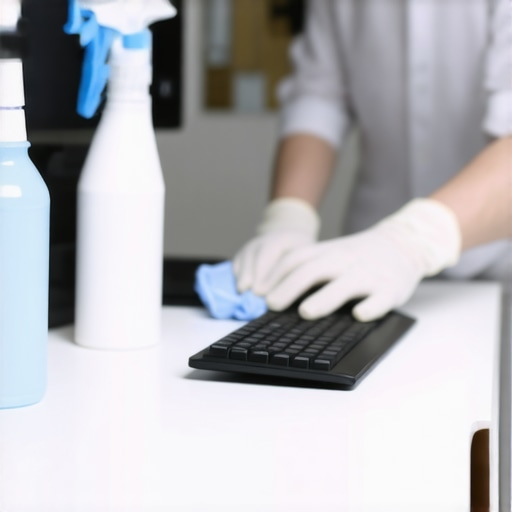
Start by gathering your cleaning supplies: EPA-registered disinfectant, microfiber cloths, gloves, and a mask. Begin with decluttering the space to ensure no surface is missed. Wipe down all high-touch areas like doorknobs, light switches, and remote controls. Use a microfiber cloth dampened with disinfectant—microfiber is superior because it traps dirt rather than spreading it, as explained in [microfiber cleaning tips](https://spotlesscarpetz.com/why-most-microfiber-cloths-are-actually-spreading-dirt-instead-of-removing-it).
Next, move to less obvious spots, such as behind appliances, inside air vents, and under furniture. Use a long-handled duster or vacuum with an attachment to dislodge dust and bacteria from hard-to-reach areas. For upholstery, consider deep cleaning with an upholstery-safe disinfectant. Refer to [upholstery cleaning tips](https://spotlesscarpetz.com/upholstery-cleaning-tips-for-a-fresh-home-revival) for guidance on selecting the right products and techniques.
Persistent odors often originate from hidden sources like behind appliances or within air conditioning units. Remove any removable filters or trays, clean or replace them, and seal gaps around vents or windows with weatherstripping. This step prevents the re-entry of stale air or new germs, ensuring a fresher environment. Use a disinfectant spray on seals and filters—consider eco-friendly options like vinegar solution or [natural disinfectants](https://spotlesscarpetz.com/the-eco-friendly-way-to-descale-your-kettle). Regularly inspecting and maintaining these areas keeps odors in check and prevents mold growth, which can harbor bacteria.
Soft surfaces like couches and mattresses can harbor germs for weeks. Use a fabric-safe sanitizer, focusing on areas where you rest or frequently touch. For deep cleaning, I recommend using a steam cleaner or a specialized upholstery machine. For a personal experience, I once cleaned a microfiber sofa using a steam cleaner in combination with a disinfectant spray, which effectively eliminated the cold virus residuals—something a simple vacuum couldn’t achieve. For tips and product suggestions, visit [effective sanitizing methods](https://spotlesscarpetz.com/effective-house-cleaning-secrets-from-cleaning-experts).
When preparing for a move, ensure all surfaces are thoroughly cleaned to prevent old germs from transferring. Use a checklist, like the one in [move-out cleaning guide](https://spotlesscarpetz.com/move-out-cleaning-hacks-ensure-your-deposit-refund), to systematically address kitchens, bathrooms, and storage spaces. Pay close attention to door jambs, under sinks, and inside cabinets—these are often overlooked but can carry bacteria and odors. Renters have reported success by sealing and sanitizing these areas to get their deposits back and prevent illness post-move.
After physical cleaning, improve air quality by opening windows and using an air purifier with HEPA filters. This helps remove airborne bacteria, viruses, and lingering smells. I personally experienced a noticeable difference after running an air purifier for 24 hours following intensive cleaning, significantly reducing residual odors.
For ongoing maintenance, incorporate daily routines like wiping high-touch areas and airing out the space. Proper sanitation isn’t a one-time task but a continuous effort to keep your environment healthy and fresh. For more expert tips on maintaining a disinfected home, see [house cleaning strategies](https://spotlesscarpetz.com/house-cleaning-strategies-for-a-sparkling-home-today).Many homeowners believe that routine cleaning is enough to keep their homes healthy, but in my experience, there’s a lot more nuance involved that many people overlook. One common myth is that disinfectants alone guarantee complete sanitation. In reality, if surfaces are not thoroughly cleaned beforehand, disinfectants can’t effectively penetrate to eliminate all germs. According to a comprehensive study by the National Sanitation Foundation, cleaning is a vital step that must precede disinfection to maximize effectiveness.
Why Does Skipping Deep Cleaning Lead to Hidden Dangers?
Skipping the deep-cleaning phase can create a false sense of security, allowing bacteria and viruses to linger in cracks and porous materials. For example, soft furnishings like upholstery often harbor unseen pathogens, making it essential to follow advanced protocols such as steam cleaning or using specialized fabric disinfectants. You can explore some expert methods in [upholstery cleaning tips](https://spotlesscarpetz.com/upholstery-cleaning-tips-for-a-fresh-home-revival). Moreover, many people underestimate the importance of disinfecting move-out items and hard-to-reach areas, which if neglected, become reservoirs for germs. Using a detailed checklist from [move-out cleaning hacks](https://spotlesscarpetz.com/move-out-cleaning-hacks-ensure-your-deposit-refund) helps prevent this oversight. Meanwhile, myths about regular household disinfectants often lead people to over-rely on sprays without cleaning visible dirt first, diminishing their effectiveness. Real sanitation requires a synergy of cleaning, disinfecting, and strategic maintenance.
Another overlooked nuance is the proper order of cleaning steps. For instance, cleaning high-touch surfaces like doorknobs and light switches should be done with microfiber cloths dampened with appropriate disinfectants—strictly avoiding dry wiping, which can spread germs instead of removing them. Additionally, many homeowners forget about the hidden mold traps within appliances, such as the refrigerator seals or bathroom grout lines, which can be hotspots for bacterial growth if not addressed properly. Detailed guidance on preventing these common pitfalls can be found in [house cleaning strategies](https://spotlesscarpetz.com/house-cleaning-strategies-for-a-sparkling-home-today).
How Can Advanced Sanitizing Techniques Make a Difference?
Implementing advanced strategies, such as using electrostatic sprayers or UV-C light sterilization, can elevate your home’s hygiene. These methods target resistant pathogens that standard cleaning might miss. While they may seem overkill for everyday cleaning, integrating them periodically—especially after illnesses—can significantly reduce infection risks. Avoid the trap of complacency by learning about these options through trusted sources like [effective sanitizing methods](https://spotlesscarpetz.com/effective-sanitizing-secrets-from-cleaning-experts). Lastly, maintaining a regular air purification routine with HEPA filters helps remove airborne bacteria, ensuring your sanitized surfaces are complemented by clean air.
Have you ever fallen into this trap of underestimating the complexity of thorough house sanitation? Let me know in the comments! Remember, true cleaning is an ongoing process that combines correct techniques, consistent routines, and advanced tools where necessary, making your home genuinely healthier for you and your loved ones.
Invest in Reliable Equipment for Lasting Cleanliness
To keep your home consistently spotless and sanitized, investing in quality tools is paramount. I personally rely on a high-grade HEPA-filter vacuum, such as the Dyson V11 Torque Drive, because it effectively captures microscopic particles and allergens that standard vacuums often miss. Regular use of such equipment not only improves air quality but also prolongs the freshness of your upholstery and carpets, reducing the need for frequent deep cleans. Integrating a steam cleaner like the Bissell SteamShot allows me to sanitize surfaces without chemical residues, aligning with eco-friendly practices and ensuring safer spaces for children and pets. These tools have become essential in my ongoing maintenance routine, enabling quick and effective touch-ups that uphold high sanitation standards over time.
Streamline Your Cleaning Routine with Smart Software
Automation and scheduling apps have transformed the way I approach home maintenance. I recommend using a dedicated cleaning schedule app like Tody or a simple calendar reminder system to allocate regular time slots for specific tasks—be it upholstery refreshes, sanitizing high-touch areas, or move-out preparations. For example, setting a weekly reminder to deep clean upholstery ensures that dirt and bacteria don’t accumulate unseen, maintaining a healthier living environment. By tracking when certain equipment like filters or vacuum bags need replacement, these tools prevent equipment from losing efficiency, ultimately saving time and money. The future points toward even smarter home cleaning systems—think IoT-enabled devices that monitor air quality and suggest real-time cleaning needs, making long-term sanitation proactive rather than reactive.
How do I maintain my cleaning tools to ensure they last?
Proper maintenance of your cleaning tools is crucial for their longevity. Always follow manufacturer instructions for cleaning and replacing parts. For vacuum filters, regular washing or replacing filters every 3-6 months will keep suction power high, as detailed in microfiber cleaning tips. Steam cleaners should be descaled periodically—using vinegar solutions as recommended by industry experts can prevent mineral buildup that hampers performance. Keep your upholstery attachments clean and dry to prevent mold. This little maintenance pays off by preserving your equipment’s efficiency, ensuring every cleaning session is effective. For more insight into optimal tool care, consult the expert cleaning strategies.
Anticipating Future Trends in House Maintenance
Looking ahead, I believe smart home technology will become even more integrated into our cleaning routines. IoT devices capable of sensing pollutants, tracking equipment wear, and scheduling maintenance automatically will revolutionize long-term sanitation. Additionally, eco-friendly and sustainable cleaning tools are gaining popularity, along with biodegradable cleaning agents that minimize environmental impact while maintaining efficacy. Staying ahead involves adopting these new tools and strategies today, ensuring your home remains healthy and welcoming for years to come.
Make Maintenance Second Nature
To truly keep your home in top shape, make routine maintenance a habit. Regularly check and service your equipment, stick to your cleaning schedule, and stay informed about new innovations. That way, you’ll ensure your tools stay effective, and your environment stays clean and safe—saving you time and hassle in the long run. For a practical start, try setting a monthly reminder to inspect and clean your vacuum filters and upholstery attachments. Want expert advice on optimizing your cleaning regime? Visit our contact page for personalized tips.
Over the years, I’ve learned that the biggest breakthroughs in home sanitation come from embracing the unexpected. For instance, discovering that deep cleaning upholstery and sealing gaps around vents can drastically cut down illness transmission was a game-changer. These lightbulb moments reminded me to look beyond surface-level chores and consider the unseen spaces—hidden corners, porous materials, and overlooked appliances—that harbor bacteria and odors. Recognizing these often-neglected areas transformed my entire approach to sanitizing, making my home not just clean but genuinely healthy.
Lessons That Changed My Perspective on Home Sanitation
- The Myth of Quick Sprays: Relying solely on disinfectant sprays without thorough cleaning can create a false sense of security. Sometimes, it’s the deep, meticulous scrubbing that ensures bacteria are truly gone.
- Hidden Spots Matter: I used to overlook behind appliances and inside air vents. Now, I understand these are breeding grounds for germs—and regularly sanitize them for real peace of mind.
- Microfiber Magic: Upgrading to microfiber cloths dramatically improved my ability to trap and remove dirt, rather than just spread it around. It’s a small change with a big impact.
- Odors Signal Problems: Lingering smells often signal unseen mold or bacteria. Addressing their root causes—like replacing filters and sealing gaps—prevents unpleasant surprises later.
- Continuous Routine Beats One-Off Efforts: Making comprehensive sanitation a regular habit prevents bacteria buildup and maintains a healthier space over time.
Tools and Resources That Elevate Cleaning Confidence
- Sanitizing hacks for safe house transitions: A fantastic resource for understanding the full scope of effective sanitation, especially during move-ins and move-outs.
- Upholstery cleaning tips: My go-to guide for reviving fabric furniture and eliminating hidden germs.
- Ultimate upholstery care: An in-depth look at maintaining soft surfaces for long-lasting freshness.
- House cleaning strategies: A comprehensive approach that I’ve personally implemented for consistent results.
Your Next Step Toward Cleaner Living Starts Now
Remember, creating a sanitized environment isn’t just about quick fixes; it’s about adopting a mindset that values thoroughness, regular upkeep, and smart use of tools. By honing these habits, you’ll not only eliminate germs more effectively but also foster a space where you—and everyone around you—can thrive. So, why wait? Invest in good equipment, stay informed about new techniques, and make cleaning an empowering ritual rather than a chore. Your health and peace of mind will thank you for it.
What’s the first overlooked spot you plan to tackle in your home sanitation routine? Share your thoughts below—I’d love to hear your stories!
**