
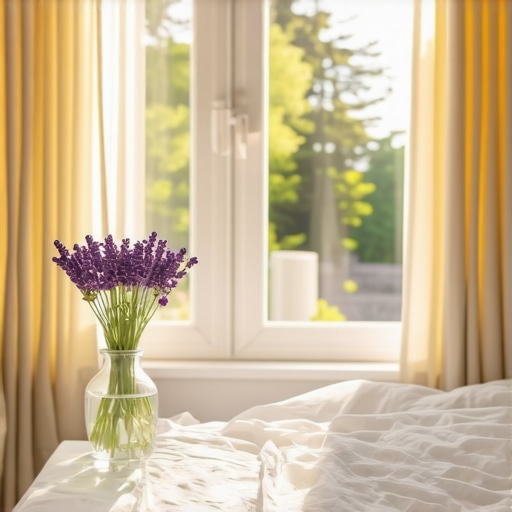
I remember the exact moment I realized my guest bedroom had become a social liability. My Aunt Brenda was visiting, and as she stepped across the threshold, she didn’t comment on the freshly ironed linens; she actually recoiled. It wasn’t that the room was dirty—I had followed my daily house cleaning routine to maintain perfection religiously. No, it was the smell. A heavy, damp, ‘old library’ funk that seemed to cling to the very walls. I was mortified. My first instinct was to douse the room in floral perfume, which was my biggest early mistake. All I did was create a scent I can only describe as ‘botanical rot.’ Today, I am going to save you from that same embarrassment. We are going to tackle the science of stale air and learn how to get rid of that stale smell in your guest bedroom once and for all. Have you ever walked into a room and felt like the air was literally five years old? You aren’t alone.
Stop Blaming the Age of Your House for the Funk
It is so easy to point at the floorboards or the old windows and say, ‘Well, it’s just an old house.’ I did that for years. But the reality is usually much more manageable—and a lot less structural. Mustiness is almost always a combination of trapped moisture, stagnant air, and organic material (like dust or skin cells) breaking down in the dark. According to the Environmental Protection Agency (EPA), indoor air pollutants can be two to five times higher than outdoor levels, especially in rooms with poor ventilation. When I finally stopped masking the scent and started looking at ultimate upholstery care guide for lasting freshness, the mystery started to unravel.
Can you really neutralize these odors without a professional crew?
Absolutely. Most of us jump to expensive ozone machines or industrial cleaners, but the solution usually lies in airflow and targeted sanitizing. I spent a fortune on ‘air purifying’ candles before I realized that the real culprit was my pillow protectors and cases which hadn’t been deep-cleaned in a year. If you aren’t looking at the soft surfaces, you aren’t actually cleaning. We’re going to look at why that guest bed is acting like a giant sponge for humidity and how a few simple upholstery cleaning tips for a fresh home revival can change the entire vibe of the room before your next guest arrives.
Evict the Odors Hiding in Your Soft Surfaces
Think of your guest mattress as a giant, thirsty sponge. It doesn’t just provide a place for a guest to sleep; it actively sips up every ounce of humidity and skin cell shed in that room over months of inactivity. When I first attempted to fix my guest room’s atmosphere, I followed a rigorous house cleaning strategy, yet the funk remained. The breakthrough happened when I stripped the bed down to the frame and realized the ‘old library’ smell was radiating from the padding itself. You must go deeper than the surface. Start by learning how to sanitize your pillow protectors and cases using high-heat cycles that actually break down organic oils. If your guests are resting their heads on year-old sweat trapped in the fabric, no amount of lavender spray will help.
The Fabric Headboard is Your Secret Enemy
Many modern guest rooms feature beautiful upholstered headboards, but these are essentially massive air filters that never get changed. I once spent three hours trying to scrub a stain out of mine, only to realize I was making the smell worse by over-saturating the internal foam with water. To truly refresh the room, you need to know how to clean a fabric headboard without getting it too wet. Use a dry-foam method or a specialized vacuum attachment with a HEPA filter to pull dust out of the fibers rather than pushing moisture in. This is a core part of the ultimate upholstery care guide for lasting freshness.
Kill the Bacteria Living in the Carpet Fibers
If the room has wall-to-wall carpeting, that is likely your primary source of the ‘stale’ scent. Most homeowners think a quick pass with a rental machine is enough, but the reason why your carpet is still dirty after you shampooed it often comes down to sticky soap residue left behind. That residue acts like a magnet for new dust and skin cells, which then break down and create that heavy funk. You need to apply effective sanitizing methods for a germ-free home by using a professional-grade extraction or a vinegar-based rinse after any deep clean. I learned this the hard way after my first ‘deep clean’ attempt left the room smelling like a damp wool coat for a week because the carpet stayed wet too long.
Address the Air Flow Dead Zones
Air doesn’t move in guest rooms because the doors stay shut for weeks at a time. This creates pockets of ‘dead air’ behind heavy wardrobes and inside dark closets. Even if you don’t have a bathroom attached, you should check nearby ventilation; for instance, why you should clean your bathroom exhaust fan every month becomes clear when you realize how much moisture those fans fail to pull from the surrounding hallway when they are clogged with gray fuzz. Use upholstery cleaning tips for a fresh home revival on your curtains too—they are the final barrier the air hits before reaching your guests’ lungs. If your curtains are dusty, the entire breeze is contaminated before it even enters the room. These are the effective house cleaning secrets from cleaning experts that turn a ‘tolerable’ room into a true sanctuary.
Stop Chasing the Myth of the ‘Clean’ Scent
Most of us have been conditioned to believe that a room isn’t truly clean unless it smells like a mountain breeze or a lemon grove. In my years of obsessing over home maintenance, I discovered a hard truth: a truly clean room should smell like absolutely nothing. When you walk into a space and get hit by a wave of ‘floral freshness,’ you aren’t smelling cleanliness; you are smelling volatile organic compounds (VOCs). I used to think I was executing a perfect daily house cleaning routine to maintain perfection by using scented sprays, but I was actually just coating the existing grime in a layer of perfume. According to the American Lung Association, many of these fragrances contain chemicals that can actually lower indoor air quality rather than improve it. The ‘old library’ smell I mentioned earlier was actually thriving beneath those sprays, feeding on the moisture the sprays provided. To get a real result, you have to move beyond masking and embrace effective sanitizing methods for a germ-free home that prioritize odor elimination at the molecular level.
Why does the room still smell after a deep clean?
The most common trap people fall into is the ‘more is better’ philosophy with detergents. If you are preparing for a transition and following a move-out clean checklist to simplify your transition, you might be tempted to douse the carpets and upholstery in extra soap. This is a massive mistake. Excess soap creates a sticky film that traps bacteria and skin cells, which eventually rot and create a worse smell than you started with. This is precisely why your carpet is still dirty after you shampooed it. In my guest room, the lingering funk was actually coming from soap residue in the rug that had gone sour over time. I had to perform a total reset using a pH-balanced rinse to strip away the buildup.
Avoid the Over-Wetting Disaster
When people try to tackle guest room odors, they often get too aggressive with steam or liquid cleaners on soft surfaces. I once thought I was being clever by deep-cleaning my sofa cushions before a guest arrived, only to have them remain damp for three days. By the time they ‘felt’ dry, they had developed a deep, internal mildew that was impossible to remove. This is why you need to master upholstery cleaning tips for a fresh home revival that emphasize moisture control. For example, if your sofa cushions have lost their shape and started to trap odors in the gaps, you should learn how to revive your flat couch cushions with this simple technique which involves proper aeration and batting replacement rather than just more chemicals.
The Hidden Nuance of Move-Out Standards
Whether you are a host or a tenant, the stakes are high when it comes to odors and cleanliness. If you are trying to secure a refund, you need move-out cleaning strategies to secure your deposit that account for the ‘nose test.’ Landlords don’t just look for dust; they smell for neglect. I’ve seen people lose hundreds of dollars because they ignored the sanitizing secrets for a safer house in 2025, specifically regarding the gaskets and seals in the room’s vicinity. Even something as small as the window tracks can hold enough stagnant water to ruin the air quality of the entire guest wing. Have you ever fallen into the trap of over-cleaning only to make the smell worse? Let me know in the comments below, and let’s figure out how to fix it together. For those of you dealing with more permanent issues, our ultimate upholstery care guide for lasting freshness is the next logical step in your journey toward a truly scent-free home.Maintaining that zero-scent baseline isn’t about working harder; it is about working with the right physics. I used to rely on a cheap upright vacuum, thinking a bag was just a bag. I was wrong. I eventually switched to a sealed-system HEPA vacuum because it actually traps the microscopic skin cells that feed the bacteria causing that signature ‘room funk.’ If you are still using a vacuum that leaks fine dust back into the air, you are essentially just moving the smell around. This discovery changed my daily house cleaning routine to maintain perfection from a chore into a science. It is also the primary reason why your house still feels dusty even after you just vacuumed.
The Pro Kit That Stops the Funk Before It Starts
To really scale your efforts, you need to think like a restoration expert. One tool I swear by is a pinless moisture meter. After I apply any upholstery cleaning tips for a fresh home revival, I don’t just touch the fabric to see if it’s dry. I use the meter to check the core density of the cushions. According to the IICRC S520 Standard for Professional Mold Remediation, porous materials that remain damp for more than 24 to 48 hours are at high risk for microbial growth. If my meter reads above 15% moisture in the center of a guest pillow, I know I need to increase the airflow immediately with a high-velocity floor fan. This level of precision is what separates a surface clean from a true deep sanitization.
Stop Guessing and Start Measuring Air Quality
I also keep a small UV-C sanitizing wand in my cleaning caddy for things like remote controls and lamp switches. It is one of those sanitizing secrets for a safer house in 2025 that allows you to kill germs on electronics without adding liquid cleaners that could drip into the components. Looking ahead, I predict the next big trend in home maintenance will be the integration of smart VOC (Volatile Organic Compound) sensors. We are moving toward a future where your home will alert your smartphone the moment your upholstery starts off-gassing or when the humidity in the guest wing hits a ‘mold-risk’ threshold. This proactive approach is already becoming a staple in high-end move-out cleaning strategies to secure your deposit, where leaving a neutral-smelling environment is just as important as a visible shine.
How do I keep that guest room fresh during the off-season?
The secret is a ‘dry-run’ ventilation habit. Once a week, I open the guest room windows for exactly ten minutes—even in winter—to exchange the air, and I use effective sanitizing methods for a germ-free home on the door handles and light switches. I also highly recommend stripping the bed entirely if the room will be empty for more than a month. Leaving the mattress exposed allows the fibers to breathe rather than trapping stagnant air under a heavy comforter. These effective house cleaning secrets from cleaning experts ensure that when Aunt Brenda visits next time, the only thing she notices is the comfort of the bed. I challenge you to try this today: take your pillows out of the pillow protectors and cases and let them ‘sunbathe’ near a bright window for two hours. You will be amazed at how much natural UV light can neutralize trapped odors without a single drop of chemicals.
Why My Most Expensive Cleaning Products Actually Failed Me
I spent years thinking that a more expensive candle or a stronger fabric softener was the secret to a high-end home. The biggest ‘lightbulb moment’ in my journey was realizing that true cleanliness is actually the absence of any scent at all. When I stopped trying to cover up the musty odor and started implementing effective sanitizing methods for a germ-free home, the air in my guest wing finally felt breathable rather than heavy. I realized that the floral scents were just bonding with the dust and moisture to create a new, weirder olfactory problem.
Another hard-learned lesson involved my window treatments. I used to vacuum the floors and scrub the baseboards but completely ignore the heavy drapes. It wasn’t until I applied upholstery cleaning tips for a fresh home revival to my curtains that I noticed the ‘old library’ smell vanished. Fabric is a massive filter, and if you aren’t cleaning the vertical surfaces, you aren’t cleaning the air.
Tools I Use to Ensure the Funk Never Returns
To keep the momentum going, I’ve curated a small but powerful toolkit that moves beyond the basic mop and bucket. My first non-negotiable is a sealed-system HEPA vacuum; it is the cornerstone of sanitizing secrets for a safer house in 2025 because it actually captures the microscopic organic matter that fuels odors. Without it, you are just blowing fine dust back into the room.
I also live by the ultimate upholstery care guide for lasting freshness, which taught me the value of a pH-balanced vinegar rinse. This simple addition breaks down the sticky soap residue that most commercial cleaners leave behind—the very residue that traps smells in your carpet fibers. Finally, I always keep a simple hygrometer in the guest room. If the humidity spikes above 50%, I know it’s time to run a dehumidifier before the mustiness has a chance to take root.
Your Path to a Truly Scent-Free Sanctuary
You don’t need a professional restoration crew or industrial chemicals to transform your home. By shifting your focus from ‘masking’ to ‘moisture control’ and ‘micro-cleaning,’ you will finally master how to get rid of that stale smell in your guest bedroom for good. It is an incredibly rewarding feeling to open that guest door and feel nothing but a crisp, neutral breeze. Your guests will notice the difference, and you’ll finally be able to host with total confidence. Have you ever discovered a hidden source of a smell in your home that completely surprised you? Let me know in the comments below!