
I remember standing over my sink, scrubbing a stubborn garlic-and-beet stain on my favorite maple board until my knuckles were white. I’d used the hottest water I could stand and a mountain of dish soap, but that pungent, pinkish mark wouldn’t budge. In a moment of desperation, I reached for the bleach. Big mistake. Not only did it make my kitchen smell like a swimming pool, but it actually dried out the wood so badly I thought I’d ruined the board forever. That’s when my neighbor, an old-school chef, told me to put down the chemicals and grab a lemon. It felt too simple to work, but it changed my entire perspective on how to handle the 3 germ hotspots in your kitchen that soap alone won’t fix.
The Real Reason Your Wood Boards Look So Tired
Most of us think that if it doesn’t foam, it isn’t cleaning. But when it comes to a standard daily house cleaning routine to maintain perfection, wood requires a much gentler touch than your ceramic plates. Wood is porous; it breathes. When you use harsh chemicals, you’re essentially feeding your board toxins that it will eventually leak back into your food. I learned the hard way that why we stopped using bleach on wooden cutting boards isn’t just about the chemical smell—it’s about preserving the life of the wood grain so it doesn’t crack and harbor even more bacteria. Whether you are doing a deep dive for a move-out clean or just trying to prep dinner, understanding the material is half the battle. Many people struggle with these deep-set odors, and honestly, have you ever felt like your cutting board was permanently ‘onion-scented’ no matter how much you scrubbed? It’s a common frustration that leads many to throw away perfectly good boards prematurely.
Does some fruit and table salt actually beat industrial soap?
It sounds like an old wives’ tale, right? I was skeptical too until I looked into the science. Research from the University of California, Davis, suggests that wooden boards can actually be safer than plastic because the wood’s natural capillary action pulls bacteria into the grain where they eventually die, whereas plastic traps them in deep, jagged knife scars. When you use the salt and lemon trick, the salt acts as a gentle, food-safe abrasive to lift those surface stains without gouging the wood. Meanwhile, the citric acid in the lemon serves as a natural disinfectant. It’s one of those effective house cleaning secrets from cleaning experts that actually lives up to the hype without costing you a fortune in specialized products. This method is the gold standard for how to sanitize your cutting boards using only natural ingredients, and it’s remarkably satisfying to watch those stains lift away in real-time. I used to think I needed a cupboard full of sprays to achieve a truly germ-free home, but the truth is often much simpler and sitting right in your fruit bowl. Before we get into the nitty-gritty of the scrubbing technique, it’s vital to understand why this combination works so well to cut through grease and organic matter where others fail.
Scrub Your Way to a Truly Clean Surface
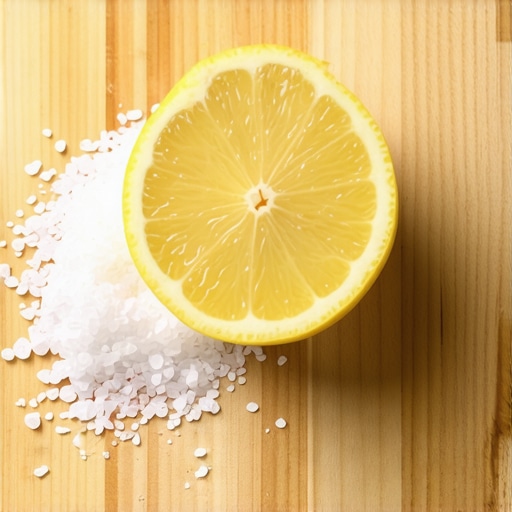
To get started, you need to clear your board of any loose debris. I once made the mistake of trying this method on a board that still had bits of wet parsley stuck to it, and it just turned into a green, salty paste that was a nightmare to rinse off. Start with a bone-dry board. Sprinkle a generous layer of coarse sea salt or kosher salt across the entire surface. You want to think of the salt as a microscopic sandpaper. It’s much more effective than a soft sponge because it gets into the grooves that knives leave behind. This is the foundation of how to sanitize your cutting boards using salt and lemon effectively. Unlike soap, which often just slides over the surface tension of the wood’s natural oils, the salt physically displaces trapped organic matter.
Why Coarse Salt Acts Like an Industrial Buffer
The grit of the salt is essential. If you use fine table salt, it dissolves too quickly once it hits the moisture of the lemon. I remember helping a friend with a move-out clean checklist to simplify your transition, and we found an old wooden board that looked grey and lifeless. By using a heavy hand with the salt, we were able to lift years of oxidation. This abrasive action is similar to the grease-cutting power of salt for cast iron pans, where you need friction rather than just chemistry to break down stubborn residues.
Applying the Citric Acid Magic
Cut a fresh lemon in half and use it as your scrubber. Squeeze slightly as you move in circular motions, working the lemon juice into the salt. You’ll notice the salt starts to turn a dingy grey or brown—that is a good sign. It means the impurities are being pulled out of the grain. This is exactly why lemon juice is better than bleach for cutting through grease and organic stains; it works with the wood instead of against it. The reaction between the citric acid and the salt creates a natural scouring paste that is far safer than any chemical cocktail you’d find under the sink.
Wait for the Chemical Reaction to Finish
Once you’ve scrubbed the whole board, don’t rinse it immediately. This is the part most people skip because they are in a hurry. Let that salty lemon slurry sit for at least fifteen minutes. This dwell time allows the acid to fully neutralize bacteria. This patience is a hallmark of a solid daily house cleaning routine to maintain perfection. I usually use this time to tackle other tasks, like checking the 3 germ hotspots in your kitchen that soap alone won’t fix, such as the faucet handles or the fridge seal.
Dry Your Board Completely Before Storing
Finally, scrape off the excess paste with a bench scraper or a flat spatula and rinse the board under cool water. Never, ever soak the board in the sink or put it in the dishwasher. Wood is like a sponge; if it drinks too much water, it will warp and eventually split. Pat it dry with a clean towel and stand it upright so air can circulate around both sides. Following these effective house cleaning secrets from cleaning experts ensures your board lasts a lifetime rather than just a season. If you are prepping for a inspection, remember that why the space behind the oven costs most renters their deposit is usually due to missed details, much like a poorly dried cutting board can lead to mold issues in a closed cabinet.Let’s dig deeper into where most people stumble. We’ve been conditioned to think that ‘clean’ is a look, but in reality, it’s a biological state. A common myth I see constantly is the idea that the hotter the water, the cleaner the surface. While heat helps with grease, why you should never use hot water on a fresh blood stain or certain protein-based messes is because it actually ‘cooks’ the stain into the fibers, making it permanent. This is a classic mistake during a high-stakes move-out cleaning strategy to secure your deposit. If you’re tackling a rental, reaching for the hottest setting on a steam cleaner could actually bond grime to the carpet or upholstery forever. Most people don’t realize that standard household cleaning often just spreads bacteria around unless the material is treated with specific respect to its porosity.
Stop Wiping Your Disinfectant Away Too Soon
Then there’s the ‘spray and wipe’ fallacy. Most off-the-shelf disinfectants require a ‘dwell time’—a period where the surface stays visibly wet—to actually kill pathogens. According to the Environmental Protection Agency (EPA), many common household cleaners require up to ten minutes of contact time to be effective against tough viruses. If you’re just spraying and immediately buffing it dry, you aren’t sanitizing; you’re just moving dirt around. This is one of those sanitizing secrets for a safer house in 2025 that separates the amateurs from the pros. It requires a shift in your daily house cleaning routine to maintain perfection; you have to let the chemistry do the heavy lifting while you move on to another task.
Is Steam Cleaning Enough to Kill Bacteria on High-Touch Surfaces?
This is the question I get most from homeowners who want to avoid harsh chemicals. The answer is: it depends entirely on the temperature at the point of contact. To truly disinfect, steam needs to reach at least 212°F (100°C) for several seconds. Many consumer-grade steamers lose heat so rapidly that by the time the vapor hits the couch, it’s merely warm air. If you’re following an ultimate upholstery care guide for lasting freshness, you have to be precise. Beyond temperature, you must know your fabric codes. I’ve seen beautiful sofas ruined because someone didn’t know how to treat s-coded upholstery fabric without ruining it—these pieces require solvent-based cleaners, not water or steam. Water on an ‘S’ code fabric can leave permanent rings that no amount of professional cleaning can fix.
Avoid the Cross-Contamination Trap
The hidden nuance here is cross-contamination. Using the same cloth for the ‘clean’ kitchen counter that you used for the cutting board—even if you think the board is sanitized—is a recipe for disaster. Professional-grade house cleaning strategies for a sparkling home today rely on color-coded systems to prevent this. When you are deep in the weeds of a move-out clean checklist to simplify your transition, the ‘oops’ factor usually hides in the air and the small fibers. Simply masking a smell with a spray won’t work for a professional inspection; you need to neutralize the source at a molecular level. Mastering these effective house cleaning secrets from cleaning experts turns a stressful move into a guaranteed success. Have you ever fallen into this trap of using the ‘wrong’ heat or skipping the dwell time? Let me know in the comments.
Keep the Wood Alive with Food-Grade Mineral Oil
After you’ve mastered the salt and lemon scrub, you can’t just walk away. If you stop there, the wood will eventually become brittle and thirsty. To truly understand how to sanitize your cutting boards using only natural ingredients for the long haul, you need a food-safe sealant. I swear by food-grade mineral oil. Unlike vegetable or olive oil, which will eventually go rancid and make your kitchen smell like a compost bin, mineral oil is shelf-stable and deeply penetrative. Once a month, I apply a liberal coat, let it soak in overnight, and buff off the excess. This creates a moisture barrier that prevents the wood from warping and cracking, which is a major part of any daily house cleaning routine to maintain perfection.
Why Your Vacuum Needs More Love Than Your Carpet
We often focus so much on the surfaces that we forget the machines doing the heavy lifting. If you’ve noticed a dusty or ‘hot’ smell when you clean, it’s a clear sign of why your vacuum filter might be making your allergies worse. I personally use a vacuum with a completely sealed HEPA system—specifically a high-end canister model—because it ensures that microscopic allergens stay inside the machine. The Institute of Inspection Cleaning and Restoration Certification (IICRC) notes in their S100 standards for textile floor covering maintenance that the efficacy of any cleaning is directly tied to the airflow and filtration of the equipment. If your filters are clogged, you aren’t removing dirt; you’re just heating it up and blowing it into your breathing zone. This is a critical point when looking for effective house cleaning secrets from cleaning experts. You have to clean the tool that cleans the house.
How do I keep my home truly sanitized month after month?
Consistency beats intensity every single time. I see homeowners go on a 12-hour cleaning binge once a year and wonder why their living room still feels ‘off.’ Following an ultimate upholstery care guide for lasting freshness involves small, monthly maintenance tasks like vacuuming under the cushions and rotating the foam to prevent fiber breakdown. Looking ahead, I suspect we will see a massive shift toward probiotic cleaners. These sanitizing secrets for a safer house in 2025 will likely involve introducing beneficial bacteria to compete with pathogens, rather than just nuking everything with harsh oxidizers. It’s a more holistic way to manage the microbiome of your home. If you want to start seeing professional-level results today, I challenge you to pull your vacuum apart this weekend, wash the canisters, and replace the filters. You’ll be shocked at the immediate difference in air quality.
What My Years in the Kitchen Taught Me About Deep Sanitizing
Looking back at my early days of home maintenance, I realize I spent way too much time fighting the material rather than working with it. The biggest lightbulb moment for me was realizing that ‘clean’ doesn’t have a scent; if your kitchen smells like heavy floral perfume or harsh chlorine, you’ve likely just masked a problem rather than solving it. I used to think a board was clean if it looked bleached white, but I eventually learned that those chemical residues were just waiting to leach into my next meal. Another hard lesson was the importance of airflow; I once lost a beautiful walnut block to mold because I tucked it away in a dark cabinet while it was still slightly damp. Now, I treat my wooden surfaces like a living part of the kitchen, requiring hydration and breathability just as much as a good scrub. Mastering how to sanitize your cutting boards using only natural ingredients isn’t just a cleaning hack—it’s a philosophy of respecting the tools that feed your family.
The Only Gear I Trust for a Real Deep Clean
If you want to move beyond the basic spray-and-wipe mentality, you need a specialized toolkit. I personally recommend keeping a dedicated ‘oil station’ in your pantry with a high-quality, food-grade mineral oil. I’ve found that Howard’s Cutting Board Oil is a reliable standard that never goes rancid. For your floors and upholstery, don’t underestimate the power of a true HEPA filter; if you skip this, why your vacuum filter might be making your allergies worse will become a daily reality. I also trust the technical standards set by the IICRC for textile care, as their guides prevent the kind of over-wetting that ruins expensive furniture. Lastly, always keep a stash of color-coded microfiber cloths. This is one of the most effective house cleaning secrets from cleaning experts to ensure you never use a bathroom rag on a food-prep surface by mistake. These simple shifts in equipment change your results from ‘surface-level tidy’ to ‘professionally sanitized.’
Build a Home That Breathes Better
Transforming your cleaning habits doesn’t happen overnight, but the peace of mind that comes with a truly germ-free environment is worth the effort. By choosing natural abrasives and acids over industrial chemicals, you create a space that is safer for your pets, your kids, and yourself. As we look toward sanitizing secrets for a safer house in 2025, the focus is shifting away from sterilization and toward a healthy home microbiome. Start small—maybe just with your main cutting board this weekend. Once you see those stains lift and feel the renewed texture of the wood under your hands, you’ll never want to go back to the old way. Your daily house cleaning routine to maintain perfection starts with these mindful choices. Have you ever tried the salt and lemon method on a board you thought was ruined, or did it finally help you get rid of a stubborn onion smell? Let me know your results below!