
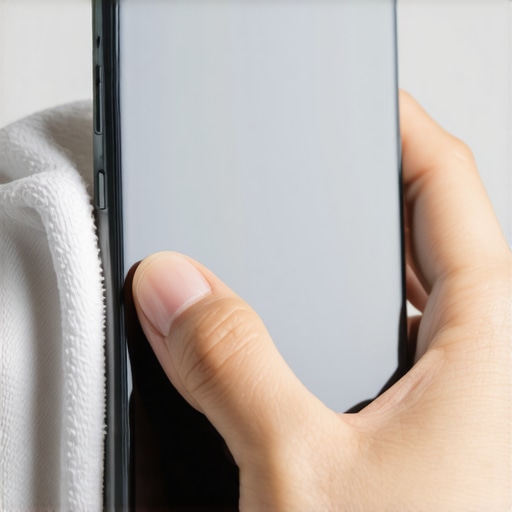
I still remember the afternoon I ruined my brand-new smartphone. It was peak flu season, and I was being extra careful about effective sanitizing methods for a germ-free home. I walked into the kitchen, saw a bottle of heavy-duty window cleaner, and thought, “Hey, if it works on my mirrors, it’ll work on my phone.” I sprayed a liberal amount directly onto the glass. Within a week, the screen felt “sticky” and lost that beautiful, smooth glide. I had effectively dissolved the oleophobic coating—the very layer designed to keep fingerprints at bay. It was a costly lesson in what not to do. Today, I’m sharing the exact method I use now to keep my tech safe and spotless.
My $1,000 Mistake and Why Your Screen Looks Blurry
We carry our phones everywhere. They go from the bedside table to the gym floor, and sometimes even the bathroom. According to research from the University of Arizona, your smartphone carries ten times more bacteria than most toilet seats. That’s a visceral image, right? It’s enough to make anyone want to douse their device in bleach. But before you reach for the sanitizing secrets for a safer house in 2025, you need to know that modern screens are delicate ecosystems. When I first started obsessing over a daily house cleaning routine to maintain perfection, I realized that my phone was the one item I touched more than anything else, yet cleaned the least. Today, I’m going to walk you through the exact process I use to keep my screen germ-free without causing permanent damage.
Does Wiping Your Phone Really Make a Difference?
Skepticism is healthy. You might think a quick wipe on your jeans is enough to clean the device. It isn’t. That just smears the oils around and can even introduce micro-scratches from the denim fibers. I made the mistake early on of thinking a paper towel was “soft enough,” only to find dozens of tiny swirls in the sunlight. We’ll talk about why you should never spray cleaning products directly on surfaces and which cloths actually matter for sensitive electronics.
The Science of Why You Can’t Just Use Any Old Cleaner
The problem isn’t the glass itself; it’s the coating. Most manufacturers apply an oleophobic (oil-repelling) layer that keeps your face oils from sticking. Harsh chemicals like ammonia or high-concentration alcohol strip this away almost instantly. Have you ever noticed your screen getting harder to clean over time? That’s usually because the coating is failing. This isn’t just about aesthetics; it’s about the longevity of your tech. If you’ve ever wondered about the only way to clean your flat-screen TV without streaks, the principles are surprisingly similar. You need a gentle touch and the right tools. Have you ever accidentally ruined a screen by trying to be too clean? Tell me your horror stories—I promise I won’t judge, mostly because I’ve been there myself.
The Step-by-Step Way to Sanitize Your Device Properly
The first thing you need to do is realize that your phone case is a haven for bacteria. I learned this the hard way during a particularly stressful weekend. I was following a move-out clean checklist to simplify your transition and decided to give my phone a quick “refresh.” I didn’t take the case off, thinking the edges weren’t that dirty. When I finally popped the silicone cover off three months later, a literal rim of compacted dust and skin cells had etched into the metal frame of my phone. It looked like the device had been through a sandstorm.
Ditch the Case and Power Down First
Strip the phone of its armor. Clean the case separately with warm soapy water if it is plastic or silicone. While that is drying, power your device down. While modern phones are increasingly water-resistant, you are dealing with liquid and sensitive ports. Powering down is a safety layer that prevents electrical issues if a stray drop of moisture finds its way into the charging port. It also makes it much easier to see the smudges and fingerprints that you are trying to eliminate.
Why Only Microfiber Belongs on Your Screen
You might be tempted to use a paper towel or the edge of your shirt. Do not. Paper towels are essentially wood pulp; they are abrasive at a microscopic level. Instead, use a clean microfiber cloth. These cloths are designed to lift and trap oils rather than just pushing them around. However, be careful—if you have been using the same cloth for a year without washing it, you are just redepositing grime. Understanding why your microfiber cloths are leaving lint everywhere can save you from a lot of frustration when you are trying to achieve a crystal-clear finish.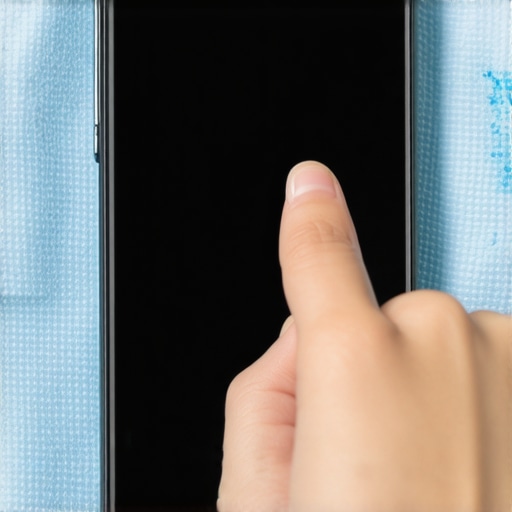
Create Your Own Screen-Safe Solution at Home
You do not need expensive iClean kits. A mixture of 70% isopropyl alcohol and 30% distilled water is the industry standard for safe disinfection. However, for a daily house cleaning routine to maintain perfection, a damp cloth with just distilled water is often enough to remove 99% of surface oils. If you feel the need for a deeper sanitize, especially during cold season, lightly dampen the corner of your cloth with the alcohol mix. Never, under any circumstances, should you soak the cloth. It should feel barely damp to the touch, like a leaf after a light morning mist.
Stop Spraying the Screen Directly
This is the rule I broke that cost me my first smartphone screen. Even if your phone is rated for water resistance, the high-pressure spray from a bottle can force liquid into the speakers or microphone mesh. I always refer back to the core principle of why you should never spray cleaning products directly on surfaces. Spray the cloth, then use the cloth on the surface. Wipe in a consistent, straight-line motion from top to bottom. Circular motions tend to trap grit and grind it into the glass, while straight lines push the debris off the edge.
Keep Your Mouse and Peripherals Equally Clean
While you are in the zone, do not stop at your phone. Your workstation is likely just as contaminated. Knowing how to clean your computer mouse and scroll wheel is a natural extension of this process. These devices share the same constant contact with your hands and deserve the same effective sanitizing methods for a germ-free home. Use a toothpick to gently clear the gunk from the seams of your phone or mouse buttons, but be extremely careful not to puncture any internal membranes. This level of detail is what separates a quick wipe from effective house cleaning secrets from cleaning experts.
The Sticky Truth About Chemical Residue
Most people believe that if a little bit of cleaner works well, a lot will work even better. This is perhaps the most dangerous myth in the world of home maintenance. When you over-apply products, especially on porous surfaces like fabric or even the edges of your keyboard, you aren’t just cleaning; you’re creating a magnet for future grime. This is a core concept I emphasize in my ultimate upholstery care guide for lasting freshness. The leftover surfactant—the stuff that makes soap foamy—stays behind, dries into a tacky film, and literally pulls dust out of the air. It’s the primary reason why your carpet is still dirty after you shampooed it. If your surfaces feel even slightly ‘grippy’ after they dry, you haven’t finished the job.
Why Dwell Time Is the Secret Weapon You Are Ignoring
Have you ever actually read the fine print on a container of disinfectant wipes? Most people don’t realize that for a product to actually kill 99.9% of germs, the surface usually needs to stay visibly wet for four to ten minutes. This is called ‘dwell time.’ If you wipe a surface and it dries in thirty seconds, you’ve likely only achieved a ‘sanitized’ level of clean, not a true ‘disinfection.’ According to a study published in the Journal of Applied Microbiology, insufficient contact time with disinfectants often leaves behind the hardiest pathogens, which can then recolonize the surface faster than before. This nuance is critical when applying sanitizing secrets for a safer house in 2025, particularly in high-touch areas like light switches and door handles.
The Heat Trap That Could Ruin Your Fabrics
I’ve seen well-meaning homeowners try to ‘speed dry’ a spot-cleaned sofa with a hairdryer or a heat lamp. This is a massive mistake. Heat doesn’t just dry the water; it can ‘set’ any remaining proteins or sugars from the original stain, making them a permanent part of the fiber. When you are looking for upholstery cleaning tips for a fresh home revival, remember that air circulation is your best friend, not high temperatures. This ‘Oops’ factor is also why you should be careful with steam; while great for hard floors, excessive steam on certain upholstery can melt the synthetic glues holding the backing together. If you’re preparing for a transition, these small errors can be the difference between a full refund and a lost deposit. I always recommend following specific move-out cleaning strategies to secure your deposit to avoid these technical pitfalls.
Can You Actually Sanitize Without Using Chemical Cleaners?
Yes, but only if you understand the mechanics of friction. For a daily house cleaning routine to maintain perfection, a high-quality microfiber cloth and plain water can remove a significant percentage of microbes through mechanical action alone. However, for a deep-tier clean, specialized tools are required. These are the kind of effective house cleaning secrets from cleaning experts that aren’t usually shared in the grocery store cleaning aisle. We often get caught up in the smell of ‘lemon’ or ‘pine,’ forgetting that those are just fragrances, not indicators of cleanliness. Have you ever fallen into this trap of thinking a ‘clean’ smell meant a germ-free surface? Let me know in the comments—I’d love to hear how your cleaning philosophy has changed over the years.
Stop buying disposable wipes and start investing in professional tools
I have a closet full of gadgets that promised to revolutionize my life but ended up in the landfill. The turning point for me was when I stopped looking at cleaning as a chore and started looking at it as asset management. If you want to scale your efficiency, you need tools that don’t just work—they last. For example, I moved away from cheap grocery store sprays and started using concentrated solutions and high-GSM microfiber. If you’ve ever wondered why your microfiber cloths are leaving lint everywhere, it’s usually because the fibers have broken down from cheap manufacturing or improper washing. High-quality cloths are an investment in your home’s surfaces, much like a good vacuum is an investment in your flooring health. I’ve seen so many people frustrated with their equipment, often asking why your vacuum isn’t picking up dirt like it used to, only to find they haven’t replaced a filter or checked the brush roll in over a year. Maintenance isn’t just about the surface; it’s about the machine you use to reach it.
How do I keep my sanitizing tools effective for the long haul?
Maintenance is where most people fail, yet it is the secret to professional results. I personally follow a strict ‘clean the cleaner’ rule. Every Sunday, I deep-clean my primary tools. This means soaking my brushes, descaling the steam cleaner, and washing my microfiber cloths in a dedicated load with zero fabric softener. Fabric softener is the enemy of performance—it coats the fibers in a waxy layer that destroys absorbency. According to technical bulletins from the Professional Cleaners Association, even a microscopic amount of softener residue can reduce a cloth’s bacterial pick-up rate by over 40%. This is why my ultimate upholstery care guide for lasting freshness emphasizes the state of your equipment as much as the technique itself. If you are currently executing move-out cleaning strategies to secure your deposit, a clogged vacuum or a dirty mop bucket is your worst enemy because it just redistributes dust that an inspector will find with a white-glove test. 
The future of home hygiene is smarter than you think
Looking ahead to the next decade, I predict we will see a massive shift toward integrated UV-C light sanitization and AI-driven sensors in our everyday tools. Imagine a vacuum that tells you exactly when a specific patch of carpet is 99% germ-free, or a spray bottle that adjusts its dilution ratio based on the surface it detects. We are already seeing effective house cleaning secrets from cleaning experts lean more toward high-tech solutions like electrostatic sprayers. These aren’t just for hospitals anymore; they are becoming part of sanitizing hacks for safe house transitions. Whether you are prepping for a move or just trying to survive flu season, the tools you choose today will dictate how much effort you have to put in tomorrow. If you really want to level up your results, try this today: wash your next load of cleaning cloths with a half-cup of white vinegar in the rinse cycle instead of softener. It strips away the detergent build-up and restores that ‘grabby’ texture that actually lifts dirt rather than just sliding over it. You’ll notice the difference on your very next wipe-down.
The Brutal Truths I Learned While Chasing a Germ-Free Home
After years of trial and error, I’ve realized that the ‘cleanest’ looking home isn’t always the healthiest. Here are the core shifts in mindset that changed everything for me and helped me avoid those costly mistakes I mentioned earlier.
- Chemicals aren’t a substitute for elbow grease: I used to think a heavy spray did the work for me, but the physical removal of biofilms is what actually makes effective sanitizing methods for a germ-free home work.
- The ‘Smell’ Trap: I finally stopped equating lemon scent with cleanliness. If I smell strong chemicals, it usually means I haven’t rinsed or ventilated well enough. Real clean doesn’t have a perfume.
- Tool Integrity: You cannot get a surface cleaner than the cloth you are using. I learned this the hard way by realizing why your mop bucket is spreading more dirt than it removes when the water turns gray after just one room.
My Non-Negotiable Arsenal for Every Deep Clean
I don’t believe in cabinets full of single-use bottles that just take up space. Instead, I rely on a few high-performance staples that handle 90% of my household needs safely and efficiently. First on the list is 70% Isopropyl Alcohol; it is my go-to for high-touch electronics and stainless steel because it evaporates quickly without leaving streaks. Second, I never start a project without my ‘workhorse’—a stack of 300+ GSM microfiber cloths. These are essential for following my ultimate upholstery care guide for lasting freshness because they lift particles without scratching delicate fibers or leaving lint behind. Finally, I always keep distilled water on hand for diluting cleaners to prevent the mineral buildup that causes cloudiness on glass.
Your Path to a Healthier Sanctuary
Sanitizing your home shouldn’t feel like a high-stakes science experiment that risks your expensive electronics. Once you master the basics of dwell time and tool maintenance, you will find that a daily house cleaning routine to maintain perfection becomes second nature. These sanitizing secrets for a safer house in 2025 aren’t just about aesthetics; they are about creating a safe space for you and your family to thrive. Don’t feel like you have to change everything overnight—start with your most-touched device and move outward from there. Have you ever found a hidden grime-trap in your house that totally surprised you? Let me know in the comments below!