
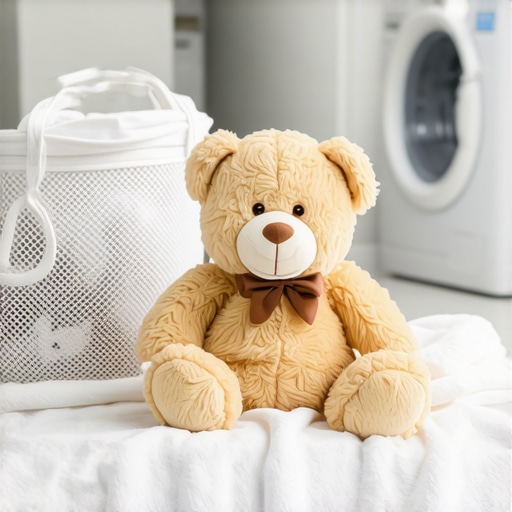
I’ll never forget the smell of singed polyester wafting from my dryer. It happened a few years ago, right after a particularly nasty virus made its way through our household. I was on a mission to scrub every square inch of our lives, and that included “Barnaby,” my daughter’s inseparable, fluff-deprived bear. I tossed him in on a heavy-duty cycle with the heat set to “incinerate.” It was a rookie mistake. Barnaby emerged looking like a matted, shrunken version of himself, and the heartbroken look on my toddler’s face was enough to make me retire from laundry duty for a month. Since then, I’ve made it my personal mission to figure out how to kill the germs without killing the magic. We want our homes to be safe, especially when we are looking for effective sanitizing methods for a germ-free home, but there is a right way and a very wrong way to handle plushies.
The Heat Trap That Ruins Your Kid’s Favorite Toys
Most of us treat stuffed animals like they’re just another load of towels. They aren’t. These toys are often held together with heat-sensitive glues and synthetic fibers that can’t handle the intensity of a modern washing machine. Early in my cleaning journey, before I knew much about upholstery cleaning tips for a fresh home revival, I assumed everything needed a hot bath to be truly clean. I was wrong. Hot water and high dryer heat don’t just sanitize; they “cook” the polyester fur, resulting in that crunchy, matted texture that no amount of brushing can fix. Whether you are doing a routine freshen-up or following a move-out clean checklist to simplify your transition, the goal is sanitation without destruction.
Will my child actually get sick from a dirty teddy bear?
It’s a fair question. Does a little bit of dust really matter? According to research cited by the National Institutes of Health, soft surfaces like plush toys can serve as a significant reservoir for allergens, dust mites, and even respiratory viruses. While we often prioritize the best way to sanitize plastic toys because they feel “dirtier,” the porous nature of stuffed animals means they actually trap more organic matter. If your household has just survived a round of the crud, knowing how to sanitize your home after the flu must include a plan for those bedside companions.
Save the Fluff While You Kill the Germs
We are going to walk through the gentle-but-firm approach today. I’m going to show you why a simple mesh bag and a little bit of patience are better than any high-temp setting on your machine. I want to spare you the trauma of a melted bear and a crying four-year-old. Have you ever had a “laundry fail” that resulted in a ruined heirloom or a favorite toy? I’d love to hear your stories—it makes me feel a lot better about my Barnaby incident! Let’s get into the step-by-step process of cleaning these delicate friends so they can go back to being cuddled as quickly as possible.
Check for Wounds and Hidden Gadgets First
Before you even think about the washing machine, you need to perform a surgical-level inspection. Stuffed animals are notorious for having weak seams that look fine until they hit an agitator. I once skipped this step with my son’s favorite robot dog, ‘Sparky.’ I assumed he was just fluff and fabric, but there was a voice box buried deep in his chest. Halfway through the cycle, Sparky didn’t just get clean; he short-circuited and started emitting a sound like a dying foghorn. It was a chaotic mess of electronic crackling that could have been avoided with a quick squeeze. Check for any ‘squeeze me’ buttons or battery packs. If they aren’t removable, the machine is off-limits. You also want to look for loose threads or small holes. Washing a bear with a hole is like inviting a snowstorm into your laundry room; the stuffing will escape and clog your drain. This pre-check is a vital part of any daily house cleaning routine to maintain perfection in your toy rotation.
Armor Up with a Simple Pillowcase
Think of a mesh laundry bag or a zippered pillowcase as a suit of armor. You wouldn’t go into a contact sport without pads, and you shouldn’t throw a delicate plushie into a drum of tumbling metal without protection. The bag prevents the eyes from getting scratched against the drum and keeps the limbs from getting tangled. When I started following the ultimate upholstery care guide for lasting freshness, I realized that friction is the enemy of soft fibers. By bunching the toy into a bag, you minimize that friction. 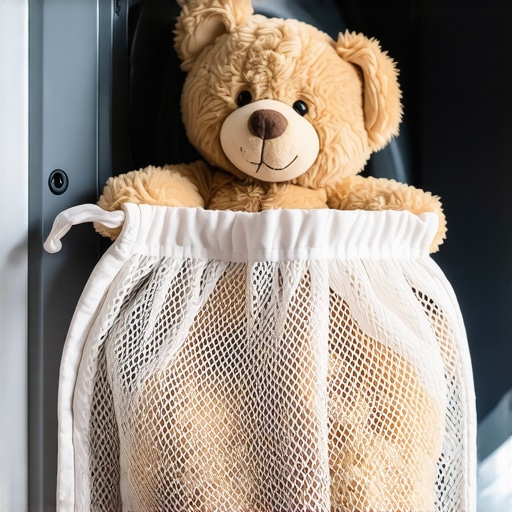 If you’re using a pillowcase, secure it with a hair tie or a knot to ensure the toy stays inside for the duration of the ride.
Wash Cold Like Your Favorite Sweater
Repeat after me: cold water is your friend. High temperatures are great for sheets, but they are the fastest way to destroy synthetic fur. Most plush toys are made of polyester or acrylic, which are essentially plastics. When plastic meets high heat, it melts. This is why toys come out feeling ‘crunchy.’ Use the delicate or hand-wash cycle on your machine. To really ensure you are using sanitizing secrets for a safer house in 2025, add a half-cup of white vinegar to the rinse cycle. It acts as a natural disinfectant and fabric softener without leaving a chemical residue that could irritate your child’s skin. I’ve found that using a small amount of mild detergent—even a baby-safe version—is plenty. You aren’t trying to power-wash a driveway; you are gently lifting skin cells and dust mites.
Get the Germs Without the Scorched Fur
Sanitizing doesn’t always mean boiling. If you are worried about bacteria but the toy is too fragile for the wash, the freezer is your secret weapon. Seal the toy in a bag and leave it in the freezer for 24 hours to kill off dust mites. However, for viruses left behind after a cold, a gentle soak with an oxygen-based bleach (if the toy is colorfast) works wonders. Learning these effective house cleaning secrets from cleaning experts will save you from the smell of burnt hair. Speaking of which, if you ever notice a weird odor from your appliances, it might be time to check why your vacuum smells like burning hair and how to fix it fast to keep your whole cleaning system running smoothly. Once the wash is done, skip the dryer. Roll the toy in a dry towel to squeeze out excess moisture, then let it air dry in front of a fan. Use a soft-bristled brush to fluff the fur back up once it’s dry, and it will look as good as the day it left the store.
While rescuing a stuffed animal from a laundry disaster is a victory, it opens the door to a much larger conversation about how we maintain the hygiene of our entire living environment. Let’s dig deeper into why we often fail even when our intentions are pure. Most people assume that if a surface looks shiny and smells like a synthetic lemon grove, the job is done. I used to be the queen of the bleach-everything brigade until I realized I was actually making my home a magnet for grime. One of the biggest contrarian truths in the industry is that a truly clean home should essentially smell like nothing at all. If you can smell your cleaner, you have likely left behind a chemical residue that acts like a sticky trap for the next round of pollutants. This is the exact reason why your house still feels dusty even after you just vacuumed. You aren’t just fighting dirt; you are fighting the very products you bought to remove it.
The Hidden Trap of the Clean Scent
One massive ‘oops’ factor I see constantly is the habit of spraying cleaners directly onto furniture or counters. I know, it feels satisfying to see that mist land, but the logic behind why you should never spray cleaning products directly on surfaces comes down to saturation control. When you spray directly, the liquid often seeps into hidden seams or creates an uneven film that is nearly impossible to buff away completely. Professionals always spray the cloth first. This nuance is a staple in any upholstery cleaning tips for a fresh home revival because it prevents the ‘spotting’ that ruins delicate fabrics and ensures you are only applying the minimum amount of moisture needed to lift the soil.
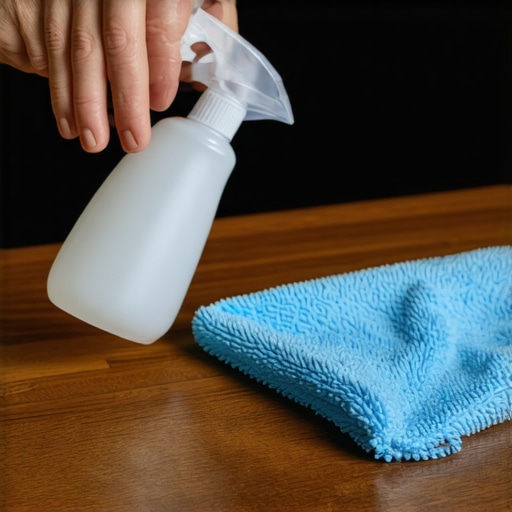
Stop Spraying Your Furniture Directly
I’ve spent years unlearning the ‘more is better’ philosophy. Have you ever fallen into this trap of thinking a strong chemical smell meant a cleaner room? Let me know in the comments. Whether you are following move-out cleaning hacks to ensure your deposit refund or just trying to keep the kids safe, remember that the goal is a healthy environment, not a sterile laboratory. Using effective house cleaning secrets from cleaning experts allows you to work smarter, preserving the integrity of your home while keeping the germs at bay. It is about the subtle art of the ‘enough’—the point where the house is safe but still feels like a sanctuary.
Is it possible to over-sanitize your living space?
The short answer is yes, but it is not just about the risk of ‘superbugs.’ According to a study published in the journal Environmental Health Perspectives, the chronic overuse of certain disinfectants, like quaternary ammonium compounds, can contribute to decreased indoor air quality and respiratory sensitivities. This is where effective sanitizing methods for a germ-free home differ from the common ‘spray and pray’ approach. True sanitization requires a two-step process: first, mechanical cleaning to remove the biofilm where bacteria hide, and then a targeted application of disinfectant only on high-touch areas. If you are preparing for a move, utilizing sanitizing hacks for safe house transitions will help you avoid the chemical-heavy approach that often leads to cleaner fatigue and damaged surfaces.
The Gear That Actually Makes a Difference
Maintaining a home that feels like a sanctuary requires more than just elbow grease; it requires tools that don’t quit on you. If I’ve learned anything from the ‘Barnaby Incident,’ it’s that the quality of your equipment dictates the quality of your life. I personally swear by high-grade microfiber cloths with a GSM (grams per square meter) of at least 300. Why? Because lower-quality cloths are basically just spreading the dirt around in a fancy circle. If you’ve ever wondered why your microfiber cloths are leaving lint everywhere, it is usually because the fibers have been ‘cooked’ in a high-heat dryer or they were low-density to begin with. I treat my cloths like delicate lingerie—wash them with like materials, use a scent-free detergent, and never, ever use fabric softener, which coats the fibers and kills their electrostatic charge.
How do I maintain a germ-free home without spending all day scrubbing?
The secret isn’t working harder; it’s the ‘Top-Down, Left-to-Right’ method used by professionals. This ensures you aren’t knocking dust onto surfaces you just sanitized. When you integrate this into a daily house cleaning routine to maintain perfection, you stop the ‘grime build-up’ before it requires a weekend-long deep dive. For those big upholstered pieces, like the couch where the kids spend 90% of their lives, I use a dedicated horsehair brush to loosen dry soil before I even think about a vacuum. As noted by the experts at the WoolSafe Organisation, dry soil is abrasive; if you don’t remove it before adding moisture or even just sitting on it, those tiny dirt particles act like sandpaper on your fabric fibers. This is a core component of the ultimate upholstery care guide for lasting freshness that most people skip.
Why Your Vacuum Needs a Spa Day
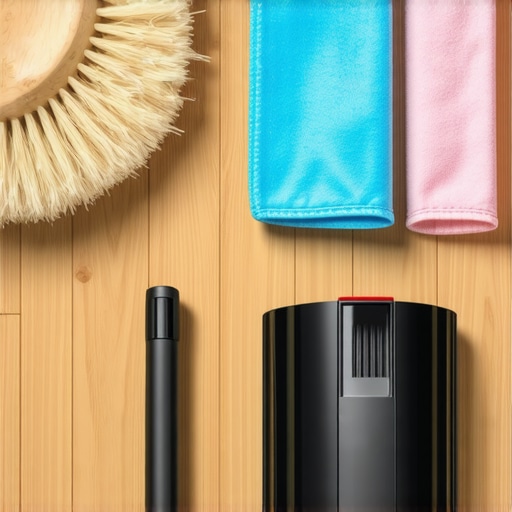
We expect our vacuums to perform miracles, but we rarely give them the care they need. If you notice a drop in suction, check the filters immediately. I’ve found that why your vacuum isnt picking up dirt like it used to is almost always a clogged HEPA filter or a tangled brush roll. I make it a habit to snip away hair from the brush roll once a month. It sounds tedious, but it prevents the motor from straining and preserves the life of the machine. For those moving into a new space, this is a must-know tip for house cleaning strategies for a sparkling home today. A clean vacuum doesn’t just suck up dirt; it actually improves indoor air quality by trapping allergens rather than spitting them back out through the exhaust.
The Future of Home Sanitization
Looking ahead, I predict we are going to see a massive shift toward ‘active’ surfaces—materials embedded with antimicrobial properties that do the work for us. We are already seeing the rise of UV-C light integration in robotic vacuums and air purifiers. However, until we all live in self-cleaning bubbles, the human touch remains irreplaceable. For anyone currently tackling a transition, I highly recommend looking at sanitizing hacks for safe house transitions to stay ahead of the curve. My challenge for you this week: go find your vacuum filter, take it outside, and give it a good tap (or wash it if it’s foam!). You’ll be shocked at how much better your house feels when your tools are actually working at 100%.
The Hardest Lessons I Learned While Chasing a Germ-Free Home
If I could go back and talk to my younger self—the one crying over a matted Barnaby—I’d tell her that cleaning is more about chemistry and physics than brute force. One of the biggest shifts in my mindset was realizing that if I can smell my cleaner, I haven’t finished the job. Truly clean environments don’t need a heavy perfume to prove their worth. Also, I finally figured out why your house still feels dusty even after you just vacuumed; it’s because I wasn’t following the logic of gravity. You have to understand why you should always start cleaning from the top of the room. If you wipe the baseboards before you dust the ceiling fan, you’re just creating a loop of endless labor. Now, I work with the house, not against it.
#IMAGE_PLACE_HOLDER_E#
The Gear That Rescued My Sunday Mornings
You don’t need a closet full of specialty chemicals to maintain a healthy home. In fact, most of my success comes from a few high-quality staples. I’ve traded in my old rags for high-density microfiber, though I had to learn the hard way why your microfiber cloths are leaving lint everywhere (pro tip: never use fabric softener on them!). I also keep a gallon of white vinegar on hand at all times because why vinegar is your best friend for cleaning hard water stains is a lesson that applies to almost every room in the house. Finally, a vacuum with a true HEPA filter is non-negotiable for keeping allergens out of those precious plushies.
Bringing the Magic Back to Your Sanctuary
At the end of the day, we aren’t just cleaning “stuff.” We are maintaining the stage where our children’s lives unfold. Whether you are using effective sanitizing methods for a germ-free home or just trying to get a grass stain out of a favorite pair of jeans, the goal is to keep the “magic” intact. Don’t be afraid to try the freezer trick or the mesh bag method; these small steps preserve the items that hold the most sentimental value. Your home should be a place of safety and comfort, not a source of stress. Have you ever had a “laundry miracle” where you saved a toy you thought was gone for good? I’d love to hear your success stories in the comments below!