
I remember the first time I brought home a second-hand sofa, feeling pretty proud of snagging a bargain. But that proud moment quickly faded when I noticed a faint, odd smell lingering in the air—something I couldn’t quite pinpoint. It wasn’t until I sat on it that I realized there might be unseen stains lurking beneath the fabric, invisible to the naked eye, yet potent enough to ruin the whole piece. That lightbulb moment made me realize: if I want my furniture to be truly clean and safe, I need to learn how to spot hidden stains before they become major problems.
The Art of Detecting Hidden Stains on Upholstery
Many people overlook this crucial step when assessing second-hand furniture. They might give the surface a quick glance or a light wipe, assuming that everything looks fine. But the truth is, places like couch armrests, under cushions, and along seams often harbor stains that are hidden from plain sight—stains that can cause discoloration, odors, and even health issues if left untreated.
One effective way I discovered to spot these concealed issues is by using a simple trick with a flashlight and some knowledge of fabric behavior. When you shine a light at an angle, different stains or residues can become visible—some might shimmer slightly or change the way the fabric reflects light. This method helped me identify water rings, old spills, or even mold growth that wasn’t apparent during a casual inspection. And that’s just the beginning; there are more tools and techniques, like using UV light or professional stain detectors, that can help you be confident your second-hand sofa is clean and safe.
But before diving into cleaning, it’s important to recognize the signs of hidden stains—so you don’t waste time and effort on furniture that’s beyond saving. Recognizing these spots early can save you money, prevent health risks, and extend the life of your upholstery. If you’ve ever agonized over whether your second-hand furniture is truly clean or just looks good on the surface, you’re not alone. Many homeowners, and even seasoned cleaners, have faced this dilemma.
Looking for a comprehensive guide on upholstery maintenance? Check out this ultimate upholstery care guide for expert tips.
Now that you understand the importance of detecting hidden stains, let’s explore practical steps to identify and address these sneaky spots effectively. Because a clean sofa isn’t just about appearance—it’s about creating a safe and healthy home environment for you and your loved ones.
Strip the Surface to Reveal What’s Hidden
Start by removing all cushions and toss pillows, then vacuum thoroughly to eliminate loose dirt and debris. Use a handheld brush to loosen fabric fibers, making stains more accessible.
Use Light and Tools to Spot Concealed Stains
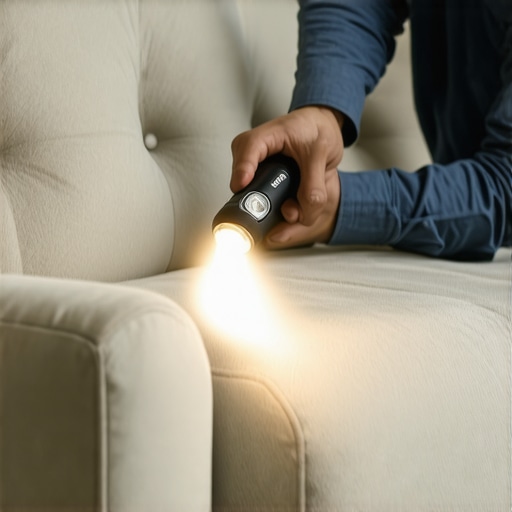
In a dim room, shine a flashlight at an angle across the upholstery—discolorations may shimmer or reflect differently, revealing unseen spots. For tougher detection, employ UV light, which helps identify mold, urine residues, or other biological stains.

This image shows how UV light reveals hidden stains on upholstery, making them visible for targeted cleaning.
Apply Targeted Stain-Detecting Solutions
Use a fabric-safe stain detector or a mixture of water and a few drops of dish soap. Spray lightly on suspected areas, then gently blot with a white cloth. If color transfers or the stain becomes more apparent, it’s time for a deep clean.
Assess the Age and Type of Stains
Older stains often stubbornly embed into fibers, requiring specific treatments. Fresh water-based stains might lift easily with an appropriate cleaning solution, while older or oily stains may need solvents or professional-grade products. Knowing this helps tailor your approach and avoid unnecessary damage.
Test Cleaning Methods First
Always perform a patch test on a hidden area with a small amount of cleaning solution to prevent fabric discoloration or damage. Wait a few minutes, then evaluate results before proceeding to the entire stain.
Use a Microfiber Cloth for Precision Cleaning
Dampen a microfiber cloth with the cleaning solution and gently blot or wipe the stain. Microfiber’s fine fibers trap dirt without spreading it further, making it ideal for delicate fabrics. For stubborn stains, repeat this process until the stain lifts or diminishes significantly.
Sanitize After Stain Removal
Once the stains are gone, sanitize the area with a fabric-safe disinfectant. This step removes any residual germs or odors, restoring freshness. For light sanitizing, consider [effective sanitizing methods for a germ-free home](https://spotlesscarpetz.com/effective-sanitizing-methods-for-a-germ-free-home).
Dry and Air Out the Upholstery
Allow the fabric to air dry completely, ideally in a well-ventilated space. Use fans or open windows to speed up the process and prevent mold growth. Follow up with a light brushing to restore the fabric’s texture.
By following these concrete steps, you transform your detection process into an effective strategy for maintaining clean, healthy furniture. Recognizing the signs early and acting promptly can save you time, money, and potential health risks.
Many homeowners believe that a quick wipe-down suffices for thorough cleaning, but in reality, this approach often overlooks hidden dangers lurking on upholstery and surfaces. A prevalent myth is that using generic disinfectants guarantees a germ-free environment; however, experts emphasize that selecting the right cleaning agents tailored to specific materials and contaminants is crucial for effective sanitation. For instance, relying solely on household bleach can damage fabrics and fail against certain bacteria, making specialized products more effective. Additionally, many assume that move-out cleaning is just about surface tidying, but neglecting deep-seated stains and hidden mold buildup can lead to costly penalties or health risks. Advanced cleaning involves nuanced techniques, like employing UV light to detect bacteria or using microfiber cloths designed to trap microscopic dirt, which most people overlook. Beware of the trap where overusing harsh chemicals creates residues that build up over time, reducing the longevity of upholstery and furniture; instead, integrating natural cleaning solutions backed by studies, such as vinegar and baking soda, can be safer and equally effective.
Why Do Some Sanitizing Methods Fall Short Against Modern Bacteria?
Despite marketing claims, many disinfectants don’t eliminate resistant microorganisms like biofilms or certain mold spores. Research from the CDC indicates that over 60% of cleaning products on the market fail to sterilize porous surfaces adequately, which is why understanding material-specific solutions is essential. In your cleaning routine, avoid the mistake of neglecting high-touch areas like door handles, light switches, and remote controls, which harbor the most germs. Proper sanitization is about more than just surface cleaning; it requires strategic application and dwell time for disinfectants to work effectively. For expert insights into efficient sanitizing techniques, read this guide on sanitizing secrets. Remember, superficial cleaning might look good but offers little protection against unseen microbes, making advanced methods and proper understanding vital for genuine safety. Have you ever fallen into this trap? Let me know in the comments.Maintaining pristine upholstery and ensuring thorough sanitization require more than just elbow grease; the right tools can make all the difference. Personally, I rely on a combination of professional-grade equipment and smart solutions to keep furniture looking and feeling fresh over time. One essential tool I swear by is a high-quality upholstery steam cleaner with adjustable pressure settings. Unlike generic models, my favorite professional steamer, the Bissell SpotClean Pro, provides precise control over heat and suction, allowing me to tackle deep-seated stains without risking fabric damage. Regular use of this device helps prevent grime buildup, prolonging the lifespan of my furniture and maintaining a healthier indoor environment.
Another indispensable tool is a set of microfibre cloths designed specifically for delicate surfaces. These cloths are highly effective at trapping dust, pet hair, and microbial residues, especially when used in conjunction with natural cleaning solutions like vinegar and baking soda. I avoid using abrasive scrub brushes because they can harm the fabric’s fibers, but microfibre cloths offer gentle yet thorough cleaning—perfect for routine maintenance or focused stain removal.
When it comes to sanitization, I incorporate UV sterilizers into my routine. UV light has proven effectiveness against bacteria and viruses, and I use a portable, hand-held UV sanitizer to periodically disinfect high-touch areas on upholstery. This method complements chemical disinfectants, providing an extra layer of protection and ensuring a safer, healthier home. As a bonus, UV sterilizers are quick and chemical-free, making them ideal for frequent use.
Looking ahead, I predict that integrating smart cleaning tools—like app-controlled steam cleaners with preset cycles and sensor-based stain detectors—will become standard for meticulous homeowners seeking both efficiency and peace of mind. These advancements will streamline maintenance routines and help identify issues before they become visible or problematic.
How do I maintain my cleaning tools over time? The key is regular upkeep: descaling the steam cleaner with specialized solutions to prevent mineral buildup, washing microfibre cloths after each use, and replacing UV bulbs as recommended by manufacturers. Proper maintenance ensures that each tool remains effective and extends its lifespan.
If you want to elevate your upholstery care, I highly recommend trying a professional-grade steam cleaner with adjustable settings. Not only does it make deep cleaning more manageable, but it also helps preserve fabric integrity over the long haul. For comprehensive guidance on upholstery upkeep, check out this upholstery cleaning tips article. Remember, investing in quality tools and proper maintenance routines now will save you time, money, and hassle in the future.
The Hardest Lesson I Learned About House Cleaning and Sanitizing
One of my biggest surprises was realizing that a surface might look clean but hide hidden stains or bacteria that pose health risks. I once overlooked a seemingly spotless sofa, only to discover mold beneath the cushions after shining a UV light—an eye-opening moment that taught me to be thorough and vigilant.
How I Discovered the Power of Proper Tools
Using professional equipment like a high-quality upholstery steam cleaner transformed my cleaning routine. It helped me eliminate deep-seated stains and bacteria without damaging delicate fabrics, proving that investing in the right tools can truly elevate your home hygiene.
The Importance of Early Detection and Regular Checks
Learning to spot hidden stains early saves not only money but also prevents long-term health issues. Routine inspections using flashlights and UV lights became my secret weapon, ensuring my furniture remains both beautiful and safe for my family.
Resources I Trust for Ultimate Upholstery Care
I highly recommend exploring the Ultimate Upholstery Care Guide for comprehensive tips. Additionally, tools like the Bissell SpotClean Pro for deep stains, microfibre cloths for gentle cleaning, and portable UV sterilizers for sanitation have been game-changers in my cleaning arsenal.
Take Action and Transform Your Home Today
Confidence in your cleaning routine starts with understanding how to detect and treat hidden stains and germs effectively. Don’t settle for surface clean—embrace the full potential of thorough sanitization and upholstery care. Your home deserves this extra touch of love and attention.
Have you ever struggled with identifying hidden stains or effectively sanitizing your upholstery? Share your experiences below—I’d love to hear your tips and stories!