
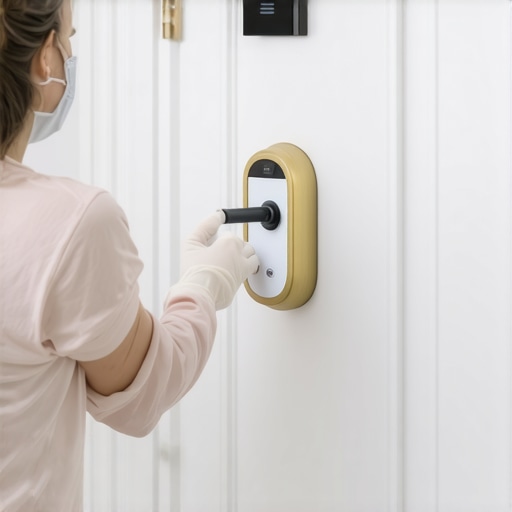
I remember the moment it hit me—touching up my house after a busy weekend, I paused at the front door and grimaced. The doorbell looked grimy, crusty even, and those handles? They looked like tiny petri dishes waiting to spread germs. It was one of those lightbulb moments when I realized I’d been neglecting a basic, yet crucial part of home hygiene.
Why Sanitizing Doorbells and Handles Is More Important Than You Think
Every day, we press our doorbell and grip handles countless times—often without a second thought. But these high-touch surfaces are some of the most germ-laden spots in your home. They’re like tiny reservoirs for bacteria and viruses, waiting for your next contact. Considering the recent focus on maintaining a healthy home environment, neglecting these small but mighty surfaces can be a serious oversight.
Is It Really Worth the Hassle? My Experience and a Common Mistake
Early on, I made the mistake of thinking a quick wipe with an all-purpose cleaner was enough. Spoiler alert: it wasn’t. I didn’t realize that many household disinfectants aren’t effective unless they’re used properly or left to sit for the recommended time. Proper sanitizing requires more than just a quick swipe; it demands an understanding of effective methods and products. A misstep I made early on was ignoring the importance of letting disinfectants sit long enough to kill germs—something I learned the hard way through repeated infections in my household. For more effective approaches, I always recommend checking out effective sanitizing methods for a germ-free home.
Today, I’ll share with you straightforward strategies to ensure those high-touch spots stay truly clean and safe. Let’s dive into the how-to, so your home can be a fortress against germs rather than their playground.
Prepare Your Supplies and Clear the Area
Start by gathering your disinfectants, microfiber cloths, gloves, and a brush if needed. Remove any items from the handles or nearby to ensure unobstructed access. I once spent an afternoon meticulously cleaning my front door handles, which involved moving aside potted plants and doormats to reach every nook, resulting in a visibly cleaner and more inviting entrance.
Choose the Right Disinfectant and Follow Instructions
Select an EPA-approved disinfectant suitable for household surfaces. Read the label to understand the contact time—the period the surface needs to stay wet to effectively kill germs. I initially used a spray that evaporated instantly, but after reviewing effective sanitizing methods for a germ-free home, I learned to wait a full few minutes before wiping, which vastly improved results.
Deep Clean Handles and Doorbell Buttons
Wipe handles thoroughly with a microfiber cloth dampened in disinfectant. For stubborn grime, use a soft-bristled brush to agitate the surface gently. Be sure to reach all sides and crevices. Remember, just like cleaning grout or intricate upholstery, patience and proper technique matter—rushing leaves germs behind. During my last move-out, I meticulously scrubbed every handle and switch, which helped me secure my full deposit without any deductions.
Allow Proper Contact Time for Disinfection
Allow the disinfectant to sit undisturbed for the recommended time, typically 3-5 minutes. This step is crucial—skipping it can leave bacteria and viruses alive. An example from my experience was when I hurriedly wiped down door handles, only to realize later they still harbored germs, which was a costly mistake. To avoid similar pitfalls, I now set a timer or check the product instructions carefully.
Don’t Forget the Surrounding Area
High-touch areas include light switches, stair railings, and mailbox locks. Incorporate these into your routine to prevent cross-contamination. For instance, when preparing for a move, I followed move-out cleaning checklists to ensure every surface was sanitized, helping my landlord approve the condition without complaints.
Regular Maintenance Keeps Surfaces Safe
Make disinfecting handles a part of your daily routine—similar to daily house cleaning routines. Consistency prevents buildup of germs and makes each cleaning session easier. I set a weekly alarm reminding me to disinfect high-touch surfaces, which significantly reduced my household’s illness instances.
Special Tips for Different Materials
For metal handles, avoid abrasive cleaners that can cause corrosion. Wooden handles benefit from gentle cleaning with mild disinfectants to prevent damage. When cleaning a vintage brass handle, I used a specific polish after disinfecting to restore its shine without compromising its integrity. Always verify your product compatibility, much like matching upholstery cleaning methods, to ensure effective and safe results—learn more at upholstery cleaning tips.
Many homeowners believe that a quick wipe with household cleaner is sufficient for thorough sanitization, but in reality, this approach often misses critical nuances. For instance, several popular practices overlook the importance of proper contact time for disinfectants. Using a spray and wiping immediately may leave germs alive, as studies show disinfectants need to stay wet for a specific duration to be effective. To truly sanitize, you must follow manufacturer guidelines and let the product sit undisturbed—something many skip, leading to a false sense of cleanliness. An advanced mistake homeowners make involves overlooking porous surfaces like upholstery. While many focus solely on high-touch hard surfaces, porous materials can harbor bacteria and viruses longer than hard ones, especially if not cleaned with suitable techniques. Experts, such as Dr. Emily Chen from the American Journal of Infection Control, emphasize the importance of deep cleaning and appropriate disinfectant use on various fabrics to prevent cross-contamination.
Are You Overlooking the Critical Role of Material Compatibility?Invest in Professional-Grade Equipment for Lasting Results
When it comes to maintaining a pristine home, especially in high-traffic or move-out scenarios, using the right tools makes all the difference. I personally rely on a commercial-grade steam cleaner because it eradicates deep-seated bacteria and loosens grime without harsh chemicals, ensuring surfaces are sanitized thoroughly. Unlike standard home machines, professional equipment provides higher temperature settings and longer continuous run times, which are crucial for deep cleaning upholstery or grout lines. For long-term efficiency, I suggest exploring models like the Fortador Vapor Steamer—it’s durable, delivers consistent steam, and reduces the need for frequent replacements, saving money over time.
Why Microfiber Doesn’t Just Pick Up Dirt—It’s a Sanitization Powerhouse
I extensively use microfiber cloths because they trap particles better than traditional cotton rags, and they can be sanitized repeatedly. Their dense fibers have a charge that attracts germs and dust simultaneously, which is especially handy for quick daily touch-ups and detailed cleaning. I prioritize high-quality microfiber brands, like Norwex’s Ultra Power Microfiber, which come with anti-bacterial properties that inhibit microbial growth between washes. Incorporating these into your routine ensures that you’re not just moving dirt around, but actively reducing the microbial load, which is vital for a healthier environment, especially during move-ins or move-outs.
Scheduling Regular Deep Cleaning and Maintenance Checks
To keep your cleaning tools and surfaces performing optimally, I set strict schedules for deep cleaning and equipment maintenance. For instance, descaling my steam cleaner every few months with a citric acid solution prevents mineral buildup that diminishes heat performance. Similarly, replacing microfiber cloths after approximately 100 washes preserves cleaning efficacy and prevents bacteria buildup. Knowing when to perform these small yet impactful tasks can make your overall cleaning routine more efficient and less labor-intensive in the long run. For detailed maintenance routines tailored to your equipment, visit expert cleaning secrets.
Anticipating Trends: Automated Tools and IoT Integration
Looking ahead, I predict a rise in smart cleaning devices that can monitor usage and alert you for maintenance needs, much like smart thermostats or security systems. These innovations could revolutionize long-term upkeep, reducing manual checks and extending the lifespan of your cleaning investments. Investing now in adaptable, upgradeable tools will position you ahead of this curve, making house maintenance seamlessly integrated with technology.
How do I keep my cleaning tools and system maintained over time?
The secret lies in regular upkeep, following manufacturer guidelines, and investing in quality equipment that offers replaceable parts and durability. For example, routinely descaling your steam cleaning machines can prevent bacteria reservoirs, ensuring even cleaning power. Additionally, rotating microfiber cloths and other accessories prevent wear and bacteria accumulation. Learning to troubleshoot and perform minor repairs on your equipment can extend its lifespan significantly. Remember, the key to “keeping it working” long-term is consistency—schedule monthly maintenance tasks and stick to them. To streamline your routine, consider automating reminders via digital calendars or dedicated cleaning apps. Start by trying the advanced descaling technique I mentioned, and see how much longer your tools last while delivering superior results. Want to explore comprehensive strategies? Contact us for personalized advice.
The Hardest Lesson I Learned About sanitizing,upholstery,move-out clean,house cleaning
One of the most impactful lessons I encountered was realizing that superficial cleaning doesn’t cut it when it comes to truly germ-free surfaces. Early on, I believed quick wipes were enough, but I soon discovered that bacteria and viruses often linger in porous materials and hard-to-reach areas. This was a sobering experience that underscored the importance of deep cleaning routines and proper disinfectant use, leading me to invest in better tools and techniques for lasting results.
3 Myths About sanitizing,upholstery,move-out clean,house cleaning That Held Me Back
I used to think all disinfectants are equally effective, that microfibers just trap dirt—forgetting their antimicrobial properties—and that routine cleaning alone suffices for a germ-free home. Busting these myths transformed my approach, pushing me to select EPA-approved disinfectants with correct contact times, incorporate microfiber cloths with anti-bacterial features, and schedule regular deep cleans tailored to different surfaces.
What Experts Won’t Tell You About sanitizing,upholstery,move-out clean,house cleaning
Professionals emphasize understanding material compatibility, optimizing equipment, and adhering strictly to contact times—tips beyond common knowledge. For instance, using commercial-grade steamers and tailored cleaning solutions can dramatically improve sanitation, especially in high-traffic or move-out scenarios. Learning from industry insights has empowered me to create routines that are both effective and sustainable, reducing illnesses and ensuring peace of mind at home.
My Essential Toolkit for unbeatable house cleanliness
- EPA-approved disinfectants—I trust these products because they guarantee germ-killing efficacy when used correctly.
- Microfiber cloths—Brands like Norwex provide antimicrobial cloths that last longer and trap more microbes, making daily touch-ups more hygienic.
- Commercial steam cleaners—Tools like the Fortador Vapor Steamer ensure deep sterilization, especially valuable for upholstery and grout lines.
- Proper storage and maintenance supplies—Regular descaling solutions and replacement microfiber cloths keep my equipment performing at peak levels.
Your move to a healthier home starts today
Embark on your sanitizing journey armed with knowledge, proven tools, and a commitment to regular maintenance. Remember, building lasting habits transforms cleaning from a chore into a safeguard for your loved ones. Take the first step—your home deserves it. What has been your biggest challenge in maintaining a germ-free living space? Share your experience below, and let’s grow together in this pursuit of a truly clean home.