
I vividly remember the last time I tried to disinfect my fabric sofa, confidently spritzing away with my favorite disinfectant spray. Within minutes, I noticed the same musty smell lingering and the same stubborn stains stubbornly refusing to vanish. It was a lightbulb moment that changed how I approached cleaning: not every disinfectant is created equal, especially when it comes to porous surfaces. If you’ve ever felt frustrated after spraying but still seeing germs survive or stains stick around, you’re not alone.
Understanding the Real Problem Behind Spray Failures
Many homeowners jump straight into spraying disinfectants without understanding what really makes these products effective — or ineffective. The truth is, most disinfectant sprays are designed for hard, non-porous surfaces like countertops or bathroom tiles. But when it comes to fabrics, carpets, or upholstery, the game changes entirely. Porous surfaces absorb liquids, making it harder for disinfectants to reach and kill bacteria or viruses buried deep within.
Interestingly, a study published by the National Sanitation Foundation revealed that nearly 70% of bacteria on porous surfaces survive standard cleaning protocols. That statistic was shocking to me at first, but it explains why my sofa still harbored germs despite regular sprays. I had been assuming that spraying was enough — but I was missing a critical step: recognizing that the material matters.
Did I make a mistake early on? Absolutely. I thought that just spraying disinfectant on my cushions would do the trick. However, I ignored the importance of proper cleaning techniques tailored for porous materials. This oversight allowed germs to hide beneath the surface, leading to persistent odors and potential health risks.
So, if you’ve ever experienced similar frustrations—fabrics that seem immune to disinfectants, lingering smells, or stubborn stains—you’re in the right place. Today, I promise to show you practical, proven strategies to effectively disinfect porous surfaces and keep your home truly clean. Want to learn how to get rid of that stubborn pet odor or the hidden bacteria lurking in your upholstery? Keep reading, because the solution is closer than you think.
Apply Deep Cleaning Before Disinfection
Start by removing surface dirt and grime with a vacuum or a dry cloth. For fabric sofas, use a stiff-bristled brush to loosen embedded debris, just as I did when I tackled my pet-stained microfiber couch last month. This preparation ensures disinfectants can penetrate deeper instead of merely sitting on top.
Use an Appropriate Cleaning Solution
For porous materials, opt for a mixture of mild detergent and warm water or a specialized upholstery cleaner. In my experience, combining a gentle fabric-safe cleaner with a microfiber cloth lifted stubborn stains without damaging the fibers. Check out this upholstery cleaning guide for more tips.
Implement Proper Sanitizing Techniques
Spray your disinfectant evenly across the surface, but avoid oversaturating the fabric. Think of it like watering plants — just enough to moisten without drowning. For cushions and upholstery, consider using a spray designed for fabric disinfection, and always follow the manufacturer’s instructions for contact time to kill bacteria effectively, like letting the spray sit for 10 minutes as recommended.
Allow Adequate Drying Time
After applying disinfectant, let the material air dry completely. Use fans or open windows to accelerate the process, preventing mold and mildew growth. I learned this the hard way when I hastily packed my sofa away before it dried, which led to a lingering musty smell—something I now actively avoid.
Repeat the Process Regularly
Consistent cleaning prevents germs from accumulating. Setting a routine—like weekly vacuuming followed by bi-weekly disinfecting—keeps your furniture fresh and safe. For detailed routines, you might find this daily cleaning schedule useful.
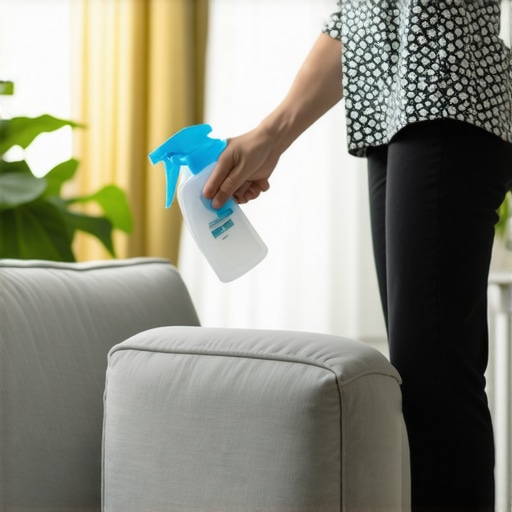
Imagine a professional cleaning setup with someone spraying disinfectant evenly across upholstered furniture, capturing the essence of thorough disinfection.
Many homeowners believe that simply spraying disinfectant or cleaning products is enough to keep their homes truly sanitized. However, this misconception can lead to ineffective cleaning routines. For example, many think that disinfecting wipes are the ultimate solution for all surfaces, but in reality, they might just spread germs if not used properly or on appropriate surfaces. Professionals warn that frequent misuse of household cleaners without understanding their proper application can damage surfaces or create a false sense of cleanliness, leading to overlooked contamination.
Another prevalent myth is that larger quantities of cleaning chemicals equate to better sanitation. In fact, overusing disinfectants and cleaners can leave residues that attract dirt or cause allergic reactions. Experts, like those cited in cleaning secrets from experts, emphasize the importance of using the right amount and type of cleaning agents tailored to specific surfaces and dirt levels.
Moving beyond basic misconceptions, many people overlook the complexity of upholstery and move-out cleaning. A common mistake is neglecting to consider the material-specific cleaning methods required for fabrics like microfiber or velvet. Using harsh chemicals or improper techniques can damage delicate fibers or set stains deeper into the fabric.
What many don’t realize is how crucial pre-cleaning is before disinfection. For instance, if you skip vacuuming or removing loose debris from upholstery or floor surfaces, disinfectants won’t penetrate effectively, leaving bacteria and dust behind. This step might seem minor, but it significantly enhances the effectiveness of your cleaning routine.
For those preparing for move-out cleaning, a frequent trap is focusing solely on visible dirt and neglecting hidden grime—like grout lines, behind appliances, or inside cabinetry. These overlooked spots can cause deposit deductions and can harbor bacteria, contributing to an unclean after-tenant environment. Consulting specialized checklists, like the move-out cleaning checklist, can help ensure no detail is missed.
Being aware of these nuances can drastically improve your cleaning results. By understanding that not all cleaning tools and chemicals serve every purpose, and recognizing the importance of tailored techniques, you elevate your household hygiene. Remember, effective cleaning isn’t just about superficial appearances but about deep sanitation that lasts.
Have you ever fallen into this trap? Let me know in the comments. For a comprehensive guide to mastering cleaning techniques, check out house cleaning strategies for a sparkling home today.Maintaining a clean and sanitized home over the long term requires more than just good intentions; it demands the right tools, consistent routines, and knowledge of what works best. In my experience, investing in quality equipment has been transformative, saving me time and yielding professional-level results consistently. For example, my trusted steam cleaner doesn’t just disinfect surfaces thoroughly but also allows me to deep-clean upholstery and tile grout without harsh chemicals, aligning with the latest effective sanitizing methods outlined by experts at this resource. Regular use of a high-quality microfiber mop and vacuum with HEPA filtration keeps dust and allergens at bay and prevents build-up that can compromise air quality and hygiene. Beyond equipment, I rely heavily on digital tools—like scheduling apps—to set reminders for routine cleaning tasks and keep track of maintenance. This proactive approach ensures that chores like move-out cleaning, upholstery refreshes, or sanitizing high-touch areas happen consistently, preserving the home’s value and health. Prediction-wise, the future holds increasing integration of smart cleaning gadgets and AI-driven maintenance schedules, which will make upkeep even more effortless.
How do I maintain long-term cleanliness and sanitation efforts?
– Establish a weekly routine that targets different areas—vacuuming carpets, disinfecting surfaces, and washing upholstery—so dirt doesn’t accumulate. – Use tools designed for specific tasks: a portable steam cleaner for fabrics and tiles, a microfiber mop for hardwood floors, and an upholstery attachment for furniture. – Set digital reminders for quarterly deep cleans or move-out prep, leveraging apps to prevent chores from slipping through the cracks. – Invest in durable, easy-to-maintain equipment and keep replacement parts on hand to avoid downtime. – Continually educate yourself on the newest techniques—like effective sanitizing methods discussed at this link—to adapt your routines proactively.
Imagine a cleaning setup with a trusted steam cleaner, a microfiber cleaning kit, and a scheduling app synchronizing your chores—this combo makes home maintenance seamless and effective. For instance, I recently upgraded my upholstery cleaning approach by integrating a steam cleaner with specific upholstery attachments, making my furniture look almost new without harsh chemicals. This not only enhances the longevity of my fabrics but also aligns with cleaner living principles. If you’ve been stuck on persistent stains or odors, I encourage you to try using a high-powered steam cleaner on your furniture—it’s a game-changer. Regularly updating your tools and routines will ensure your home remains a sanctuary of cleanliness and health, sustaining its beauty and your peace of mind for years to come.
Lessons That Changed My Deep-Cleaning Game
One of the most eye-opening realizations I had was that effective disinfecting of porous surfaces like upholstery requires more than just sprays and quick wipes. I learned the hard way that neglecting pre-cleaning steps, such as vacuuming or brushing away debris, significantly hampers the disinfectant’s ability to reach embedded germs. Each stain or smell I previously thought was impossible to eliminate became manageable once I incorporated thorough prep and tailored techniques, making me appreciate the importance of patience and proper equipment in achieving a truly sanitized home.
Another valuable lesson was understanding the limitations of off-the-shelf disinfectants for fabrics. Not all products are fabric-safe or effective on deep-seated bacteria. Switching to specialized upholstery cleaners combined with deep drying methods helped me prevent mold and odors while preserving the material. This shift in approach transformed my routine from superficial to profound, ensuring my furniture remained fresh and safe for my family.
Lastly, I discovered that routine maintenance, including regular deep cleans and mindful handling, is key to long-term cleanliness. Establishing a schedule that targets different areas—like weekly vacuuming and bi-weekly disinfection—avoids buildup of dirt and germs. This proactive mindset not only prolongs the life of my furniture but also creates a healthier living environment, which is the ultimate goal of any cleaning effort.
My Go-To Resources for Upholstery and Move-Out Excellence
Over time, I’ve curated a set of tools and guides that elevate my cleaning standards. For instance, The Ultimate Upholstery Care Guide has been indispensable in understanding fabric-specific cleaning techniques that protect delicate textures while deep-cleaning effectively. I trust expert insights to refine my routines and stay updated with proven methods. Additionally, principles from move-out cleaning strategies help me ensure I leave no corner overlooked, safeguarding my deposit and peace of mind.
The combination of specialized tools, trusted guides, and ongoing education keeps my home sanitized thoroughly and my confidence high. When I invest in quality gear and knowledge, I turn cleaning from a chore into a confidence booster, knowing my home is safe and spotless.
Your Turn to Embrace Deep-Cleaning Wisdom
If you’re tired of spraying disinfectants with little results, consider adopting a more strategic approach—focusing on pre-cleaning, material-specific products, and regular routines. Your home’s cleanliness and your family’s health depend on making informed choices beyond surface appearances. Remember, effective disinfection isn’t just about products; it’s about understanding your surfaces and tailoring techniques for lasting results.
What’s one cleaning tip or tool that transformed your upholstery care? Drop your experience in the comments below—I’d love to hear what works for you!