
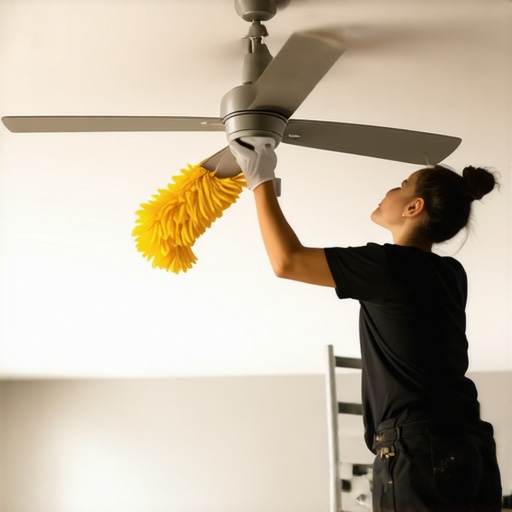
Have you ever reached up to clean your ceiling fan and felt that tiny rush of panic—wondering if this might be the moment gravity wins? Yeah, I’ve been there. I once clumsily swatted at a particularly dusty blade, only to lose my grip and watch as it swung wildly before I caught it, heart pounding. That moment was my wake-up call: cleaning ceiling fan blades isn’t just about cleanliness but also about safety. It’s an ordinary chore that can turn into a real hazard if you’re not careful.
The Real Risk of Dust and Falling Fans
Ceiling fans are often overlooked during house cleaning, yet they’re some of the dirtiest surfaces in our homes. Dust, pet hair, and airborne grime settle quickly on those blades, and when disturbed, they can become airborne again—circulating pollutants in your living space. But what’s more alarming is the risk of injury—many of us try to clean them without proper tools or methods, leading to precarious situations and falls. I’ve seen firsthand how a simple lack of technique can turn this mundane task into a potential accident waiting to happen.
Is It Really Worth the Risk?
I made a crucial mistake early on: attempting to clean my fan with a regular, shaky step stool without securing it properly. That mistake isn’t just mine—surprisingly, many homeowners underestimate the danger of unstable surfaces or using the wrong cleaning tools, which dramatically increases the chance of slips or falls. According to safety experts, falls from household heights are among the most common accidents—yet they are preventable with the right knowledge and cautious steps. To prevent these mishaps, I researched and experimented until I found foolproof ways to keep us safe while keeping our fans dust-free.
So today, I’m sharing proven strategies that will help you remove dust effectively without risking your balance or safety. No need for dramatic climbs or fragile furniture setups—just simple, safe techniques to keep your ceiling fans spotless and your home, and yourself, secure. Ready to learn how to conquer this cleaning challenge without the fall hazard? Let’s dive into the specifics that transformed my messy, risky chore into a safe, satisfying task.
Gather Your Tools and Prepare Safely
Before climbing that step stool, gather a microfiber duster, a sturdy ladder or an adjustable step stool, and a cleaning cloth soaked in a gentle solution of dish soap and water. Place a stable base near the fan to prevent slips, and keep a broom or vacuum handy to remove heavy dust buildup beforehand. Remember, securing your ladder is crucial — I once almost toppled over because I didn’t double-check its stability, which taught me to always set it on an even surface.
Remove Dust Without Climbing Risks
Start by turning off the fan and laying down a drop cloth or old sheet beneath it to catch falling dust. Use a microfiber duster with an extendable handle to gently wipe each blade from the center outward, mimicking the motion of peeling a banana. This minimizes dust dispersal and keeps you from leaning over dangerously. When I did this, I avoided the usual dusty cloud and reduced my exposure — it’s a simple yet effective step.
Deep Clean the Fan Blades
Now, take a damp microfiber cloth with your cleaning solution and wipe each blade thoroughly. Pay attention to the edges and corners where grime often accumulates, much like scrubbing the corners of a window frame where dirt nests. For stubborn spots, gently scrub with an old toothbrush dipped in your cleaning solution — I once cleaned a greasy kitchen fan and learned that this technique shines through.
Address the Ceiling Fan’s Motor and Base
Don’t forget to clean the motor housing and mounting bracket with a dry microfiber cloth, removing dust that can affect the fan’s functioning. Use compressed air to blow out debris from vents or hard-to-reach spots. I once neglected this, leading to a squeaky, inefficient fan. Regular maintenance keeps your fan operating quietly and prolongs its lifespan.
Inspect and Maintain for Safety
After cleaning, inspect the fan for loose screws or wobbling. Tighten any loose parts with a screwdriver — I discovered a loose blade after a vigorous cleaning session, which could have caused imbalance or damage. A quick check prevents future mishaps and ensures the fan stays anchored securely to the ceiling.
Final Tips for a Hazard-Free Experience
Always ensure the power is off before cleaning and avoid overreaching on unstable surfaces. Use a sturdy step ladder, and avoid leaning too far or standing on furniture. If you’re unsure, consider enlisting help to hold the ladder or handle tricky spots safely. Remember, safety isn’t just a checkbox — it’s the foundation of effective cleaning. For more in-depth safety strategies during home maintenance, check out house cleaning secrets from experts.
Many homeowners believe that sanitizing, upholstery care, and move-out cleaning are straightforward tasks—simply follow the instructions, use the right products, and voila, the job’s done. However, lurking beneath this surface of simplicity are common misconceptions and advanced pitfalls that can undermine your efforts. As an expert in home hygiene and cleaning, I’ve seen firsthand how these overlooked nuances can transform a passable clean into a damaging oversight.
Why Most People Overlook the Complexity of Sanitizing
When we talk about sanitizing, the typical assumption is that applying disinfectant liberally will eliminate germs. But in reality, many rely on surface-level sprays without considering the materials or bacteria types involved. For instance, porous surfaces like upholstery or fabric curtains require specific approaches or professional-grade solutions, as standard disinfectants might not penetrate and effectively kill germs residing deep within fibers. According to a study published in the Journal of Applied Microbiology, bacteria can survive on porous surfaces for days unless treated with suitable, proven disinfectants—like those discussed in specialized upholstery sanitizing tips.
Another common myth is that all disinfectants are interchangeable. In reality, using the wrong type on delicate fabrics or natural materials can cause discoloration, weakening, or even permanent damage. Always opt for products formulated specifically for that surface, and when in doubt, consult expert advice or professional services to prevent costly mistakes.
Moving Beyond Basic Upholstery Cleaning
Many assume that vacuuming and light spot cleaning are enough to preserve furniture’s freshness. While these steps help, they fall short of removing deep-seated dirt, allergens, and bacteria. For example, some homeowners mistakenly believe that steam cleaning is suitable for all fabrics. The truth is, natural fibers or vintage pieces might shrink, discolor, or get damaged from high heat or moisture. It’s crucial to understand the fiber content and heat tolerance of your upholstery before choosing a cleaning method. Delving into this nuance can save you from costly repairs, and for specific guidance, I recommend checking out expert insights on upholstery steam cleaning.
Move-Out Cleaning: The Trap of One-Size-Fits-All
The biggest mistake in move-out cleaning is relying on generic checklists and DIY hacks without understanding the property’s unique features. For example, flooring in rental units may have specific requirements—vinyl, hardwood, tile, or carpet—each demanding a tailored approach. Over- or under-cleaning can lead to losing part of your security deposit. A prevalent trap is neglecting to clean hidden spots like grout lines, behind appliances, or under cabinets, which inspectors often scrutinize. Using specialized tools like grout brushes or professional techniques, rather than generic cleaning, ensures thoroughness and compliance. Remember, a comprehensive understanding of each surface and area saves you from costly deductions.
Recognizing these nuanced mistakes is essential for elevating your cleaning routine. It’s about shifting from a one-size-fits-all mindset to a strategic approach that considers the intricacies of the materials, surfaces, and environments involved. Failing to do so can inadvertently compromise safety, damage property, or cause you to spend more in the long run. For deeper insights into how expert cleaners approach these challenges, explore the secrets shared by professionals.
Have you ever fallen into this trap? Let me know in the comments. Mastering these hidden aspects will not only make your cleaning more effective but also safer and more cost-efficient in the long run.
Keeping It Working: Tools I Recommend
Maintaining a spotless, safe home isn’t just about quick fixes; it’s about investing in the right tools that stand the test of time. Over the years, I’ve refined my toolkit, choosing equipment and methods that offer durability, efficiency, and safety. For example, I rely heavily on extendable microfiber dusters like the Swiffer Dusters Extender. These allow me to reach ceiling fan blades and high shelves without risking unstable ladders or awkward movements. Their static charge traps dust effectively, reducing airborne particles and minimizing cleanup time. I prefer microfiber cloths over paper towels because they are washable, eco-friendly, and more effective at trapping dirt and bacteria, especially when paired with appropriate cleaning solutions sourced from trusted manufacturers.
When it comes to upholstery sanitation, I recommend using a high-quality, professional-grade steam cleaner. It’s tempting to opt for cheaper models, but a reliable steam cleaner, like the Vaporetto Steam Cleaner, ensures thorough sanitization without damaging delicate fabrics. Modern models also come with adjustable temperature controls, enabling gentle cleaning on sensitive upholstery, which is crucial for natural fibers or vintage furniture. Incorporating a handheld detail attachment allows me to target pet hair, stains, and allergens in tight spots—a huge plus for maintaining a consistently fresh home environment.
For move-out cleaning, I’ve found that multi-surface scrapers with replaceable blades are game-changers. They help in removing stubborn grime from grout lines, window tracks, and stove surfaces without scratching or damaging surfaces. Pairing these with specialized cleaning solutions—such as enzymatic cleaners for carpets or natural vinegar solutions for tiles—ensures a deep clean that passes even the strictest inspections. Over time, I’ve learned that investing in high-quality microfiber mop heads and extendable dust mops reduces wear and tear, saving money and effort in the long run.
How do I maintain my cleaning arsenal over time?
Proper maintenance and calibration of your tools are essential. Rinse microfiber cloths thoroughly after each use, and replace them when frayed to avoid spreading dirt. Regularly clean steam cleaner filters and check hoses for blockages, following manufacturer guidelines. For tools like vacuum filters, I recommend keeping a few extras on hand—this ensures uninterrupted cleaning sessions and keeps your equipment performing optimally. Staying proactive about tool maintenance prolongs their lifespan and ensures consistent results, making your home cleaner and safer over the years.
Looking ahead, I predict that smart cleaning devices integrated with IoT technology will become even more prevalent, offering real-time alerts for maintenance needs and optimizing energy use. For now, installing a powerful, programmable vacuum with HEPA filters has significantly improved my long-term indoor air quality, especially for allergy sufferers. Don’t underestimate the importance of consistency—set schedules and stick to them; it’s the best way to keep your home in top shape year-round. Want to take your maintenance game further? Try a professional-grade microfiber mop for your floors—once you experience the difference, you’ll wonder how you ever managed without it.
Lessons From My Cleaning Journey That Changed Everything
- I realized that rushing through ceiling fan cleaning increases the risk of dangerous falls—taking the time to secure proper tools and surfaces isn’t just safer, it’s smarter. This lesson reminded me that safety should always come first, especially when cleaning at heights.
- Understanding the materials I was working with transformed my approach. Using the wrong disinfectant on natural fabrics or delicate upholstery can cause damage, so I started researching which products are truly effective and safe, preventing costly mistakes down the line.
- Deep cleaning isn’t just about visible dirt; allergens and bacteria hide in unseen spots. Learning to target these areas with appropriate tools and techniques helped me improve indoor air quality and family health, turning routine cleaning into a healthful act.
- My biggest eye-opener was realizing that tools matter—investing in quality microfiber cloths and extendable dusters made my tasks more efficient and gentle on surfaces. Upgrading my toolkit was like giving my cleaning routine a professional boost.
- Finally, consistent maintenance—like regular inspections of fan blades and furniture—prevents small issues from becoming big, costly repairs. This proactive mindset saves money and stress, making home care a breeze rather than a chore.
Tools That I Trust for a Safer, Smarter Home
- Swiffer Dusters Extender: I rely on these because their extendable handles let me reach ceiling fans safely without balancing on unstable furniture. Plus, their static charge traps dust efficiently, reducing airborne particles.
- Vaporetto Steam Cleaner: For upholstery, this professional-grade steamer ensures deep cleaning without risking fabric damage. Adjustable settings help me tackle different materials safely, keeping furniture fresh and allergen-free.
- Microfiber Mop Heads: Switching to high-quality microfiber mop heads has improved my floor cleaning game, allowing for quicker, streak-free results that leave surfaces spotless and sanitized.
- Multi-surface Scrapers: When dealing with stubborn grime, these tools save time and prevent scratching, especially around grout lines or tight spots. Paired with specialized cleaning solutions, they make deep cleaning more manageable.
Step Into a Cleaner, Safer Future Today
Remember, transforming your home cleaning routine is about more than just surface sparkle—it’s about creating a safe, healthy environment for those you love. Embrace the process, invest in the right tools, and approach every task with patience and precision. Your home will thank you, and so will your peace of mind. Want to master these strategies? Dive deeper into expert cleaning secrets and elevate your home care skills by exploring these industry insights. Now’s the time to take action—start tomorrow, and see the difference for yourself! Can you recall a cleaning mistake that taught you an important safety lesson? Share your story below and help others avoid the same pitfalls.