
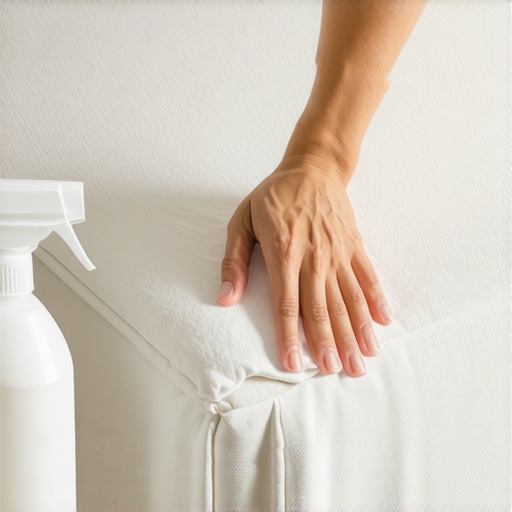
I remember exactly when it happened. The sun was streaming through the bay window, hitting my favorite oatmeal-colored linen ottoman at just the right angle to reveal a crusty, yellowed ring I hadn’t noticed for weeks. My heart sank. That ottoman wasn’t just furniture; it was my ‘guilty pleasure’ purchase after three months of saving. I’d love to tell you I handled it like a pro, but I didn’t. In a panic, I grabbed a bottle of generic spray and a bucket of hot water, thinking heat would melt the stain away. Big mistake. I ended up with a permanent ‘halo’ where the fabric fibers felt stiff and the color looked slightly off. It was a classic case of trial and error that taught me the hard way: linen is a fickle beast that demands respect, not aggression. Today, I’m going to share the exact, gentle method I’ve perfected to get those stubborn, set-in pet messes out without ruining the gorgeous texture of your upholstery.
Stop Before You Reach for the Bleach
Honestly, the biggest hurdle isn’t the stain itself—it’s the urge to over-clean. When we see a spot that’s been sitting there since the Reagan administration, our instinct is to go nuclear. But linen is a natural fiber, and unlike polyester, it doesn’t just bounce back from harsh chemicals. If you’ve ever wondered why your living room still smells like pets after you vacuum, it’s often because those old stains are trapped deep in the padding of your furniture, mocking your standard cleaning routine. To truly fix this, we have to talk about moisture control. According to the International Fabricare Institute, linen is exceptionally prone to ‘cellulosic browning’—a phenomenon where the fabric turns brown or yellow simply because it stayed wet for too long. This is why my first attempt failed so miserably; I drowned the fabric instead of treating the spot. If you want a truly fresh home revival, you need to think like a surgeon, not a high-pressure washer. Have you ever stared at a stain on your couch for twenty minutes, debating whether to touch it or just flip the cushion and pray? Drop a comment and tell me I’m not the only one who has played ‘hide the stain’ with guests coming over!
Is My Ottoman Actually Beyond Saving?
I hear this all the time from neighbors who are ready to drag their furniture to the curb. They assume that because a stain is ‘old,’ it has become part of the DNA of the fabric. It’s a valid fear! Linen is porous, and pet proteins can bond to the fibers over time. However, the secret lies in breaking those bonds without stripping the dye. I’ve found that by following a specialized upholstery care guide, even the most daunting spots can be lifted. The trick is to avoid the mistakes of the past—specifically, using hot water on set-in stains, which basically ‘cooks’ the protein into the linen. We’re going to use a much more strategic, cool-tempered approach that respects the integrity of the weave while being absolutely ruthless to the bacteria hiding underneath. Get your microfiber cloths ready, because we’re about to dive into the nitty-gritty of the process.First, we have to clear the battlefield. You cannot clean a stain if it’s buried under a layer of pet hair and dander. I learned this the hard way during a particularly stressful move-out cleaning session where I tried to wet-clean a linen chair without vacuuming first. The water just turned the surface dust into a muddy sludge that pushed deeper into the fibers, turning a simple spot into a permanent shadow. Always use a vacuum with a HEPA filter and a dedicated upholstery tool to pull every loose particle out of the weave. If you notice a funky scent while doing this, it’s a sign that your vacuum cleaner is making the house smell worse because the filters are clogged with old organic matter. Get that surface completely naked before any liquid touches it.
Apply the Solution with Surgical Precision
Once the fabric is dry-vacuumed, you need to identify your fabric’s ‘personality.’ Linen is often ‘S’ coded, meaning it should only be cleaned with solvents, or ‘W’ for water-based cleaners. Knowing how to treat s-coded upholstery fabric without ruining it is the difference between a clean couch and a ruined heirloom. If your tag allows for water, we are going to use the same principle as the cold water secret for removing blood stains from linen. Heat is the enemy of protein-based pet stains; it acts like a glue. Instead, mix a teaspoon of pH-neutral clear dish soap with two cups of distilled, cold water. Distilled water is key here because it lacks the minerals that often cause those dreaded ‘rings’ on light linen. 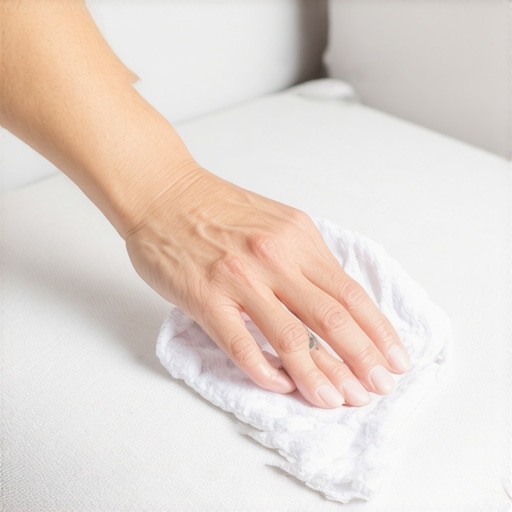
Blot Like You Are Handling Fine China
Never, under any circumstances, should you scrub. Scrubbing linen is like sanding wood against the grain; you will fray the fibers and create a ‘fuzzy’ patch that reflects light differently than the rest of the sofa. Use a clean, white microfiber cloth—colored cloths can bleed dye into your linen—and dip only a corner into your solution. Press it firmly into the stain, hold for five seconds, and lift. This uses capillary action to pull the stain into the cloth rather than pushing it into the cushion foam. I remember trying to ‘fast-track’ this on a set of dining chairs once by using a stiff brush. By the time I was done, the linen looked like it had been through a cat fight. It was a painful lesson in patience that expert cleaning secrets always emphasize: let the chemistry do the work, not your muscles.
Dry the Fabric Fast to Prevent Browning
The danger isn’t over once the stain is gone. As I mentioned before, ‘cellulosic browning’ happens during the drying phase. If that spot stays damp for six hours, a yellow ring will migrate from the backing of the fabric to the surface. To prevent this, use a dry white towel to sandwich the damp area and press down with your full body weight to soak up every possible drop of moisture. Then, set up a floor fan directed at the spot. It’s a common mistake to try and speed this up with heat, but using hairdryers on wet fabric spills can actually set any remaining residue or cause the fibers to become brittle and yellow. High-velocity air at room temperature is your best friend here.
Why Looking Clean Is Not the Same as Being Safe
We often assume that if the visual stain is gone, the job is finished. This is a common misconception in modern house cleaning strategies. In reality, removing the protein from a pet mess is only half the battle; the other half is microscopic. Many homeowners ask, is steam cleaning enough to kill bacteria on high-touch surfaces like your favorite armchair? While steam is great for polyester, on linen, high heat can actually seal in odors by altering the organic structure of the fiber. According to the Institute of Inspection, Cleaning and Restoration Certification (IICRC), improper temperature control during sanitization is the leading cause of permanent ‘fiber setting’ in natural textiles. If you aren’t careful, you’re not sanitizing; you’re just baking the bacteria into the weave. 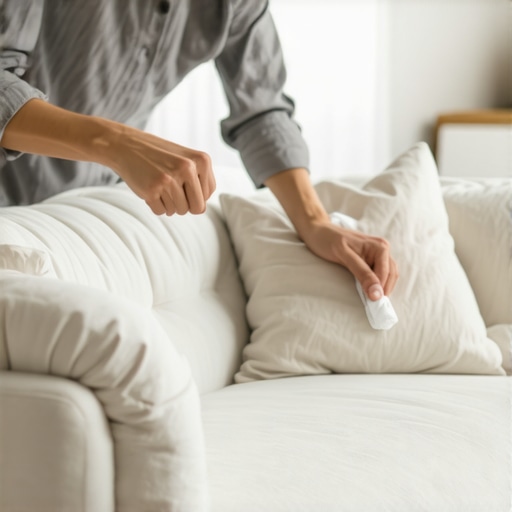
The Sticky Residue Trap Most People Fall Into
This is the “oops” factor I see most often when people are preparing for a move-out clean. When a stain doesn’t budge, the instinct is to dump more detergent on it. But here is the nuance: soap is a surfactant, meaning it is designed to attract. If you don’t thoroughly rinse out every trace of that pH-neutral soap with distilled water, it creates a sticky film. Within hours, that film will attract every piece of dust and pet dander floating in the air. This is why your fabric sofa still smells after using store-bought deodorizers—the fragrance eventually fades, but the soap remains, trapping new odors in a cycle of filth. It is also why many tenants fail their move-out clean checklist; the “cleaned” spots often look darker than the rest of the furniture after just a week of foot traffic or use.
Can You Sanitize Upholstery Without High Heat?
Absolutely, but it requires chemistry over brute force. Advanced house cleaning secrets often involve using oxygen-based boosters that work at room temperature. These release active oxygen molecules to break down odors without the fiber-damaging effects of boiling water. This is vital for maintaining the ultimate upholstery care for high-end pieces. Have you ever fallen into the trap of using too much cleaner only to have it feel crunchy or sticky later? Let me know in the comments! If you’re ever in doubt, it’s always safer to reach out for a professional opinion before that “halo” becomes a permanent feature of your home’s decor. Use a daily house cleaning routine to catch these spots before they require such aggressive measures.Since we’ve talked about the pitfalls of residue, I want to get real with you about the gear I actually use to prevent my house from becoming a ‘sticky trap.’ When I’m doing a deep house cleaning, I don’t just grab whatever is on sale. I use a low-moisture upholstery tool attached to a professional-grade extractor. Why? Because it controls the spray at the nozzle, ensuring the water never penetrates the backing. This is a game-changer if you’re trying to follow effective house cleaning secrets without the risk of browning. I’ve seen so many DIYers try to use a standard shop-vac, only to find the suction is too aggressive, stretching the linen and leaving it warped. Professional tools are designed to lift the soil, not the soul of your furniture.
How Do I Keep My Upholstery Looking New for Years?
The secret isn’t a massive annual deep clean; it’s the boring, small stuff. I stick to a daily house cleaning routine that includes a quick vacuuming of the main seats. If you’re a pet owner, this is non-negotiable. You need a vacuum with a certified HEPA filter, because otherwise, you’re just recirculating dander. I’ve written before about why your vacuum filter is actually spreading dust around your home, and for linen, this is deadly. The Carpet and Rug Institute (CRI) emphasizes using ‘Seal of Approval’ products because they’ve been scientifically tested to ensure they don’t damage the fibers or leave that sticky residue we discussed. Looking ahead, I suspect we’re going to see a massive shift toward bio-enzymatic cleaners that ‘eat’ odors over 24 hours rather than using harsh surfactants. These sanitizing secrets for 2025 are already becoming the gold standard for high-end fabric care.  If you are prepping for a big move and need to ensure everything is perfect, don’t forget to use these move-out cleaning hacks to protect your investment. If you’re feeling overwhelmed by a set-in mess, I highly recommend trying the ‘distilled water rinse’ I mentioned earlier on a small, inconspicuous spot first. It’s the single most effective way to see if you’ve actually cleared the soap residue. For long-term peace of mind, always keep a bottle of pH-neutral cleaner on hand to treat spills the second they happen—your future self will thank you for maintaining that ultimate upholstery care standard. Don’t wait until the ‘halo’ appears to act!
How the Linen Battlefield Taught Me to Clean Smarter Not Harder
Reflecting on my own journey from a ruined ottoman to a spot-free home, I’ve realized that the most effective house cleaning secrets aren’t about the strength of your arm, but the patience in your process. Here are the lightbulb moments that finally clicked for me: First, lighting is everything. I used to think a spot was gone while cleaning at night, only to see the halo in the morning sun. Always inspect your work from a side angle under natural light. Second, linen holds a grudge. If you skip the dry vacuuming, you aren’t cleaning; you’re making mud. A daily house cleaning routine that includes light vacuuming prevents dust from becoming a permanent stain binder. Third, distilled water is your cheapest insurance policy. Most permanent water rings aren’t from the pet mess; they are mineral deposits from tap water. Switching to distilled water changed my success rate overnight.
My Must-Have Tools for Keeping High-End Fabrics Flawless
I’ve tested dozens of products, but for ultimate upholstery care, I stick to a very narrow list of trusted tools. First, a high-quality HEPA vacuum is non-negotiable to keep allergens out of the weave. I also swear by clear pH-neutral soaps because dyes and heavy fragrances often lead to that sticky residue that attracts more dirt. Finally, I always keep a stash of pure white microfiber cloths. #IMAGE_PLACEHOLDER_E# Why white? Because I need to see the stain transferring onto the cloth to know the chemistry is working. If you’re preparing for a move, these tools paired with move-out cleaning hacks will save you hundreds in professional fees.
Reclaiming Your Space One Spot at a Time
It is so easy to feel defeated when your favorite chair looks ruined, but remember that natural fibers like linen are incredibly resilient when treated with respect. By moving toward the sanitizing secrets for 2025—focusing on low-moisture and pH-balanced methods—you aren’t just cleaning a surface; you’re preserving a piece of your home’s history. Don’t be afraid to take it slow and trust the process. Have you ever tried a hack that actually made an upholstery stain worse before you found the right method? Let me know in the comments below!