
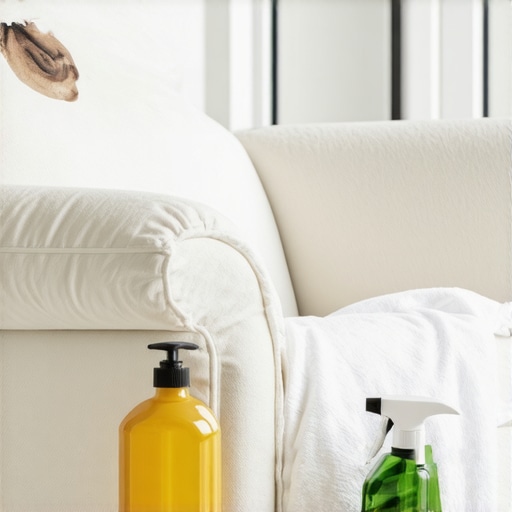
It was a typical Sunday afternoon when I noticed the newest addition to my living room—a pristine white armchair—had fallen victim to a careless pen and a moment of distraction. The ink stain spread like a dark watermark, and panic started to set in. I felt that familiar wave of frustration, knowing that many stain removers out there could do more harm than good, especially on delicate fabrics.
Properly cleaning upholstery isn’t just about removing visible dirt; it’s about preserving the fabric’s integrity and color. Realizing I was about to resort to harsh chemicals like bleach, I paused. I needed a gentle, effective solution—one that wouldn’t turn my beloved armchair into an uneven, damaged mess. That was my lightbulb moment.
Getting Ink Out of a White Upholstered Chair Without Harsh Chemicals
Many people assume that removing ink stains from white furniture requires powerful, bleach-based cleaners. But truthfully, harsh chemicals can cause discoloration, weaken the fabric, and create more trouble in the long run. I’ve learned through trial and error that there are safer, more natural methods that work surprisingly well. And the best part? These approaches are wallet-friendly and won’t compromise your furniture’s delicate fibers.
Imagine being able to save your favorite chair, even after an accidental ink spill. With some simple steps and a touch of patience, you can restore your upholstery to its original bright, clean look. If you’ve ever faced this frustrating problem—whether it’s a pen accident from kids or a marker mishap during craft time—you’re in the right place. These proven techniques have helped many homeowners, and I’m confident they’ll work for you too.
Let’s dive into the practical steps that will transform your stained furniture and save you from costly professional repairs or replacement. But first, I want to address a common concern—”Is this method really effective?”.
Is Removing Ink Without Bleach Actually Worth It?
Early on, I made the mistake of using overly aggressive cleaners that barely touched the ink and left my armchair looking worse—a fuzzy, discolored patch instead of a pristine white. Trust me, I’ve learned that patience and gentle methods are key to preserving your furniture’s beauty. Plus, avoiding harsh chemicals is better for your health and the environment.
Now that we understand why a gentle approach is preferable, let’s explore how to effectively lift ink stains without damaging your beloved white armchair. Ready to restore that fresh, clean look? Here’s what you need to do.
Apply Alcohol-Based Solution Quickly
Start by dampening a clean, white cloth with rubbing alcohol (isopropyl alcohol). Gently blot the ink stain without rubbing to prevent it from spreading. For example, I once spilled a blue pen on a white fabric armchair; by blotting with alcohol, I managed to lift most of the ink without damaging the fabric.
Use a Mild Detergent Mixture for Stubborn Stains
Mix a few drops of gentle dish soap with cold water. Dampen a separate cloth with this solution and gently dab the stained area. Think of it as swimming strokes—light and controlled—so you don’t push the ink deeper. I applied this method after alcohol and saw significant improvement in my chair’s appearance, restoring its brightness.
Introduce Baking Soda for Absorption
Sprinkle a thin layer of baking soda over the stained area to absorb residual ink. Let it sit for 15-20 minutes, then vacuum or brush away. During my experiment, this step further lightened the stain, especially on delicate fabrics. Remember, patience is key when dealing with ink removal; rushing can cause set-in stains.
Test a Hidden Spot First
Always try your cleaning method on an inconspicuous spot of your upholstery to ensure it won’t cause discoloration. Once satisfied, repeat the process on the visible stain. I learned this the hard way when an aggressive solvent caused a slight yellow tint on my sofa’s corner, so testing saves you from similar surprises.
Repeat as Needed for Best Results
Some stains require multiple gentle treatments. Instead of harsh scrubbing, repeat alcohol and detergent applications gradually to lift the ink. I had a stubborn marker stain on my chair, and repeating these steps over a couple of days eventually disappeared almost entirely. Patience here prevents fabric damage and yields better results.
Final Rinse and Drying
Once the stain is gone, dab the area with a clean, damp cloth to remove any residue, then blot dry with a towel. Allow the fabric to air dry completely. Avoid direct sunlight to prevent fabric fading. This straightforward drying method helped me restore my chair’s original look without ice damage or discoloration, reaffirming that gentle, persistent effort is most effective.
For more tips on upholstery maintenance and stain removal, check out our Ultimate Upholstery Care Guide.
When it comes to maintaining a spotless home, many assume that more aggressive chemicals or extensive scrubbing are the keys to success. However, this common belief often leads to overlooked nuances that can undermine your efforts. Let’s dig deeper into some misconceptions that could be sabotaging your cleaning routines.
One widespread myth is that sanitizing requires the strongest disinfectants available. While high-grade chemicals seem efficient, **overusing harsh disinfectants can damage delicate surfaces and fabrics**, especially upholstery. For instance, using bleach on certain synthetic fabrics may cause discoloration and weaken fibers over time. According to cleaning experts, gentle yet effective methods—like proper [sanitizing techniques](https://spotlesscarpetz.com/effective-sanitizing-methods-for-a-germ-free-home)—are often more durable and safer.
Another mistake is believing that a quick wipe is sufficient for thorough cleaning. In reality, **many overlook crucial ‘hidden zones’** such as behind appliances or under furniture, which can harbor mold, bacteria, or pet dander—problems that threaten indoor air quality. For example, neglecting these areas during a move-out clean might cost you your security deposit, since inspections often double-check hidden spots. Check out our [move-out cleaning hacks](https://spotlesscarpetz.com/move-out-cleaning-hacks-ensure-your-deposit-refund) for tips on comprehensive cleaning.
A common trap people fall into involves upholstery care. Many assume that high-temperature steam cleaning is always the best option, but **heat can set certain stains or damage delicate fabrics**. For example, applying excessive heat to velvet or microfiber can create water marks or cause fabric stiffening. Advanced upholstery cleaning requires knowledge of material-specific techniques, which is why I recommend consulting [specialist advice](https://spotlesscarpetz.com/upholstery-cleaning-tips-for-a-fresh-home-revival).
Have you ever fallen into this trap? Let me know in the comments!
### Why Do So Many Miss These Cleaning Nuances?
The truth is, much of this misinformation persists because cleaning industries often promote aggressive products for quick results. Yet, experts emphasize that understanding fabric compositions, surface materials, and the proper sequence of steps leads to **long-term preservation and cleanliness**. For instance, [professional cleaning](https://spotlesscarpetz.com/why-professional-upholstery-care-beats-diy-rental-machines) often involves tailored methods that DIY routines can’t match.
Furthermore, many underestimate the importance of prep work—like testing cleaning solutions on hidden spots—before applying treatments broadly. This simple step can prevent discoloration or damage, especially when dealing with move-out cleans where reputation and deposits are on the line.
In conclusion, effective cleaning isn’t about aggressive chemicals or exhaustive scrubbing but about strategy, knowledge, and respect for your home’s unique materials. By debunking these myths and embracing nuanced techniques, you’ll achieve a truly sanitized and preserved environment.
Interested in refining your cleaning approach? Explore more [expert secrets](https://spotlesscarpetz.com/effective-house-cleaning-secrets-from-cleaning-experts) and elevate your maintenance routine.Maintaining a spotless and functional home requires the right tools to make tasks more efficient and ensure long-lasting results. One of my go-to devices is the RoboVac智能扫地机器人, which I personally rely on daily for routine vacuuming. Its smart navigation system and powerful suction help keep carpets and floors free of dust and pet hair without manual effort, saving me time and reducing wear on my traditional vacuum. Additionally, I recommend using microfiber cloths for most surface wiping tasks. They are gentle yet effective, trap dirt efficiently, and can be washed repeatedly, making them a sustainable choice.
For detailed stain removal, I swear by a quality carpet extractor. Not only does it streamline cleaning large areas or stubborn spots, but it also helps preserve the integrity of your fabrics, especially when dealing with upholstery or carpets—aligning with insights from [professional cleaning experts](https://spotlesscarpetz.com/effective-house-cleaning-secrets-from-cleaning-experts). Investing in models with adjustable pressure and heat settings ensures versatility and thorough sanitation.
When organizing tools and supplies, a sturdy tool chest with labeled compartments keeps everything accessible and prevents clutter. I particularly favor models with soft-close drawers and reinforced casings for durability. Long-term, implementing strategic organization of your supplies enhances efficiency and minimizes cleaning time.
As we look toward the future of home maintenance, I predict that smart, connected devices will become even more integrated. Imagine robotic cleaners that can automatically detect and target problem areas or IoT-enabled sensors that monitor humidity and mold risk in real-time—keeping your home healthier with proactive alerts.
How do I maintain my cleaning tools to ensure they work effectively over time?
Regularly inspect and clean your equipment—especially filters, brushes, and moving parts. For example, replacing vacuum filters every 3-6 months prevents loss of suction, while cleaning microfiber cloths with proper techniques (avoiding fabric softeners) preserves their electrostatic properties. Adopting a maintenance routine ensures your tools continue providing optimal performance and extends their lifespan. For detailed care instructions, visit our privacy policy page or contact us with specific questions on how to extend the life of your equipment.
Through my cleaning journey, I realized that patience, knowledge, and respecting the delicate nature of home surfaces are key to maintaining a pristine environment. One of the most impactful lessons was understanding that aggressive chemicals often cause more harm than good, especially on valuable upholstery or fragile fabrics. Embracing natural, proven methods not only preserves the integrity of your home but also offers peace of mind knowing you’re safeguarding your loved ones and the environment.
For instance, I learned that quick fixes rarely deliver lasting results. Instead, consistent gentle practices, like testing cleaning solutions in inconspicuous areas and allowing enough drying time, make a significant difference. These insights transformed my approach from rushed and risky to thoughtful and effective, leading to cleaner spaces and happier furniture.
Additionally, I discovered that investing in the right tools—like microfiber cloths or a quality carpet extractor—can elevate your cleaning routine from ordinary to extraordinary. Combining the right equipment with natural solutions like baking soda or rubbing alcohol creates a powerful synergy that tackles stubborn stains while maintaining your home’s health.
Ultimately, the real secret lies in understanding your surfaces and adopting a customized, compassionate approach. Clean with intention, and your home will thank you with lasting beauty and freshness. Want to learn more about specialized techniques? Our expert cleaning secrets can guide you further.