
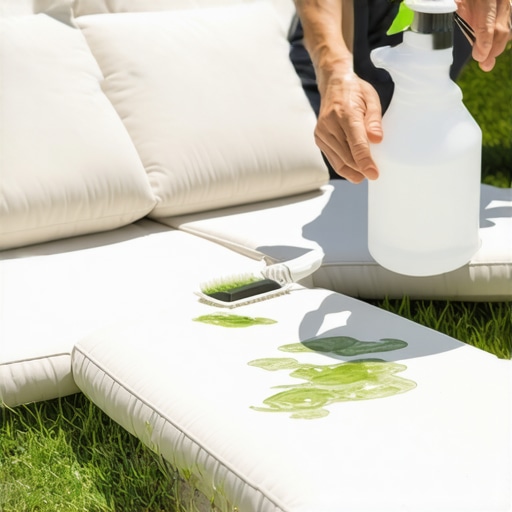
I remember the first time I saw a vibrant grass stain creeping across my outdoor patio cushion. It was a sunny Saturday afternoon, and my kids had just finished their impromptu soccer game right next to my beloved seating area. As I glanced over, I noticed that cheerful green patch turning into a stubborn blemish, stubbornly clinging to the fabric despite my attempts to wipe it away. That moment was a real eye-opener—it made me realize that dealing with outdoor stains isn’t just about cleanliness; it’s about preserving the comfort and beauty of our outdoor retreats.
Why Grass Stains Can Die Hard and Why You Should Care
Grass stains are notorious for being difficult to remove because they contain chlorophyll, which binds tightly to fabric fibers. If left untreated, they can set permanently, especially on cushions that face the sun and moisture—making stains look worse over time. Not only do these stains ruin the appearance of your outdoor furniture, but they can also attract more dirt and bacteria, creating a less inviting space for your family and friends. Plus, I’ve learned that proper stain removal can actually extend the life of your cushions, saving you money in the long run. Want to keep your outdoor oasis looking fresh and vibrant? Great! Today, I’m going to share tested methods that helped me banish those stubborn grass stains for good.
Is It Really Worth the Effort or Just a Waste of Time?
Early on, I made the mistake of thinking that wiping a grass stain with plain soap and water was enough. Spoiler alert: it’s not. Leaving stains untreated or using ineffective techniques can turn a small blemish into a permanent mark. According to expert advice from [Spotless Carpetz](https://spotlesscarpetz.com/ultimate-upholstery-care-guide-for-lasting-freshness), acting quickly and choosing the right cleaning methods are key. I’ve found that patience, combined with the right products, can make all the difference. So, if painstakingly removing stains feels overwhelming, don’t worry—I’ll walk you through simple but effective steps to give your cushions a second lease on life and keep your patio looking as inviting as the day you bought it.
Act Fast and Pre-Treat
Once you notice a grass stain, grab a clean cloth and blot the area gently to remove excess. For my patio cushions, I applied a mixture of dish soap and warm water directly onto the stain, letting it sit for 10 minutes. This loosens the chlorophyll molecules binding to the fabric fibers, preventing the stain from setting deeper. Remember, the sooner you act, the easier it becomes to remove the stain without harsh scrubbing.
Create an Effective Cleaning Solution
For stubborn grass stains, combine one part white vinegar with two parts water, adding a tablespoon of baking soda. This combination is acid and base working together—acidic vinegar breaks down the chlorophyll, while baking soda acts as a gentle abrasive. I used this solution on my cushions after pre-treating, which significantly lightened the stain within minutes. Always test a small, hidden area first to ensure colorfastness.
Scrub Smartly and Rinse Thoroughly
Use a soft-bristled brush or sponge to gently scrub the stained area, working from the outside inward to prevent spreading. After scrubbing, rinse the fabric with clean, cold water to wash away loosened stain particles. In my experience, avoiding excessive water prevents cushion saturation, which can prolong drying. For best results, I did this in the shade—direct sun can cause residual stains to set faster. Once rinsed, gently squeeze out excess moisture without wringing, which can distort fabric fibers.
Dry and Inspect
Allow the cushion to air dry completely, ideally in a shaded area to prevent fading. Once dry, inspect the area; some stains may require a second treatment. On one occasion, my first attempt only lightened the stain, so I repeated the process a day later, achieving near-perfect results. Maintaining a routine of spot cleaning prevents stains from becoming permanent and keeps your outdoor furniture looking pristine.
Prevention Tips to Save Future Effort
To minimize future stains, consider applying a fabric protector spray designed for outdoor cushions. Regular maintenance, such as weekly quick checks and spot cleaning with mild solutions, can keep your furniture fresh. During heavy use seasons, lay a washable cover over cushions to catch dirt and grass stains, making cleanup a breeze. Following these actions not only improves longevity but also saves you time and effort in the long run, allowing your outdoor space to stay inviting without tedious scrubbing.
Many homeowners believe that a quick spray of all-purpose cleaner will keep their upholstery pristine, but this oversimplification ignores vital nuances that can lead to costly mistakes. Misconceptions like these can hinder effective cleaning and even damage your furniture over time.
Are You Overlooking the Power of Proper Pre-Treatment?
One frequent error is neglecting the importance of pre-treating stains before cleaning. For instance, applying harsh chemical cleaners without testing can discolor fabrics or weaken fibers. Experts from [Ultimate Upholstery Care](https://spotlesscarpetz.com/ultimate-upholstery-care-guide-for-lasting-freshness) emphasize that pre-treatment not only enhances stain removal but also prolongs fabric life. Skipping this step might seem convenient, but it often results in incomplete cleaning or damaged upholstery pieces.
The Trap of Over-Relying on Commercial Cleaners
Many assume that commercial upholstery cleaners are universal solutions, but in reality, some formulations can be too abrasive for delicate fabrics. For example, using bleach-based products on colored or natural fibers leads to color fading or fiber deterioration. Additionally, overuse of harsh chemicals can compromise the waterproofing treatments of certain furniture. Remember, always check manufacturers’ labels or consult professional guides before selecting cleaning products. Misjudging the compatibility of cleaning agents is a common mistake that can cost both money and the integrity of your furniture. If you’re unsure, professional upholstery cleaning experts suggest using gentle, fabric-specific solutions, which are detailed in [Upholstery Cleaning Tips](https://spotlesscarpetz.com/upholstery-cleaning-tips-for-a-fresh-home-revival).
Mastering Sanitization Without Cross-Contamination
Sanitizing is crucial, especially during flu seasons, but many overlook the subtlety of proper disinfection protocols. Simply wiping down surfaces with a damp cloth doesn’t eliminate germs; effective sanitizing requires contact time and appropriate agents. For high-touch areas like remote controls or light switches, experts recommend using disinfectants that need to sit for at least 10 minutes to be effective, as supported by research from [Effective Sanitizing Methods](https://spotlesscarpetz.com/effective-sanitizing-methods-for-a-germ-free-home). Without this crucial step, germs can survive and multiply, posing health risks. Also, avoid cross-contamination by using separate cloths for different areas—an often ignored but vital tip many homeowners miss. Learn more about proper sanitizing procedures in [Sanitizing Secrets for a Safer House in 2025](https://spotlesscarpetz.com/sanitizing-secrets-for-a-safer-house-in-2025).
Why Quick Fixes Might Sabotage Your Deep Clean Efforts
Another misconception is that frequent, superficial cleaning is enough. While regular maintenance is essential, neglecting occasional deep-cleaning can let embedded dirt, dust mites, and bacteria accumulate, damaging fabrics and shortening furniture lifespan. Relying solely on quick vacuum passes or surface sprays is a trap that can lead to stubborn grime buildup over time. Professionals recommend scheduling periodic deep cleans, including steam extraction or specialized treatments, to truly refresh upholstery and surfaces. For comprehensive tips on effective deep cleaning, check out [Move Out Cleaning Hacks](https://spotlesscarpetz.com/move-out-cleaning-hacks-ensure-your-deposit-refund), which also cover how to avoid common pitfalls leading to deposit deductions or inspection issues.
Invest in Quality Equipment for Consistent Results
My go-to tool for maintaining upholstery over time is the Bissell CrossWave. Its dual-action design allows me to vacuum and wash simultaneously, making routine cleaning both efficient and thorough. Unlike traditional upright vacuums, this device reaches deep into fabric fibers, removing embedded dirt and stains before they set. I personally find that relying on a versatile machine like the CrossWave not only saves time but also preserves the fabric’s integrity, extending the lifespan of my furniture.
Utilize Specialized Cleaning Solutions
For long-term results, I use environmentally friendly, fabric-specific cleaners recommended by upholstery experts. For example, I trust professional-grade upholstery solutions that are designed to penetrate fiber depths without leaving residues. Applying these solutions with a microfiber cloth ensures even coverage and prevents over-saturation, which can lead to mold or mildew growth over time. Investing in quality solutions helps maintain softness and appearance, reducing the need for frequent deep cleans.
Establish a Regular Maintenance Routine
Consistency is key to long-term upholstery health. I follow a weekly daily house cleaning routine that involves quick vacuum passes and spot-treating minor stains. Additionally, I schedule quarterly professional cleanings, which are invaluable for preserving fabric resilience. This proactive approach prevents dirt buildup and keeps my furniture looking and feeling fresh, minimizing costly restorations down the line.
Harness Advanced Methods for Deep Cleaning
Steam cleaning is another technique I swear by. Modern steam cleaners, like the Dupray Neat Steam Cleaner, deliver sanitized heat that removes bacteria and reduces allergens without harsh chemicals. The high-temperature vapor penetrates deeply, loosening dirt and grime embedded within fibers. I recommend trying this method at least twice a year to ensure a hygienic, long-lasting upholstery environment. Proper use of steam cleaners can also cut down on chemical exposure, making it safer for households with children or pets.
How do I maintain upholstery over time?
Maintaining upholstery requires a combination of the right tools, consistent routine, and advanced cleaning methods. By investing in equipment like the Bissell CrossWave and using tailored solutions, you can maximize fabric longevity and appearance. Remember to follow manufacturer guidelines and consult expert advice to avoid common pitfalls. Regular upkeep not only preserves your furniture but also creates a welcoming, clean space for your family. For comprehensive tips, visit this guide and consider scheduling professional deep cleans periodically to ensure your investment lasts for years to come.
Over the years, I’ve realized that maintaining outdoor upholstery is as much about patience and knowledge as it is about cleaning techniques. One of the most valuable lessons I learned is that quick fixes rarely deliver lasting results. Instead, consistent routines and understanding the fabric’s unique needs pave the way for furniture that remains inviting and pristine.
Lessons Only Experience Can Teach About Outdoor Upholstery Care
- Pre-treatment is everything: Applying a gentle fabric protector at the right time prevents stubborn stains from setting. I wish I had started doing this sooner, as it saved me countless hours of scrubbing later.
- Choose your cleaning products wisely: Not all solutions are suitable for outdoor fabrics. Trusting expert recommendations and specialized solutions from [Ultimate Upholstery Care](https://spotlesscarpetz.com/ultimate-upholstery-care-guide-for-lasting-freshness) has preserved the color and texture of my cushions better than generic sprays.
- Routine maintenance trumps deep cleans: Regularly inspecting for stains and addressing them immediately keeps stains from becoming permanent. Utilizing a versatile machine like the Bissell CrossWave streamlines this process, making upkeep less daunting.
- Deep cleaning isn’t about harsh chemicals: Methods like steam cleaning using tools such as the Dupray Neat Steam Cleaner help sanitize without damaging fabric fibers, extending both the look and lifespan of your cushions.
- Sunlight is your friend, not foe: Allowing cushions to dry naturally in shade prevents residual stains from setting and fading. It’s a simple step that makes a big difference.
A Selection of Resources That Transformed My Approach
- [Effective Sanitizing Methods](https://spotlesscarpetz.com/effective-sanitizing-methods-for-a-germ-free-home): This guide opened my eyes to the importance of proper contact time and the correct disinfectants, ensuring my outdoor space stays safe and fresh.
- [Upholstery Cleaning Tips](https://spotlesscarpetz.com/upholstery-cleaning-tips-for-a-fresh-home-revival): It provided me with tailored strategies for different fabric types, which minimized damage and maximized cleanliness.
- [Move Out Cleaning Hacks](https://spotlesscarpetz.com/move-out-cleaning-hacks-ensure-your-deposit-refund): This resource taught me to maintain an organized approach, saving time during transitions and preventing overlooked spots.
Embrace the Challenge: Your Cozy, Inviting Outdoor Space Awaits
Taking charge of your outdoor upholstery isn’t just about cleanliness—it’s about creating an environment where memories are made and relaxation is guaranteed. Remember, the key lies in consistent effort, smart choices, and a touch of patience. If I can do it, so can you! Why not start today? Share your biggest upholstery challenge below, and let’s grow together in this cleaning journey.